In a nutshell
- 😺 Environment Setup: Create a secure sleep zone, dim lights, use steady white noise, add familiar scents, and keep temperature slightly warm to reduce arousal.
- 🧭 Predictable Rituals: Repeat a nightly sequence—gentle grooming, a scent cue, brief puzzle time, and a calm cue phrase—to signal safety and sleep.
- 🎯 Play → Meal → Calm: Schedule interactive wand play, then a protein-forward meal, followed by quiet activities; consistent timing drives deeper, longer sleep.
- 📝 Troubleshoot and Track: Log wake-ups, adjust one variable at a time, use a timed feeder for early hunger, and remember consistency beats intensity.
- 🏥 Health First: Rule out pain or thyroid/cognitive issues; add gentle supports (covered beds, pheromones), and consult a vet or behaviorist if anxiety persists.
Cats are twilight romantics. But for an anxious cat, night can feel noisy, unpredictable, and long. A structured bedtime routine turns that chaos into comfort, helping your feline sleep through the night. Think sequence, not speed. Small, repeatable steps that whisper: you are safe here. The routine starts hours before lights-out and ends with a low-stimulus sanctuary your cat can trust. No dramatic inventions required. Just consistent timing, sensory clarity, and soothing cues. Predictability is a powerful sedative for stress-sensitive animals. Here’s how to design a simple, humane plan that works in studio apartments, busy homes, and everywhere in between.
Set the Stage: Environment, Light, and Sound
Before you tackle training or toys, shape the room itself. Cats map safety through space. Start with a designated sleep zone: a raised perch, a soft cave bed, or a box-lined shelf where your cat can survey without being seen. Keep it away from doors and drafts. Ambient light matters. Dim lamps an hour before bedtime and block stray street glow with blackout curtains. Darkness signals the nervous system to power down, especially when paired with a quiet, consistent routine.
Sound can tip the balance from alert to restful. Swap loud television for low, even noise. White-noise machines or steady fans help mask hallway clatter and neighbor pets. Avoid birdsong playlists; they can trigger prey-mode. Offer a familiar scent: a worn T‑shirt, a fleece with your smell, or a vet-approved pheromone diffuser near the bed. Keep litter boxes scooped, water fresh, and pathways uncluttered. Friction at 2 a.m. becomes agitation at 2:05. The smoother the environment, the calmer the night.
Finally, respect temperature. Many anxious cats crave warmth. A self-warming mat or a microwavable pet-safe heat pack tucked under bedding often reduces restlessness. Just a few degrees. Not hot. Reliable comfort cues turn the bedroom into a promise rather than a gamble.
Create Predictable Pre-Sleep Rituals
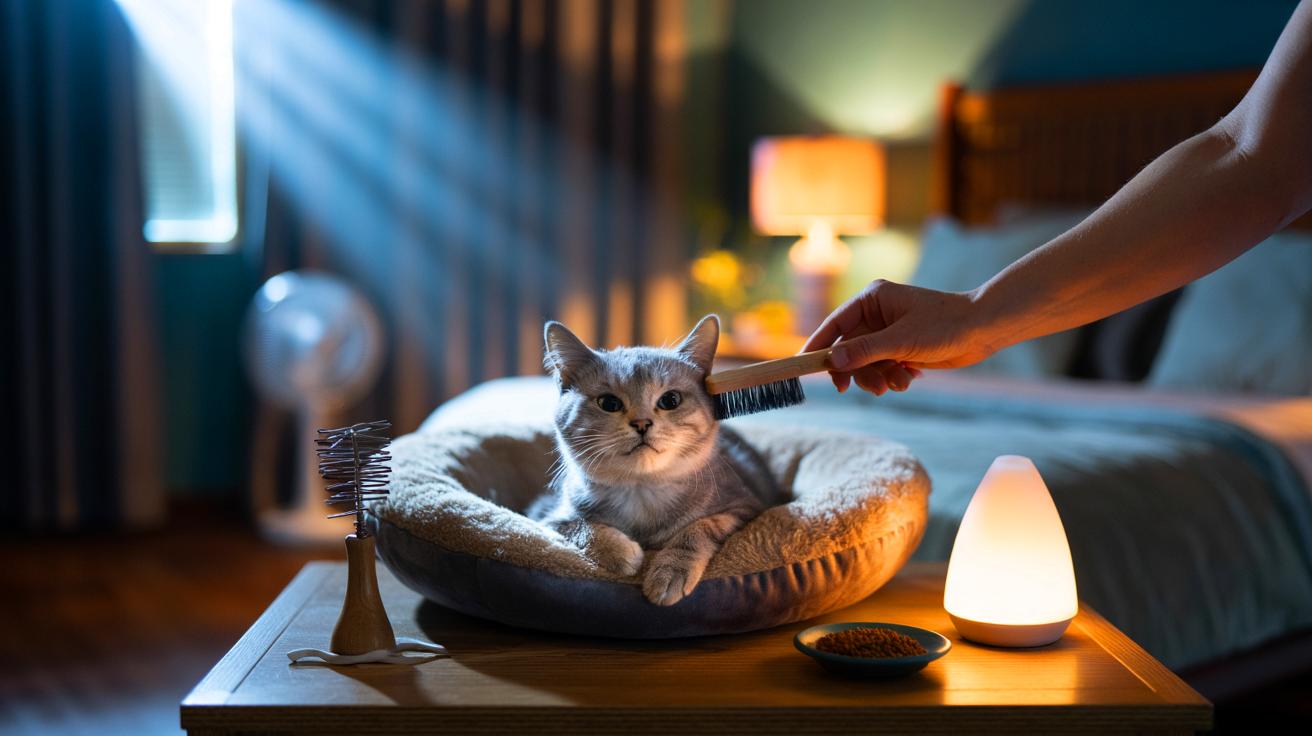
Rituals are anchors. Repeat the same sequence nightly so your cat can anticipate what comes next. Start with low-voice check-ins: a brief grooming session with a soft brush or a cloth “lick” along the cheeks and chin. Grooming is a feline relaxation script. When your hands become a metronome, the body follows. Keep it short, keep it gentle, and finish in the sleep zone to associate touch with rest.
Introduce a scent cue before lights dim. One drop of a cat-safe hydrosol on a nearby blanket or the quiet whirr of a pheromone diffuser tells the brain: bedtime is close. Follow with a stationary enrichment activity—food puzzle or snuffle mat—for five to eight minutes. This engages problem-solving without spiking arousal. Chew, lick, nosework are self-soothing actions; they nudge anxious systems toward calm.
End the ritual with a consistent phrase—“Bedtime now”—and a final cue, like closing the curtains or setting a small nightlight. Avoid last-minute chasing games or feather wands here; you’ll schedule active play earlier. Keep human exits uneventful. No big goodbyes, no sudden door slams. Cats notice patterns. When the finale is quiet, nights stay quiet.
Feed, Play, and Calm: The Three-Pillar Schedule
For anxious cats, timing is therapy. The evening should follow this order: interactive play, meal, then calm. Play first. Use a wand toy that lets your cat stalk, pounce, and “win” with a soft catch at the end. Ten to fifteen minutes is enough for most felines. Finish with a successful capture to close the hunting loop. Immediately after, serve a measured, protein-forward meal. Full belly, spent energy, sleepy brain—biology does the heavy lifting.
To make it simple, try this sample micro-schedule. Adjust to your household’s clock, but keep intervals steady. Predictable timing produces predictable sleep.
| Time | Activity | Goal |
|---|---|---|
| 7:30 p.m. | Interactive wand play | Burn anxious energy |
| 7:45 p.m. | Meal or snack | Promote post-prandial drowsiness |
| 8:00 p.m. | Grooming/brush | Trigger relaxation |
| 8:10 p.m. | Puzzle feeder | Calm focus |
| 8:20 p.m. | Lights dim, cue phrase | Consistent bedtime signal |
Keep treats minimal and high value. Offer a last litter break right after the puzzle session to prevent 3 a.m. pacing. Water stays available, but remove hyper-stimulating toys from the sleep zone. Quiet chews or a felt kicker with catnip kept in a drawer can be offered only if chewing calms rather than excites your cat.
Nighttime Troubleshooting and Tracking
Even the best routine needs tuning. If your cat vocalizes at night, first rule out medical triggers: pain, hyperthyroidism, or cognitive changes. Then examine the routine’s gaps. Are play sessions too short? Is the final meal too small? Extend play by five minutes every three nights and slightly increase protein at dinner. Adjust one variable at a time so you can see what works. For door scratching, install a pressure-free boundary: a baby gate with a mesh cover or a foldable room divider that preserves sightlines without rewarding attention-seeking.
Logging behavior helps. Keep a simple sleep journal noting start time, wake-ups, and triggers like sirens or neighbor footsteps. Patterns emerge within a week. If your cat wakes at 4 a.m. for food, add a timed feeder that opens at 3:45 a.m. in the designated sleep area. You deliver comfort; the device delivers calories. This prevents reinforcing yowls with your presence. Consistency beats intensity; small, steady routines outperform marathon play or sporadic cuddles.
For high-strung cats, layer in tactile security: a partially covered bed, a weighted blanket made for pets, or a hooded perch. Keep changes slow and reversible. If anxiety persists beyond four weeks despite structure, consult a veterinarian or behaviorist about enrichment plans and possible anxiolytics. The goal isn’t perfection. It’s a quieter baseline that holds, night after night.
When the environment is tuned, the sequence is steady, and needs are met before lights-out, even a skittish cat can drift into deeper, longer sleep. Small moves add up. A dimmer here. A wand session there. A final brushstroke at the bed’s edge. The routine becomes reassurance your cat can count on. What part of this nighttime plan feels most doable in your home today, and which single change will you test first this week?
Did you like it?4.4/5 (20)