In a nutshell
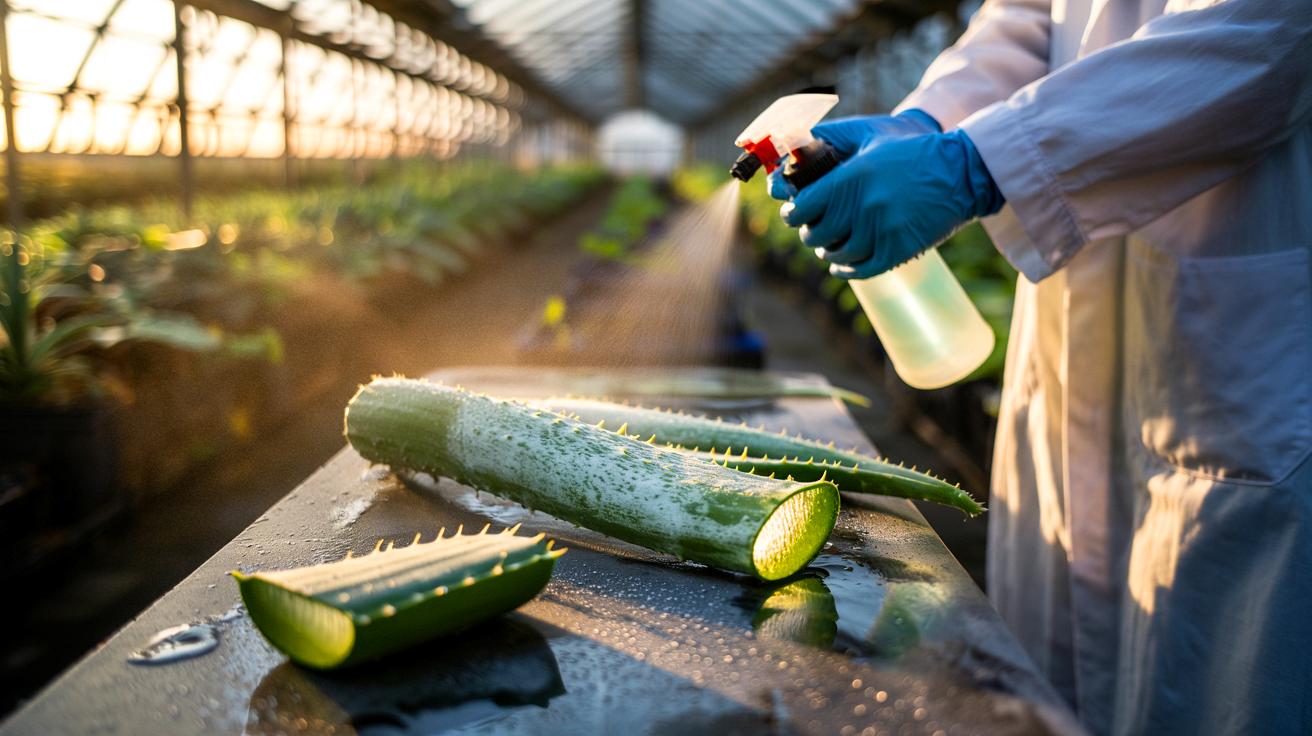
Plant pathologists are turning to a familiar houseplant for an unfamiliar job: crop bodyguard. In lab benches and greenhouse benches alike, an aloe vera spray is drawing attention as a gentle yet surprisingly potent shield against fungal diseases that ravage leaves, fruits, and stems. The logic is elegant. Aloe’s gel brims with bioactive molecules plants recognize and fungi dislike. Trials aren’t uniform, and this isn’t a silver bullet. Still, the data are intriguing, the costs modest, and the environmental upside significant. Spraying aloe extracts can nudge crops toward stronger defenses while keeping residues and resistance pressure low. Here’s what scientists say is happening, and how growers are testing it.
What Makes Aloe Vera a Plant Protector
Aloe vera is more than a soothing gel for sunburns. Its inner leaf tissue is a complex broth of polysaccharides like acemannan, saponins, phenolic compounds, amino acids, and trace minerals. This cocktail matters. Saponins can disrupt microbial membranes. Phenolics can interfere with spore germination. And the long-chain polysaccharides act as elicitors, signaling leaves to prime their defenses. That priming, akin to a workout before the match, prepares plants to deploy pathogenesis-related proteins faster and stronger when fungi arrive.
Researchers describe a dual-action profile. First, aloe’s surface-active molecules can directly slow spore germination and hyphal growth on treated tissue. Second, the extract appears to enhance local and systemic responses, including oxidative bursts and the production of chitinase and other enzymes fungi dislike. It’s gentle on foliage when properly diluted, biodegradable, and compatible with many low-input programs. The appeal is simple: antifungal push with a plant-friendly touch. Importantly, aloe extracts are not uniform; processing, cultivar, and storage shape potency, which is why formulation details matter.
How the Spray Works Against Common Fungal Invaders
Fungal diseases exploit plant vulnerabilities. Powdery mildew rides air currents. Botrytis gray mold loves humidity. Anthracnose pounces on soft fruit. In controlled assays, aloe-based sprays have reduced visible lesion development and slowed sporulation compared with water-treated controls, especially when applied before infection pressure peaks. Scientists propose several mechanisms: membrane disruption by saponins, phenolic-mediated oxidative stress on fungal cells, and elicitation of host defenses that render leaf surfaces less permissive to invasion.
Mode of action also includes biophysical effects. Aloe gels can alter leaf-surface microenvironments by slightly changing wettability and creating a transient film that reduces spore attachment. There’s evidence that certain aloe constituents chelate ions and modulate pH at the microscale, nudging conditions away from fungal comfort zones. To be clear, aloe is not a systemic fungicide in the traditional sense. Think of it as a protective veil and a wake-up call to plant immunity, not a curative knockout punch. Timing matters. Preventive or early applications outperform late, rescue attempts after disease is rampant.
Formulating a DIY Yet Science-Informed Aloe Spray
Commercial formulations vary, but basic, research-aligned approaches are accessible. Start with fresh inner fillet gel or a food-grade stabilized gel. Aim for a sprayable solution at 2–10% aloe gel by volume in clean water. Many trials cluster near 5%, sometimes with a mild surfactant to improve leaf coverage. Maintain solution pH around 6–6.5, and strain to avoid nozzle clogs. Always spot test a few leaves, then scale up if no phytotoxicity appears within 48 hours. Freshness is crucial—bioactivity wanes as gels oxidize. Mix only what you’ll use that day, store cool, and agitate tank gently.
Some growers boost persistence by pairing aloe with chitosan or small amounts of potassium bicarbonate; others integrate it between copper or sulfur sprays to diversify modes of action. Compatibility checks are essential. Avoid mixing with strong oxidizers or high-alkaline inputs that can denature aloe’s delicate compounds. For home gardens, a hand sprayer suffices. For field plots, use fine droplet nozzles and target full coverage of upper and lower leaf surfaces.
| Component/Practice | Role | Typical Range | Notes |
|---|---|---|---|
| Aloe gel concentration | Antifungal + elicitor | 2–10% v/v | Spot test for leaf sensitivity |
| pH adjustment | Stability, leaf safety | 6.0–6.5 | Avoid strong bases/acids |
| Surfactant | Coverage, adhesion | 0.05–0.1% | Use non-ionic, mild types |
| Application timing | Prevention | 7–10 day interval | Shorten in high humidity |
Field Results, Caveats, and Regulatory Context
Field stories are encouraging but nuanced. In small-plot and greenhouse settings, aloe sprays have helped hold back powdery mildew on cucurbits, delayed Botrytis on ornamentals, and kept leaf spots from coalescing under moderate pressure. The pattern is consistent: best performance when disease pressure is low to moderate and applications begin before symptoms explode. That makes aloe a compelling fit for integrated programs, organic transitions, and backyard gardens chasing resilience without harsh residues. When expectations match its strengths, aloe often overdelivers.
There are caveats. Raw extracts vary by plant source and processing; batch-to-batch consistency can slip. Warm tanks and sunlight degrade actives, and overdosing may leave sticky residues that invite dust and sap-sucking pests. Regulations differ by jurisdiction; aloe-based products may fall under low-risk or botanical categories, but labels and compliance still matter. Scientists stress stewardship: rotate modes of action, scout frequently, prune for airflow, and manage irrigation to deny fungi their favorite microclimates. Seen that way, the aloe vera spray is not a solitary hero—it’s a smart teammate in a diversified defense lineup.
As growers seek practical tools that protect yields without loading fields with synthetic residues, aloe vera’s rise from windowsill staple to crop defender feels timely. It’s plant-derived, relatively gentle, and aligned with science that values prevention and immune priming. Costs are manageable and the know-how is spreading through extension workshops and farmer-to-farmer networks. The big question is scalability and consistency under real, messy weather and pathogen pressure. If you’re managing plants this season, how might you test an aloe-based spray alongside your current practices—and what evidence would convince you it earns a permanent spot in your toolbox?
Did you like it?4.5/5 (25)