In a nutshell
- 🧪 Eugenol-rich clove buds confuse mosquitoes’ odorant receptors, masking CO₂ and lactic acid cues and disrupting host-seeking in the pot-level microclimate.
- 🌿 Practical use: scatter 10–15 buds in small pots, 20–30 in large; use breathable sachets, lightly crush some for aroma, refresh weekly, and avoid pouring clove oil into soil.
- ⚖️ Results and safety: expect fewer landings, not zero bites; whole buds are low risk, but keep from pets and skip undiluted skin use; pair with EPA-registered repellents and BTI in standing water.
- 🔄 Comparison: cloves are cheap, storable, and flameless versus citronella, lemongrass, lavender, and basil, though wind can dilute the effect; choose based on longevity and placement.
- 🪴 Layered strategy: place buds on the leeward side of pots near seating to create a scent buffer, add a small fan, drain saucers, and wear light clothing for amplified protection.
On summer evenings, nothing crashes a cozy porch moment faster than a cloud of whining mosquitoes. Gardeners often reach for sprays, candles, or plug-ins, but one quiet fix comes from the spice rack: whole clove buds. Scattered around planters, tucked into saucers, or nestled at the base of foliage, they release aromatic compounds that confuse biting insects. The result is not a force field, but a noticeable drop in landings near container gardens. This simple, low-cost tactic exploits a plant’s own chemical defenses to protect your plants—and your ankles—without drenching your space in synthetic scents. Understanding why it works can help you place cloves smarter, refresh them at the right time, and combine them with other practical steps for a calmer, bite-free patio.
The Chemistry Behind Cloves’ Mosquito-Repellent Power
Clove buds are tiny chemical factories. Their signature oil is rich in eugenol, a phenolic compound with a spicy-sweet aroma that insects find overwhelming. Studies on disease-vector mosquitoes—including Aedes, Culex, and Anopheles—show eugenol can disrupt odorant receptors that guide host-seeking. It doesn’t “kill” the urge to bite; instead, it muddles the trail. Your exhaled CO₂, skin-emitted lactic acid, and other cues become harder for mosquitoes to follow when eugenol vapor saturates the air near your pots. In practice, that means fewer accurate approaches and more aimless fly-bys around your plants.
Whole buds slowly off-gas not only eugenol but also beta-caryophyllene and other volatiles that contribute to the repellent bouquet. Temperature and humidity matter. Warm evenings increase evaporation, lifting the scent plume above soil level—the same zone where mosquitoes patrol potted foliage for resting spots. In still air, the aroma lingers near containers, creating a subtle “scent buffer.” Wind thins it out, which is why strategic placement (for example, on the leeward side of pots by seating areas) amplifies the effect. This botanical chemistry won’t replace proven skin repellents, yet it can materially improve comfort within a small, container-filled patio.
The takeaway: clove volatiles alter mosquito navigation right where the insects forage—at plant height around pots—making your microclimate less attractive without harsh residues.
How to Use Clove Buds Around Pots
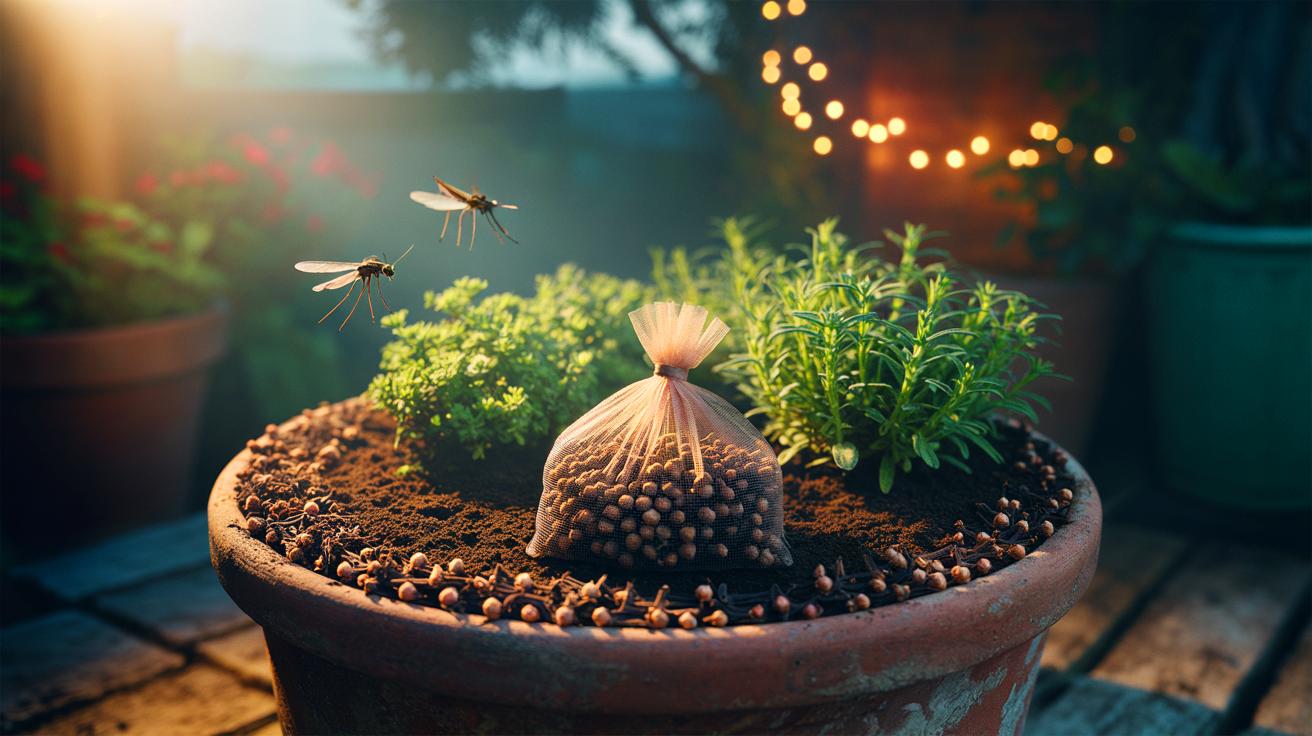
Think proximity and persistence. For tabletop planters or balcony boxes, scatter 10–15 whole clove buds in a ring on the soil surface, avoiding direct contact with tender stems. For larger floor pots, use 20–30 buds, tucked beneath a thin layer of mulch to slow desiccation while still allowing aroma to escape. Another neat option: breathable sachets (cheesecloth or mesh tea bags) filled with buds and nestled at pot rims or clipped to trellises. More surface area equals more scent—lightly crush a few buds to jump-start the aroma.
Refresh weekly in hot weather; every 10–14 days in cooler, drier periods. If rain or heavy watering floods saucers, dry the buds on a paper towel and return them, or replace with fresh ones. Do not pour concentrated clove oil into potting mix—it can stress roots and soil microbes. Instead, keep it simple: whole buds, mild bruising, and consistent replenishment. Combine with smart cultural practices that starve mosquitoes of habitat: empty saucers, scrub algae film, and keep pot drainage fast. A small tabletop fan near seating moves the scent plume across ankles, where bites happen most.
Households with pets should keep sachets out of nibbling range. While whole buds used decoratively are low risk, clove oil is potent—store essential oils safely and avoid skin application on children without medical guidance.
Effectiveness, Safety, and Limitations
Expect reduction, not perfection. In lab assays, eugenol-based blends repel aggressively; outdoors, results vary with wind, humidity, mosquito species, and competing human scents. Around pots—where mosquitoes loaf on shaded leaves before biting—the effect is more noticeable because the clove plume occupies the same micro-zone. Cloves shine as a “zone comfort” tool, not as a stand-alone personal repellent when you move away from the containers.
Safety is straightforward with common-sense handling. Whole buds are culinary-grade; avoid ingesting them in quantity and keep them out of reach of pets that chew. People with fragrance sensitivity should test small amounts first. Skip DIY skin sprays made with undiluted clove oil—phenols can irritate. For gardens, keep essential oils off foliage and soil to protect beneficial insects and roots. If your pots include water features, prevent breeding at the source: drain saucers, top up birdbaths frequently, and consider BTI (Bacillus thuringiensis israelensis) dunks in standing water that cannot be emptied.
Pairing measures multiplies impact: clove buds by pots, a fan, light-colored clothing, and a proven EPA-registered repellent for skin when mosquitoes are intense. This layered approach keeps bites down while preserving the ambiance and scent profile of your patio.
How Cloves Compare to Other Natural Repellents
Cloves belong to a family of aromatic plants whose oils scramble mosquito navigation. Gardeners weigh them against citronella, lemongrass, lavender, and basil for practicality around containers. What sets cloves apart is convenience: dry buds store for months, shed scent without electricity or flame, and look at home tucked among potting mix and mulch. Still, each option has a niche depending on aroma preference, longevity, and wind exposure. The table below captures key differences for pot-side use.
| Repellent | Active Compounds | Placement by Pots | Longevity | Pros | Cons |
|---|---|---|---|---|---|
| Clove buds | Eugenol | Scatter/sachet at rim | 7–14 days | Cheap, dry storage | Wind reduces effect |
| Citronella | Citronellal, geraniol | Candles near pots | 2–4 hours | Fast scent plume | Requires flame; smoke |
| Lemongrass | Citral | Potted plant foliage | Seasonal | Attractive plant | Weak in wind |
| Lavender | Linalool | Cut sprigs around pots | 3–7 days | Pleasant scent | Subtle effect |
| Basil | Eugenol, linalool | Live plant near seating | Seasonal | Edible, easy to grow | Needs sun, pruning |
If maximum protection is essential—say, at dusk near water—pair clove buds with a skin-applied repellent like picaridin or DEET. For casual evenings, cloves can meaningfully reduce hovering around containers, especially when placed upwind of chairs so scent wafts through the sitting area. Keep experimenting: bud density, sachet height, and mild crushing all tune the aroma output to your space.
Small, consistent tweaks make an outsized difference. Clove buds stationed around pots bend mosquito behavior where you notice it most, without harsh sprays or constant tending. Add a fan, drain saucers, and you’ve built a layered defense that feels natural and smells inviting. The goal isn’t perfection; it’s reclaiming your patio’s comfort zone long enough to linger over one more conversation. What arrangement of clove sachets, plant choices, and airflow could you try this week to test how much calmer your own container garden can become?
Did you like it?4.4/5 (21)