In a nutshell
- 🌱 Supports root vigor by delivering trace organosulfur compounds, flavonoids, and prebiotic inulin to the rhizosphere, nudging beneficial microbes rather than acting as a direct fertilizer.
- 🧪 Make from rinse water or a brief skin infusion; apply a 1:5–1:10 dilution, target soil-only (not leaves), and use fresh within 24–48 hours to avoid fermentation and off-odors.
- 💧 Best for seedlings, new transplants, and container herbs; apply weekly or biweekly as an adjunct, not a fertilizer, alongside good soil, mulch, and balanced feeding.
- ⚠️ Helps during establishment and in sandy beds, but avoid for succulents, waterlogged or cold soils; overuse can cause odor or minor tip burn—when uncertain, dilute more and apply less.
- 📊 Backed by biology and backyard trials: dosage is decisive; run a simple A/B test to compare root mass, recovery, and vigor before making it a routine.
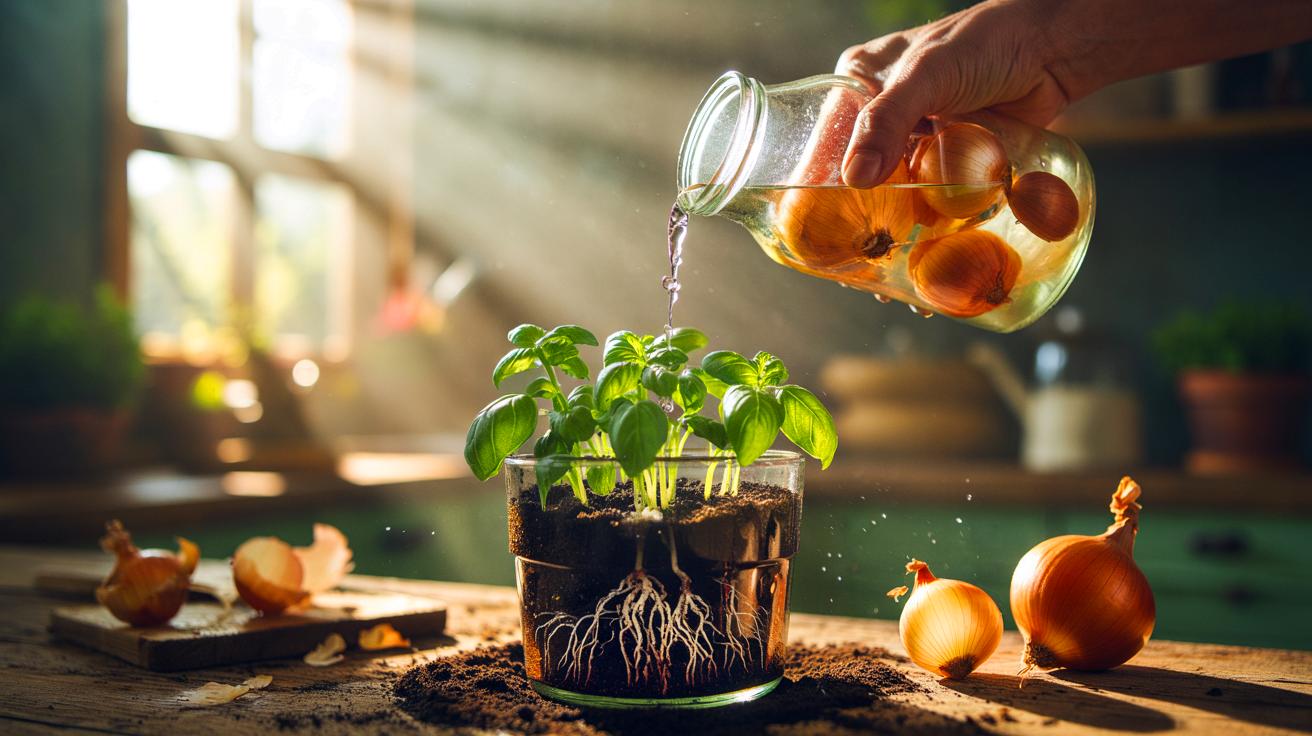
Across American kitchens, a quiet gardening hack is migrating from cutting boards to potting benches: the leftover liquid you usually pour down the drain after chopping or soaking onions. Gardeners call it “onion water.” It smells faintly pungent. It’s free. And when used wisely, it can nurture sturdier, more resilient plant roots. What sounds like folklore rests on a mix of chemistry and soil biology that plants recognize. The idea isn’t to douse beds with a homemade tonic, but to use a light touch—small sips that encourage a thriving underground network. Handled correctly, onion water can help young transplants settle faster and perennials push whiter, finer feeder roots.
What Onion Water Does for Roots
Onions are rich in organosulfur compounds and flavonoids such as quercetin. In the soil’s microscopic marketplace—the rhizosphere—these molecules can shift microbial activity in ways that support root vigor. A light dose acts like a nudge, not a shove, encouraging beneficial bacteria and fungi to cycle nutrients more efficiently around root tips. The goal isn’t to fertilize directly but to support the living soil that feeds the roots. Unlike a high-nitrogen feed, onion water is gentle, which helps reduce the risk of soft, weak growth.
There’s also the prebiotic angle. Onions contain inulin and other carbohydrates that microbes like. When diluted onion water reaches the root zone, it can spark a small bloom of microbial activity. That short pulse, if not excessive, often coincides with better root architecture—more branching, more surface area. Growers report quicker recovery from transplant shock and sturdier seedlings that anchor in windy springs. When roots explore more soil, plants spend less energy searching, more energy building.
Finally, some sulfur compounds are mildly antifungal or antibacterial. That can help tip the balance away from certain pathogens on damp days. It’s not a cure for disease, and it won’t replace sound hygiene, spacing, and airflow. But as part of a broader routine, onion water can be a useful, natural complement that supports overall root health without synthetic inputs.
How to Make and Use Leftover Onion Water
Start with what you already have: the water left from rinsing sliced onions, or a quick infusion made by simmering clean onion skins and trimmings for 10 minutes in plain water. Cool completely and strain. Never apply undiluted. For general use, mix at a dilution of 1:5 to 1:10 (one part onion water to five–ten parts clean water). That range delivers trace compounds while minimizing the risk of phytotoxicity and off-odors in confined containers.
Apply to the soil, not the leaves, focusing on the root zone of seedlings, new transplants, and herbs in active growth. Water as you normally would, then follow with the diluted onion water so compounds aren’t wasted on dry media. Once weekly is ample for most plants; every other week for containers. Use within 24–48 hours and refrigerate if you must store it; discard if it ferments or smells sour. Remember: this is an adjunct, not a full feeding program.
| Preparation | Dilution | Frequency | Best For | Storage |
|---|---|---|---|---|
| Rinse water from chopped onions | 1:10 | Weekly | Seedlings, leafy herbs | Refrigerate; use in 24 h |
| Skin infusion (10 min simmer) | 1:5–1:8 | Weekly/biweekly | Transplants, perennials | Refrigerate; use in 48 h |
This is not a fertilizer substitute. Continue balanced feeding as needed, especially for heavy feeders like tomatoes. Onion water works best when soil already has organic matter, steady moisture, and moderate pH. Paired with mulch and gentle watering, it helps roots branch instead of racing downward for survival.
When It Helps—and When It Doesn’t
Onion water shines during establishment. Newly set peppers, cucumbers, native perennials, and houseplant cuttings respond to the subtle microbial spark and trace minerals. Container herbs—basil, parsley, mint—often show denser white roots along pot edges after a few weeks. In coarse or sandy beds, where nutrients wash through, that extra root surface can be a quiet game-changer. Think of it as a confidence boost for roots when conditions are changeable.
But not all situations benefit. Succulents and cacti, which dislike frequent moisture, are poor candidates. Waterlogged soils, cold potting mixes, or plants stalled by severe nutrient deficiencies won’t revive with onion water alone. Overuse can concentrate sulfur compounds and create odors or mild leaf tip burn if splashed. When in doubt, dilute more and apply less often. Sensitive, fragrant ornamentals may hold scent on foliage, another reason to target soil only.
There’s also the pest question. The aroma can briefly mask scents that attract some insects, yet it won’t solve established infestations. And while alliums are generally unbothered, crops prone to onion maggot or thrips won’t be protected by onion water. Results vary by climate, soil life, and watering habits. A small trial on two or three plants will tell you more about your setup than any blanket rule.
Backed by Biology, Tested in Backyards
Lab studies on onion-derived thiosulfinates and flavonoids show antimicrobial effects, and soil science confirms that modest carbon inputs can stimulate beneficial microbes. That’s the scientific scaffolding. The home-garden translation is pragmatic: low-dose, short-lived pulses that prime the root zone without overwhelming it. In practice, the line between a boost and a burden is dosage. Gardeners who measure, dilute, and schedule see steadier gains than those who pour freely and hope.
To gauge impact, track a simple before-and-after: transplant two identical starts, treat one, and after four weeks compare root mass, stem thickness, and recovery from heat or wind. Note moisture, temperature, and any fertilizer used. Patterns emerge quickly. If benefits appear, keep it; if not, you’ve learned inexpensively and can move on. Either way, your observations add to a growing, grassroots dataset that is refining an old kitchen habit into a modern sustainability practice.
Ultimately, onion water works best as part of a system: compost-rich soil, steady moisture, seasonally appropriate feeding, and gentle handling of roots. It’s thrifty. It’s simple. And when aligned with good horticulture, it’s surprisingly effective. Use what the kitchen gives you, but let the garden’s response set the pace.
Turning leftovers into root strength is the kind of small win gardeners love: low risk, potentially high reward, and easy to test in a weekend. The chemistry is plausible, the technique is uncomplicated, and the cost is virtually nothing. Keep expectations realistic, measure your results, and remember that dilution and timing make all the difference. If you try it this season, which plants in your garden will get the first sip—and how will you decide whether the experiment earns a permanent place in your routine?
Did you like it?4.6/5 (21)