In a nutshell
- 🍂 The cinnamon hack leverages cinnamaldehyde and eugenol to slow mold and damping-off; apply a whisper-thin dusting to the moist surface for targeted suppression.
- 🧪 Step-by-step: start with clean media and trays, bottom water, dust via a tea strainer, and use a strained “cinnamon tea” for maintenance without oversaturating.
- 🌬️ Prioritize environment: increase airflow, crack humidity domes, keep lights close, and manage temperature to build a resilient micro-ecosystem instead of chasing sterility.
- ⚠️ Avoid pitfalls: don’t overapply (crusting risk), skip cinnamon sugar and potent essential oils, curb overwatering, and act fast when stems constrict at the soil line.
- 🧰 Smart toolkit: pair cinnamon with bottom watering, gentle hydrogen peroxide resets, and microbial inoculants, choosing tactics based on disease pressure.
Gardeners whisper about it in forums. Old-school propagators swear by it. The humble kitchen spice that keeps delicate starts clean and vigorous isn’t bleach or a lab-grade fungicide—it’s cinnamon. If you’ve watched fluffy gray fuzz creep over potting mix, threaten stems, and topple baby plants overnight, you’ve met the notorious damping-off complex. The fix doesn’t require a chemistry degree. It requires timing, a dusting hand, and patience. A simple sprinkle of ground cinnamon can tilt the micro-ecology in your favor and keep trays mold-free. Here’s how the hack works, when to use it, and the smart tweaks that turn a folk remedy into a reliable seedling protocol.
Why Seedlings Mold and How Cinnamon Helps
Mold isn’t just a cosmetic issue in seed trays. It’s the visible tip of a biological iceberg: a surge of fungi and oomycetes such as Pythium, Rhizoctonia, and Fusarium that bloom in cool, humid, stagnant environments. Baby plants are especially vulnerable because they lack woody tissue and robust immune responses. Overmixed peat, heavy watering, and tight domes create a sauna for spores. Break the humidity-stagnation cycle and you starve the pathogens. That’s step one.
Step two is targeted suppression. Cinnamon contains volatile compounds—especially cinnamaldehyde and eugenol—with well-documented antifungal activity. They don’t sterilize your media, and they’re not a silver bullet, but they inhibit spore germination and mycelial growth where they touch the surface. Think of it as a botanical speed bump. A light dusting interrupts the early bloom of fungi without scorching tender cotyledons. Both cassia and Ceylon cinnamon can work; the key is freshness, fine grind, and even distribution across moist—but not soggy—media.
That balance matters. Too little and colonies rebound. Too much and you impede airflow at the soil line. The sweet spot is a whisper-thin veil that settles into crevices where spores lurk. Seedlings stay upright, stems dry quickly after misting, and the tray smells like a bakery instead of a basement.
Step-by-Step: Using Cinnamon Powder on Seed Trays
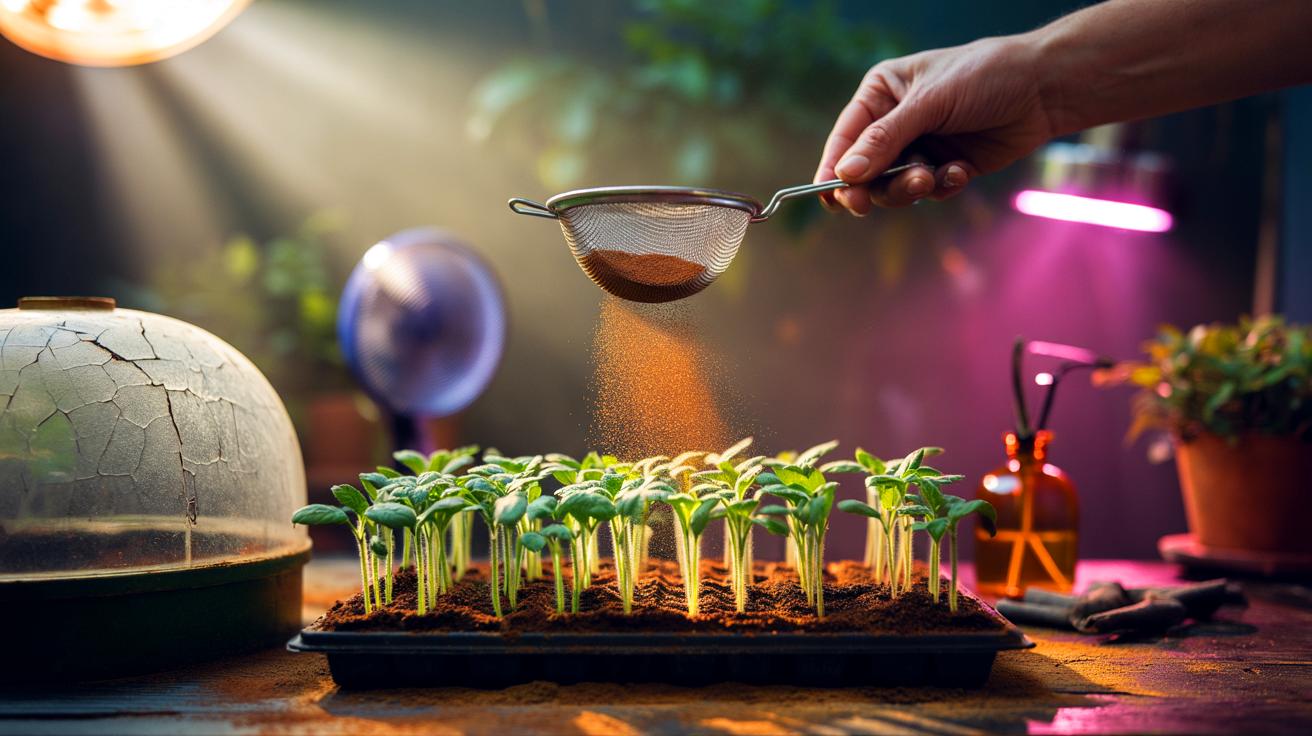
Start clean. Use a sterile, peat-free or high-quality seed-starting mix, washed trays, and labeled cells. Sow shallowly, then bottom-water so the surface isn’t saturated. When you see the first glint of white fuzz—or ideally, right after sowing—load a fine-mesh tea strainer with ground cinnamon. Tap lightly to create a translucent film across the surface. Avoid burying seeds; you want coverage on the top layer only. If a cell looks glossy-wet, wait an hour, then dust.
For ongoing prevention, rotate two tactics: a dry dust and a “cinnamon tea.” To make the tea, steep 1 teaspoon cinnamon in 1 cup near-boiling water for 15 minutes, cool, and strain through a coffee filter. Mist the surface lightly every few days, or use it as your bottom-water once per week. The tea reaches nooks where powder can clump. Don’t oversaturate; the goal is contact, not puddles. If you see standing water, you’ve invited mold back to the party.
Finish with airflow. Crack the humidity dome as soon as you have sprouters. Run a small fan on low across the room, not directly on the trays. Keep lights close so seedlings stay stocky and don’t flop into damp media. Re-dust after thinning, potting up, or any moment that disturbs the surface and releases spores. Consistency beats heavy-handed cures.
Common Mistakes and Smart Fixes
Biggest error? Overdoing it. A thick layer of cinnamon can crust, blocking oxygen exchange and slowing emergence. Solution: sift and apply sparingly, then reassess in 24 hours. Another misstep is using cinnamon sugar from the pantry. Sugar feeds microbes. Always choose plain ground cinnamon, nothing added. If the label lists sugar or flavorings, keep it off your trays. People also confuse essential oil with powder. Cinnamon oil is potent and can burn tissue; stick with powder and weak tea.
Overwatering undermines everything. Even a perfect dusting can’t outcompete a perpetually wet surface. Water from the bottom, then drain the excess after 10–15 minutes. If media compacts, fluff gently with a sterile fork between seedlings, redust, and reintroduce airflow. Note that cinnamon is a surface strategy. If your potting mix is contaminated deep down, consider baking the medium before sowing or starting with a fresh bag. When stems constrict at the soil line and flop, you’re dealing with classic damping-off—act immediately.
Lastly, timing matters. Apply before problems escalate. Once fuzzy colonies climb stems, prune losses, discard that cell’s media, sanitize tools, and treat neighboring cells. Keep notes on varieties. Some species—basil, zinnias—love warmth and sulk in damp coolness. Dialing in temperature cuts mold pressure and reduces your reliance on any intervention.
When to Reach for Other Tools
Cinnamon is excellent, but it’s part of a toolkit. Think of cultural controls as the backbone: airflow, temperature, and watering discipline keep pathogens off balance. For stubborn cases, rotate additional gentle measures to avoid selecting for hardy fungi. Chamomile tea has mild activity. A diluted hydrogen peroxide rinse can reset a tray’s surface. Microbial inoculants reestablish balance after an outbreak. Only in severe, high-value starts might you consider copper or sulfur fungicides, and even then, with restraint indoors.
| Method | Best Use | Pros | Cautions |
|---|---|---|---|
| Cinnamon Dusting | Early prevention, light fuzz | Botanical, cheap, surface-targeted | Don’t apply thick; avoid sugary blends |
| Cinnamon Tea Spray | Follow-up maintenance | Reaches crevices, gentle | Strain well; avoid overspray saturation |
| Air Circulation | All trays, daily | Dries surfaces, strengthens stems | No direct blast on seedlings |
| Bottom Watering | Routine hydration | Keeps surface drier | Dump excess; don’t soak |
| H2O2 Dilution | Spot reset after outbreaks | Fast knockback of spores | Use mild mix; can stress roots |
| Microbial Inoculants | Rebalancing media | Longer-term stability | Choose reputable strains |
Match the tool to the pressure you face. If your humidity is high and temps are low, prioritize environmental tweaks first, then layer in cinnamon. In warm rooms with crowded trays, thin aggressively and keep the fan running. The goal is not sterility, but a resilient micro-ecosystem that favors plants. Rotate tactics, observe, and keep records so each season gets easier and cleaner.
In a world of high-tech solutions, the cinnamon hack stands out for its simplicity, scent, and surprising efficacy. It won’t replace good hygiene or airflow, but it buys your seedlings time to toughen up and claim their space. A teaspoon in the right place can save a flat of heirlooms, and that’s real value. Small, repeatable actions add up to mold-free trays. Ready to try it on your next sowing, and what tweaks—fan placement, watering rhythm, or tea versus dust—will you test first to make the method your own?
Did you like it?4.5/5 (21)