In a nutshell
- 💧 Cats prefer running water due to evolutionary cues that signal freshness and safety, which boosts overall hydration.
- 🐾 Sensory wins: cooler, oxygenated flow, motion visibility, whisker-friendly designs, and quiet pumps increase sipping; choose stainless steel or ceramic setups.
- 🧮 Kidney link: steady hydration dilutes urine and eases strain, helping with CKD risk and progression; aim for 150–400 mL/day based on weight; wet diets + fountains perform best.
- 🏠 Home strategy: place water away from food and litter, offer multiple stations, introduce fountains gradually, clean weekly, swap filters regularly, and use safe flavor boosts.
- 🩺 Vet watch: sudden thirst/urination, weight loss, poor coat, or lethargy merit tests (chemistry, urinalysis, BP, SDMA); hydration supports but doesn’t replace treatment.
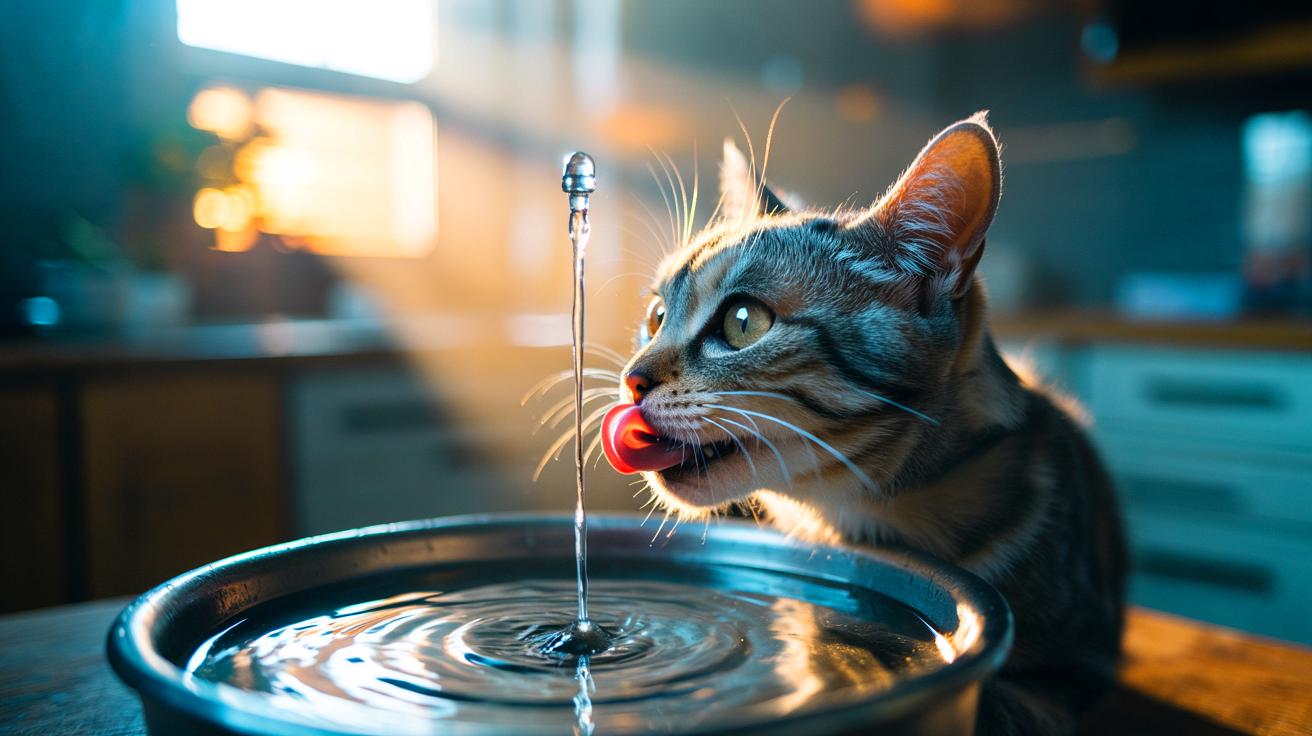
Cats don’t crowd the faucet just to be quirky. Their fascination with running water ties back to survival instincts, sensory quirks, and a biological truth: hydration protects kidneys. In a home where bowls sit still and quiet, a trickle from the tap sparks curiosity and confidence. The sound carries. The sparkle moves. It looks safer, fresher. Many owners notice the payoff—more sipping, fewer urinary hiccups. Encouraging a cat to drink is one of the simplest, most effective steps you can take to support renal health. From evolution in arid landscapes to modern fountains on kitchen floors, here’s why flow matters, and how a small stream today may spare big trouble tomorrow.
The Wild Logic: Evolution Behind Running Water Preference
Long before house cats napped on sofas, their ancestors stalked desert edges where water wasn’t abundant. In that world, moving water signaled life. Stagnant pools, by contrast, often meant microbes, parasites, or contamination. That prejudice persists indoors. A scalloped fountain sounds like a stream; a bowl looks like a puddle. The choice feels obvious to a species that still listens with hunter’s ears. Flow reads as fresh, and fresh reads as safe. Evolution built that shortcut.
There’s also the matter of seeing vs. sensing. Cats have limited close-up focus, but they’re exceptional motion detectors. A rippling surface catches the eye where a flat one disappears. Hearing seals the deal. Drips and trickles are acoustic breadcrumbs guiding them to the sip. Smell plays a role too; flowing water is often better aerated, which disperses off-odors. Even at home, these cues stack up. The result: more interest, more visits, more licks. Over days and years, those small changes accumulate into something crucial—steadier daily water intake.
Sensory Science: Taste, Temperature, and Motion
What tastes “better” to a cat? Oxygenation and temperature help decide. Running water typically holds more dissolved oxygen and tends to be slightly cooler, both qualities most felines seem to favor. The dynamic surface also resets taste receptors; each lap brings subtly different sensations, preventing the “flat” experience of a stale bowl. Small sensory upgrades often produce outsized behavior changes in pets. That can look like longer drinks, or more frequent ones.
Bowl design matters. Deep, narrow dishes can press whiskers, which some cats find aversive. Wider rims, shallow plates, or flowing spouts reduce that contact. Materials change flavor too. Ceramic and stainless steel are less likely than plastic to harbor biofilm and odors that repel sensitive noses. Sound counts: a gentle burble can be inviting, while a loud pump is a deal-breaker for skittish cats. All of these cues—texture, temperature, movement, noise—interact. Tune them, and you tune the habit. The payoff isn’t an Instagram moment at the faucet; it’s reliable hydration from a station your cat actually trusts.
Hydration and Kidney Health: The Preventive Link
Kidneys filter waste, balance minerals, and concentrate urine. They’re quiet workhorses—until they’re overworked. Even mild dehydration can strain feline kidneys. Cats evolved to extract moisture from prey, so their thirst drive is naturally low, and many on dry food alone may never drink enough. That yields concentrated urine, crystal formation risks, and more effort for nephrons (the kidney’s tiny filters). Increase intake, and you dilute solutes, support filtration, and lower urinary tract friction. It’s not a cure-all, but it’s powerful prevention. Chronic kidney disease (CKD) is common in older cats; consistent hydration can’t stop every case, yet it can ease kidney workload and may slow progression.
Use these rough daily water targets (from all sources, including wet food):
| Cat Weight | Daily Water Goal | Notes |
|---|---|---|
| 8 lb (3.6 kg) | 150–220 mL (5–7.5 oz) | Includes food moisture |
| 10 lb (4.5 kg) | 180–270 mL (6–9 oz) | Monitor litter clump size |
| 15 lb (6.8 kg) | 270–400 mL (9–13.5 oz) | Adjust for activity/heat |
Wet diets plus a fountain often deliver the best hydration combo. Aim for more frequent, shorter drinks throughout the day. The goal isn’t guzzling; it’s gentle, steady intake that keeps kidneys comfortable.
Smart Home Strategies: From Fountains to Placement
Start with hardware. Choose a stainless steel or ceramic fountain to limit biofilm and odor. Look for a quiet, low-vibration pump, adjustable flow, and dishwasher-safe parts. Replace carbon filters as directed (often 2–4 weeks) and deep-clean weekly. A sparkling system wins trust. Clean water is the habit-builder. If your cat is hesitant, begin with the fountain turned off, then slowly increase flow over several days.
Now the map. Place water away from food and far from the litter box—cats prefer separation. Offer multiple stations in multi-cat homes. Avoid corners where a cat can feel trapped; sightlines and escape routes reduce stress. Try a shallow bowl nearby as a control; some cats like options. Flavor boosters can help: a splash of tuna water (no salt), clam juice, or unsalted bone broth can entice. Never use onions, garlic, or artificial sweeteners. Travel? Pack a collapsible bowl and a small bottle of the water they know. Consistency keeps them sipping wherever they roam.
What Veterinarians Watch: Warning Signs and When to Intervene
More drinking isn’t always good news. Sudden increases in thirst or urination can signal diabetes, hyperthyroidism, or kidney trouble. Watch the litter box: larger clumps, more frequent visits, or urine outside the box matter. Other flags include weight loss, poor coat quality, bad breath, vomiting, and lethargy. Any rapid change warrants a call to your vet. Early screening—chemistry panel, urinalysis, blood pressure, and SDMA—can catch kidney issues while interventions are simplest.
If CKD is diagnosed, your vet may recommend renal diets, phosphorus binders, blood pressure control, and sometimes subcutaneous fluids. Hydration strategies continue to support those plans, but they don’t replace them. Think of water as the track that makes every other treatment run smoother. Keep measuring what you can: refill volumes, fountain noise, filter dates, and your cat’s routine. Small notes detect big shifts. And remember, kidneys prefer predictability. Build a steady drinking environment, and you give those organs the calm they crave.
Running water feels right to cats for ancient reasons, and it helps for modern ones: better hydration, gentler kidneys, more comfortable lives. A quiet fountain, smart placement, regular cleaning, and a wet-food assist can transform a reluctant sipper into a steady drinker. Prevention starts with the next lap. What change could you make this week—a new fountain, a fresh station, or a subtle flavor boost—to turn your kitchen into a place where your cat actually wants to drink?
Did you like it?4.5/5 (26)