In a nutshell
- 🟠 Why it works: orange peels contain limonene that dissolves greasy films and mild antimicrobial compounds that curb odor‑causing bacteria; pairing with baking soda delivers a neutralize‑then‑refresh one‑two punch.
- 🍊 Dried peel sachets: wash, dry peels until they snap, tuck into breathable pouches, place under the liner or on the hinge, store extras in a jar, and compost spent peels; avoid wet peels to prevent mold.
- 🧪 Peel + baking soda packs: combine soda with crushed dried peels in a pouch, position under the liner, refresh every 1–2 weeks, and add activated charcoal for stubborn, pet‑household odors.
- 🧴 Citrus vinegar spray: infuse peels in white vinegar 7–14 days, dilute 1:1, spray after washing to reduce biofilm; never mix vinegar with bleach or ammonia and spot test metal finishes.
- 📅 At‑a‑glance strategy: rotate sachets, soda packs, and quick fresh‑peel fixes based on season and cooking intensity; consistency beats intensity for low‑cost, sustainable freshness.
Orange peels rarely get a second thought after breakfast. Yet they’re small marvels of chemistry and thrift, tailor‑made for taming the swampy funk that can bloom inside a household bin. Packed with fragrant oils and gentle antimicrobial compounds, they offer a natural counterpunch to the sulfurous gases produced by decomposing scraps. The result is quiet, consistent freshness. And no synthetic fragrances. In a world of disposable solutions, reusing something you already have feels subversive—and smart. Below, you’ll find practical ways to turn orange peels into hardworking bin deodorizers, from slow-release sachets to a zesty cleaning spray. It’s simple, affordable, and surprisingly effective.
Why Orange Peels Neutralize Bin Odors
The secret weapon living in citrus rinds is limonene. This aromatic compound doesn’t just smell like a fresh grove—it actively helps dissolve greasy residues and can disrupt odor-causing films that cling to bin walls. Orange peels also contain mild antimicrobial properties, which is crucial because the smells you notice are often byproducts of bacteria thriving in moist, nutrient-rich conditions. Reduce microbial activity, and you curb the stink. Simple science, everyday payoff.
Texture matters too. The spongy pith absorbs and releases fragrance over time, behaving a bit like a natural diffuser when dried. Fresh peels give an instant scent burst; dried peels deliver a slower, steadier release. That’s why pairing peels with absorbers like baking soda works so well: one neutralizes volatile compounds while the other replaces them with a bright citrus note. Think of it as a one-two punch—neutralize, then refresh.
There’s also a sustainability dividend. Reusing peels reduces waste, keeps plastic-heavy deodorizer pods off your shopping list, and transforms a throwaway into a tool. It’s budget-honoring, low-risk, and family-friendly. The payoff grows with habit: rinse, dry, and stash peels regularly, and the bin never gets a chance to tip into funk. That prevention mindset is the unsung hero here.
Drying Orange Peels for Natural Deodorizers
Start by washing the oranges to remove wax or residue. Peel in wide strips; a little pith is fine. Spread peels on a rack in a warm, breezy spot for 2–3 days until crisp, or use a low oven (200°F/95°C) for 60–90 minutes, turning once. A dehydrator set to low works even better. Drier is better: moisture invites mold and mutes fragrance. Fully dried peels should snap, not bend.
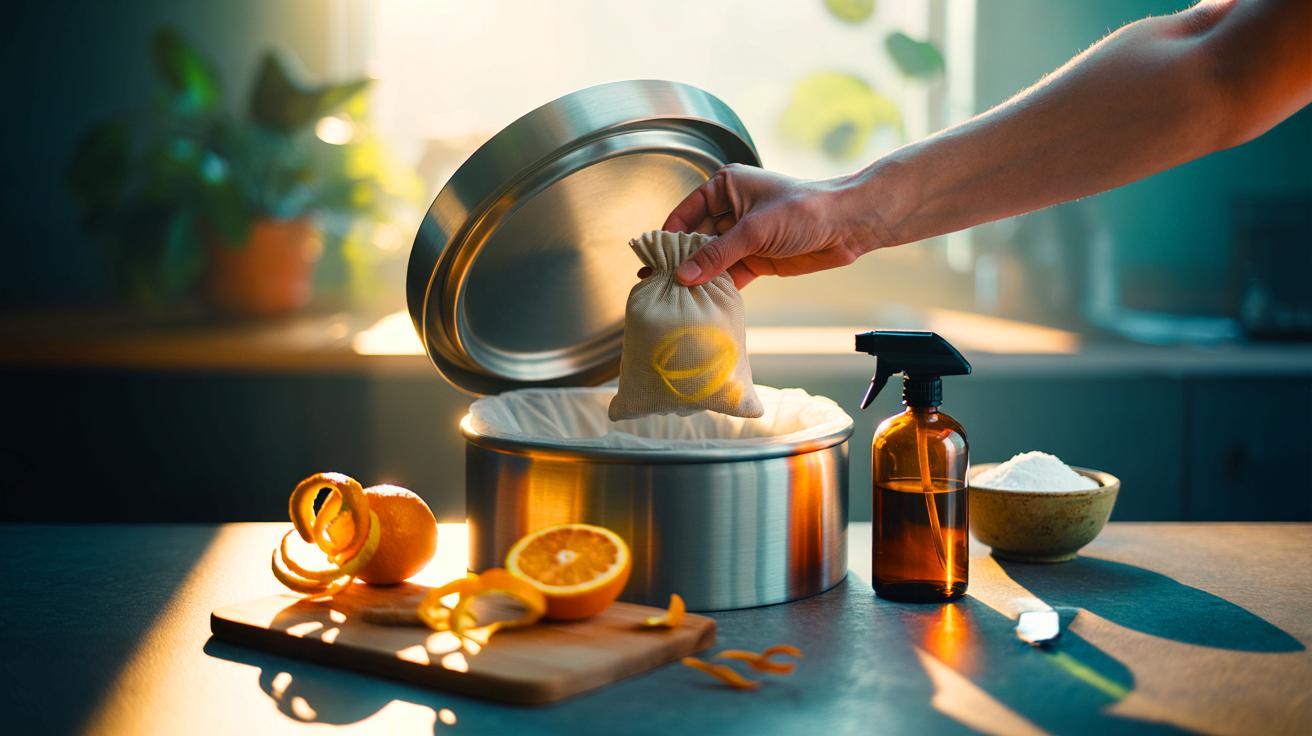
To use, tuck the peels into a breathable pouch—mesh tea bags, cheesecloth squares, or a scrap of clean cotton tied with string. Drop the pouch beneath the bin liner or hang it on the hinge so airflow can carry the scent upward. The goal is steady diffusion. For extra insurance, refresh the pouch with a few drops of orange essential oil if you have it, although the peels alone often suffice. Replace as soon as fragrance fades.
Maintenance is painless. Keep a jar of dried peels under the sink, and rotate sachets every 2–3 weeks. If summer heat spikes, swap weekly. Toss spent peels into compost, or crumble them into houseplant soil as a mild deterrent to gnats. Never place wet peels in a sealed pouch, and never seal them into airtight containers before they’re bone-dry. That’s invitation and RSVP to mold.
Orange Peel and Baking Soda Packs
Combining orange peels with baking soda creates a dual-action deodorizer that works hard in tight, smelly spaces. The baking soda neutralizes acidic and basic odor molecules, while the citrus oils layer on a clean scent. It’s especially effective for kitchen bins hosting a revolving cast of onion ends, coffee grounds, and fishy wrappers. Quick to assemble, even quicker to love.
Fill a small, breathable pouch with two tablespoons of baking soda and a handful of crushed, dried peels. Place the pack at the bottom of the bin, beneath the liner, or wedge it into the lid cavity if your bin has one. For extra punch, sprinkle a teaspoon of baking soda directly into the liner before adding scraps. The pack traps smells before they waft up; the sprinkle catches leaks and drips.
Swap packs every two weeks, sooner if your household cooks a lot of protein. If liquid spills into the bin, discard the pack immediately and wash the bin with hot, soapy water. Then drop in a fresh pack. For pet households, consider adding a teaspoon of activated charcoal to each pouch—charcoal excels at adsorption, capturing stubborn odor compounds that baking soda alone may miss.
Citrus Vinegar Spray and Wipe-Downs
When a bin smells “set in,” surface cleaning matters as much as deodorizing. Make a gentle, high-impact cleaner by infusing white vinegar with orange peels. Pack a jar halfway with peels, cover with vinegar, and let it steep 7–14 days. Strain, then dilute 1:1 with water in a spray bottle. The result: a citrus vinegar that cuts grease, tames bacteria, and leaves a bright finish without synthetic perfumes.
Wash the bin first with warm, soapy water. Rinse, then spray the citrus vinegar over interior walls, lid seals, and the foot pedal area—spots where grime likes to cling. Let sit three minutes. Wipe dry with a clean cloth or paper towel, then leave the lid open for airflow. This regimen reduces biofilm, which is basically a condo complex for odor-making microbes. Clean the bin, and the stink doesn’t stand a chance.
Safety note: Never mix vinegar with bleach or ammonia. The combination creates dangerous gases. If you’ve previously used bleach, rinse thoroughly and let the bin dry before applying citrus vinegar. For metal bins, spot test inside the rim; acetic acid can be unfriendly to certain finishes. In most cases, though, this spray becomes a dependable, low-cost staple you’ll remake all year.
At-a-Glance Methods for Busy Households
Different homes, different rhythms. Maybe you want a “set it and forget it” sachet. Or an infrequent deep clean. Or a robust, pack-a-punch combo for big families. Use the quick guide below to match your time and tolerance to the right orange-peel strategy. If you can peel an orange, you can keep a bin from smelling like last week’s leftovers.
| Method | Prep Time | How to Use | Lifespan | Best For |
|---|---|---|---|---|
| Dried Peel Sachet | 15–90 min (drying) | Place under liner or on hinge | 2–3 weeks | Everyday freshness |
| Baking Soda + Peel Pack | 5 minutes | Under liner; refresh sprinkle weekly | 1–2 weeks | High-odor kitchens |
| Citrus Vinegar Spray | 7–14 days (infuse) | Wipe bin after washing | 1–2 months (bottle) | Deep clean, biofilm control |
| Fresh Peel Quick Fix | 30 seconds | Tuck a strip under the lid | 1–2 days | Emergency odor cover |
Choose one, layer two, or rotate all three depending on season and cooking patterns. Summer heat? Go heavier on baking soda. Holiday roasting season? Pair sachets with the citrus spray. Small apartment with a compact bin? Fresh peel fixes can tide you over until laundry day. Consistency beats intensity here. The best deodorizer is the one you’ll actually use, again and again.
Reusing orange peels turns a daily discard into a reliable ally against rank, lingering bin odors. It’s low-cost, low-effort, and kinder to the air you breathe than masking sprays. Most important, these methods scale: a studio apartment, a family kitchen, or a sprawling backyard setup all benefit from citrus power. Try a sachet this week, mix a vinegar bottle for next, and find your rhythm by month’s end. Which orange-peel tactic will you test first—and how will you tweak it to fit your household’s routines?
Did you like it?4.4/5 (28)