In a nutshell
- 🍞 The pantry shortcut uses baker’s yeast plus unsulfured blackstrap molasses to jumpstart microbes, spike heat, and speed decomposition naturally.
- 🧪 Simple activator recipe: per gallon of lukewarm water, add 1 tsp active dry yeast and 1–2 tbsp molasses, proof 10 minutes, then drizzle lightly over layered materials.
- 🌡️ Aim for a balanced C:N ratio (about 2 parts browns to 1 part greens), sponge-like moisture, and frequent aeration to maintain 131–150°F hot phases.
- 🧰 Troubleshoot fast: add fluffy browns and turn if sour or soggy; add coffee grounds/grass if the pile stalls; avoid over-sugaring to prevent odors and gnats.
- 🚫 Myth-busting: more yeast isn’t better; skip vinegar and Epsom salts—moisture, oxygen, particle size, and turning drive results far more than additives.
Open your cabinet and you’ll find a surprisingly powerful compost accelerator hiding in plain sight. Gardeners across the country swear by a simple mix of baker’s yeast and molasses to kickstart microbial action, raise heat fast, and turn kitchen scraps into dark, crumbly humus in record time. It’s cheap. It’s safe. It’s natural. The secret isn’t magic; it’s microbiology. By feeding the right organisms with quick energy from sugars and a dash of minerals, you can help your pile hit that productive hot phase sooner and stay there longer. Used correctly, this pantry trick can shave days—sometimes weeks—off the composting clock, especially when paired with smart moisture and aeration.
The Pantry Shortcut: Yeast and Molasses
The backbone of this trick is simple: Saccharomyces cerevisiae—the same baker’s yeast that leavens your bread—plus blackstrap molasses, a mineral-rich sugar syrup. Yeast doesn’t replace your compost’s native bacteria; it jumpstarts them. The sweet feed provides readily available carbon while trace minerals in molasses support broader microbial diversity. In that first 24–48 hours, the mix acts like a starter pistol, spiking microbial respiration and warming the pile. Warmer piles work faster, plain and simple.
Why it works: microbes need food, air, and moisture. This combo supplies fast food without unbalancing the crucial carbon-to-nitrogen (C:N) ratio when used in moderation. Think “espresso shot” for microbes, not dessert buffet. A little goes a long way. Pour too much syrup and you risk souring, odors, and oxygen loss. Used lightly on a well-built mix of browns and greens—shredded leaves, straw, and chopped kitchen scraps—the yeast-and-molasses approach pays back with speed and consistency, especially in cool spring or fall conditions when piles can stall.
How to Mix and Apply the Activator
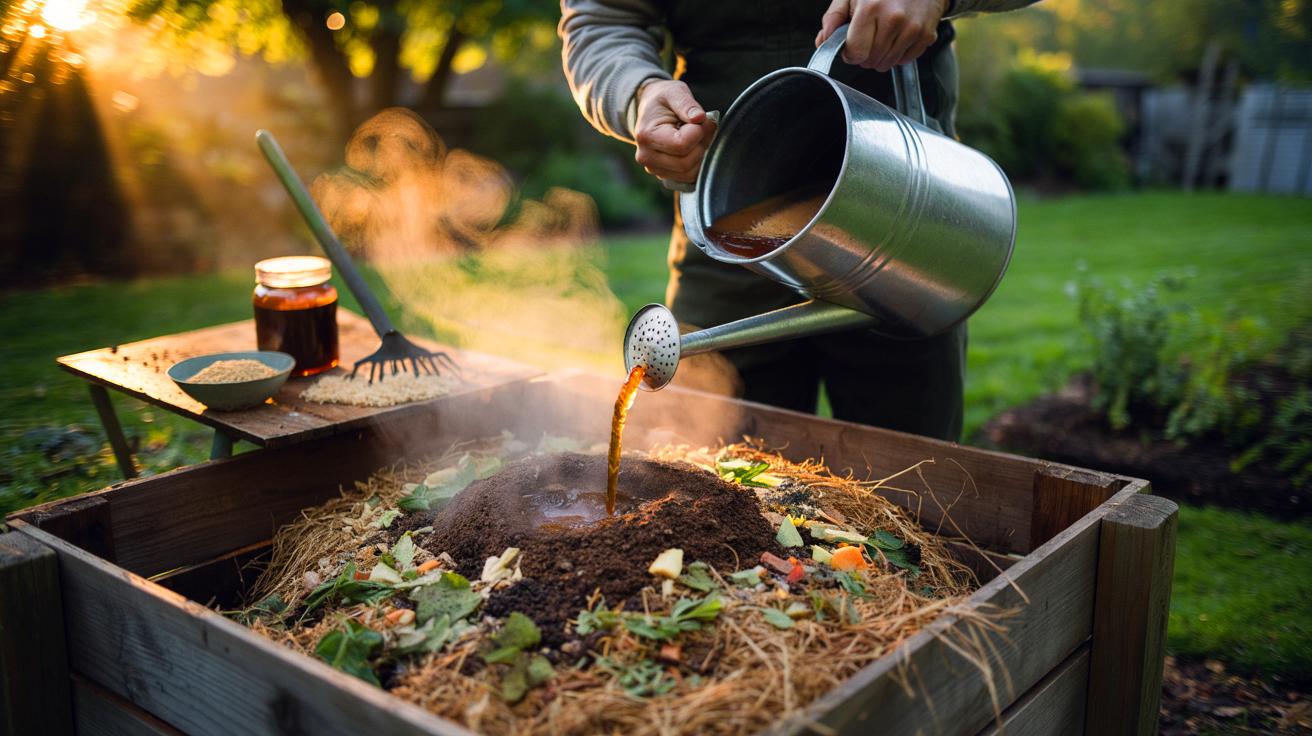
Make a gallon of activator in minutes. In lukewarm water, dissolve 1–2 tablespoons of unsulfured blackstrap molasses. Sprinkle in 1 teaspoon of active dry yeast, stir, and let it sit 10 minutes until a light foam appears. That’s your signal the culture is awake. Drizzle over a freshly layered pile or windrow—never swamp it—aiming for even coverage while you build. Then, turn or fork the materials to blend and introduce oxygen. The pile should feel like a wrung-out sponge, not a soaked towel.
| Ingredient | Amount (per 1 gal water) | Purpose | Notes |
|---|---|---|---|
| Blackstrap molasses | 1–2 tbsp | Quick carbon; trace minerals | Use unsulfured to avoid inhibiting microbes |
| Active dry yeast | 1 tsp | Microbial jumpstart | Proof 10 minutes for best activity |
| Lukewarm water | 1 gallon | Carrier; hydration | Comfortably warm, not hot |
Apply the activator once at build, then reassess. If temperature dips below 100°F after the first hot phase, a half-strength reapplication can help. Do not use daily; overfeeding invites odors and fruit flies. Complement the booster with proper structure: about two parts “browns” (dry leaves, shredded cardboard) to one part “greens” (coffee grounds, produce scraps, fresh clippings). Keep particles small for more surface area, and turn the pile when the center cools to sustain momentum.
Troubleshooting, Myths, and Pro Tips
If the pile smells sour, you’ve overdone the sugar or lost air. Fork it open, add fluffy browns, and turn twice in 48 hours. If it’s dry and sluggish, mist while turning until it passes the squeeze test: one or two drops from a clenched fist. If you see clouds of gnats, cover new food scraps with browns immediately and stop re-sugaring. For persistent stalls, check your C:N ratio—piles starved of nitrogen won’t heat. A few cups of coffee grounds or fresh grass clippings can nudge them back.
Myths abound. No, more yeast isn’t better. No, Epsom salt won’t speed decomposition. And please skip vinegar; acidity suppresses the very microbes you’re feeding. Instead, think systems. Chop inputs to 1–2 inches, layer like lasagna, and aerate. Target a core temperature of 131–150°F for several days to accelerate breakdown and weed-seed kill. Consistent moisture and oxygen move the needle more than any single additive. The pantry trick is an accelerator, not a substitute for fundamentals. Used with discipline, it’s the difference between waiting all season and harvesting finished compost before your tomatoes need side-dressing.
Composting rewards timing, proportion, and a little curiosity. The yeast-and-molasses shortcut respects that balance by giving microbes a quick, digestible meal without rewriting the rules. It’s thrifty, family-safe, and easy to scale from a tumbler to a backyard bin. Paired with routine turning and smart layering, it turns “stuck” piles into steady producers of crumbly, earthy-smelling compost that gardens devour. Ready to try the pantry trick on your next build—and what small tweak will you test alongside it to learn even more about your pile’s personality?
Did you like it?4.5/5 (26)