In a nutshell
- ⚡ Fast-acting scraps: use coffee grounds, chopped produce/tea leaves, and live-culture inoculants (spent brewer’s yeast, sourdough discard, kombucha SCOBY) to spark heat in 24–72 hours.
- 🧪 The science: hit a C:N ratio ~25–30:1, keep moisture 50–60%, ensure oxygen flow via small particle size and mixing, and let sugars drive rapid thermophilic activity.
- 🧰 Prep and ratios: aim for 3 parts browns : 1 part greens, bury fresh scraps under dry browns, add pulverized eggshells to buffer acidity, and avoid meat, dairy, and oils.
- 📅 7-day plan: build a 3-foot core (Day 1–2), turn on Day 3 and Day 5, check for steam and sweet smell by Day 7; if it smells, add air + carbon, if dry/cool, add water + greens.
- 🌱 Payoff: rapid heating (often 24–48 hours), faster volume shrink, earthy aroma, and nutrient-dense compost that boosts soil health while cutting kitchen waste.
American households toss out tons of food scraps each year, yet a surprising slice of that waste can be turned into black gold fast. The secret, experts say, lies in choosing the right kitchen inputs and prepping them so microbes can feast without pause. Think nitrogen-rich grounds and live cultures that kick-start a compost pile like a barista hands a marathoner an espresso. With a few simple tweaks—shredding, balancing moisture, and proper layering—your backyard heap can heat up within days. Used wisely, certain kitchen waste can transform a sluggish pile into a steaming, sweet-smelling reactor, shrinking volume and building soil-ready humus with astonishing speed.
The Fast-Acting Kitchen Scraps Experts Swear By
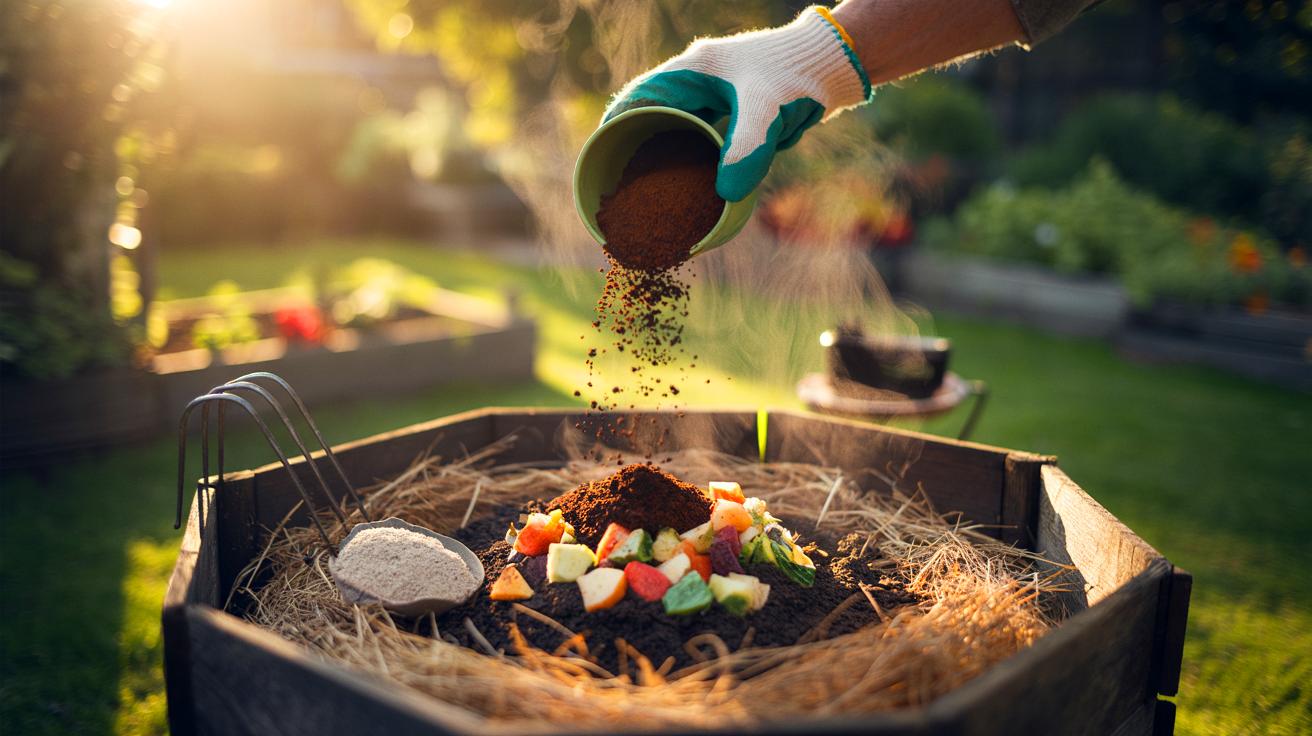
Start with coffee grounds. They’re a sleeper hit: technically a “green,” packed with nitrogen and fine texture that blends well with paper, leaves, or sawdust. They rarely smell, distribute easily, and heat a pile fast. Add used tea leaves and tea bags (staples removed) to the same lane. Next, reach for overripe fruit and fresh vegetable trimmings—apple cores, banana peels, melon rinds diced small. Sugary, moist, and microbe-friendly, they feed the first wave of bacteria that drive temperatures into the thermophilic zone. Chop scraps to thumbnail size and you’ll feel the heat in 24–72 hours.
For a turbo boost, compost educators point to live-culture leftovers: a spoonful of spent brewer’s yeast, a splash of sourdough starter discard, or a bit of kombucha SCOBY chopped fine. These inoculants don’t just add nitrogen; they deliver bustling microbial communities ready to populate fresh material. A small dose goes a long way. Mix in a handful of pulverized eggshells for calcium—not to speed things up, but to buffer acidity as microbes work. Avoid meat and dairy; skip oily sauces. Stick to plant-based “greens” and microbial starters, then bury them under carbon-rich browns so the magic happens quickly and discreetly.
The Science Behind the Speed: Nitrogen, Sugars, and Microbial Inoculants
Fast compost is a chemistry-and-biology partnership. Microbes need carbon for energy and nitrogen for protein synthesis; the classic sweet spot is a C:N ratio around 25–30:1. Kitchen “superchargers” such as coffee grounds (~20:1), fresh veg scraps, and yeast-rich starters drive growth spurts because they supply readily available nitrogen, amino acids, and simple sugars. Those sugars act like a starter pistol, igniting microbial reproduction that raises core temperatures. Aim your pile at roughly 30:1, and you’ll see structural cell walls collapse in days, not weeks.
Heat is only half the story. Moisture must hover near 50–60%—damp like a wrung-out sponge—so enzymes can diffuse. Oxygen fuels aerobic metabolism; without it, decomposition slows and odors bloom. That’s why particle size and mixing matter. Smaller, well-distributed bits increase surface area and airflow between browns, preventing clumps. Live-culture inputs—spent brewer’s yeast, sourdough discard—act as inoculants, seeding the pile with decomposers adapted to metabolize sugars and proteins quickly. Balance wet greens with fluffy browns, keep the pile breathing, and microbes will work at a blistering pace.
How to Use Them: Ratios, Prep, and a 7-Day Game Plan
Pros keep a simple playbook. Build a base layer of coarse browns—twigs, shredded stalks—for airflow. Add a thin layer of chopped kitchen greens and a sprinkle of coffee grounds. Drizzle in a couple tablespoons of live-culture discard if you have it. Cap with dry browns. Think in volumes: roughly three parts browns to one part greens, adjusting until the pile feels springy and moist, not soggy. Always bury fresh scraps under browns to control odor and to lock heat in.
| Kitchen Material | Why It Works | Prep Tip | Expected Effect |
|---|---|---|---|
| Coffee grounds | Nitrogen-rich, fine texture | Blend with shredded paper | Heat rise in 24–48 hours |
| Veg/fruit scraps | Sugars, moisture for microbes | Dice to thumbnail size | Rapid softening in 2–4 days |
| Spent brewer’s yeast | Live inoculant + nitrogen | Mix 1–2 tbsp per layer | Faster heat, cleaner finish |
| Sourdough discard/SCOBY | Acid-tolerant microbes | Chop, distribute thinly | Kick-starts early activity |
Day 1–2: Build a 3-foot-wide core, water to sponge-wet. Day 3: Turn once; add more grounds and browns if sticky. Day 5: Turn again; watch steam. Day 7: Textures slump, sweet earthy smell returns. If it goes anaerobic, fluff and add leaves. Simple rule: if it smells, add air and carbon; if it’s dry and cool, add water and a handful of greens. With this rhythm, that once-slow pile becomes a hotbed of life, shrinking before your eyes.
Compost’s speed story is really a kitchen story: the right scraps, in the right ratio, treated with a little care. Coffee grounds, chopped produce, and live-culture leftovers won’t just disappear; they’ll drive the whole system hotter, cleaner, and faster, building stable organic matter your soil craves. The payoff is visible in a week, tangible in a month, and transformative over a season. In an era of food waste and tired soils, a smarter bin is a simple climate tool. What supercharging tweaks will you try first—and how will you track the heat, the smell, and the visible change in your pile over the next seven days?
Did you like it?4.5/5 (25)