In a nutshell
- 🍌 Banana peels turn dull compost into plant-boosting gold, delivering high potassium plus helpful micronutrients that enhance blooms and resilience.
- ⚗️ Microbial action speeds when peels are chopped, releasing soluble K and creating friable humus that improves aeration and water management.
- 🛠️ Proven methods: chop-and-drop in the pile, dehydrate and powder for clean top-dressing, or ferment (bokashi) for rapid nutrient availability; skip weak “peel tea.”
- ⚖️ Keep balance: pair peels with greens (coffee grounds) and browns (leaves/cardboard), bury to deter pests, freeze to nix fruit flies, and avoid overloading K in containers.
- 🌹 Real-world wins: roses, tomatoes, peppers, and container citrus show stronger flowering and less wilt when given peel-enriched compost—big payoff at near-zero cost.
Compost piles often languish in the corner, quietly breaking down but rarely thrilling anyone. Yet one humble leftover can flip that script. The banana peel—a slip of kitchen waste most people toss without a thought—can turbocharge a slow heap into a nutrient factory that plants genuinely crave. Rich in potassium and sprinkled with beneficial micronutrients, it energizes the microbial party behind every thriving compost bin. Add them thoughtfully, and the results are striking. This is not garden folklore; it’s a practical tweak with outsized impact. Call it the peel effect: small input, big payoff, and a greener end to breakfast.
Why Banana Peels Supercharge Compost
The secret weapon is potassium (K), the macro-nutrient responsible for strong stems, improved water regulation, and vivid blooms. Banana peels carry plenty of it, plus modest phosphorus (P) for roots and magnesium (Mg) for chlorophyll production. They also contribute calcium (Ca), which supports cell walls and reduces blossom-end rot risk when the finished compost is blended into beds. While peels aren’t a nitrogen powerhouse, they slip comfortably into a well-balanced pile, adding energy without overwhelming the mix.
Microbes love the sugars and soft fibers. They move fast, shredding peels and releasing soluble K that migrates throughout the heap and into finished compost. That nutrient pulse helps correct the “dull compost” problem—dark material that looks right but tests light on plant-available nutrition. Cutting peels into small pieces dramatically increases surface area and speeds the transformation from fruit waste to fertile amendment. It’s simple science: more edges, more microbial access, faster results.
Texture matters too. Peels break down into a fine, friable humus that improves soil tilth. Better structure means better aeration, root exploration, and water retention. Think sponge, not sludge. In containers, where soil volumes are limited and nutrients leach quickly, that extra K hit can be the difference between limp leaves and a burst of blooms. A banana peel isn’t a stand-alone fertilizer—but it’s a remarkably effective boost inside the compost ecosystem.
How to Use Banana Peels: Three Proven Methods
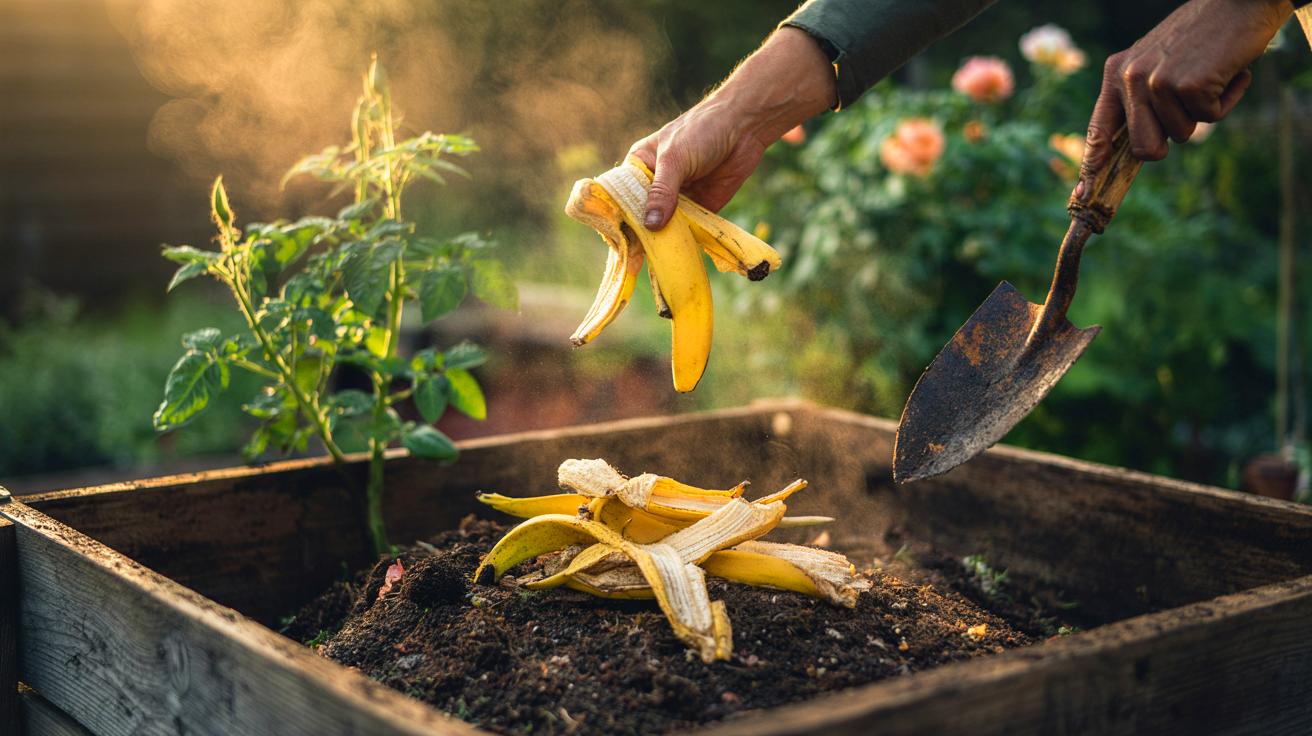
Method 1: Chop-and-drop in the bin. Snip peels into confetti and fold into the middle of an active pile. Aim for a balanced blend of “greens” (coffee grounds, fresh clippings) and “browns” (shredded leaves, cardboard) to keep moisture and oxygen in check. Bury peels at least six inches deep to deter pests and fruit flies. Turn weekly if you can. You’ll feel heat, smell a mild earthy sweetness, and watch the peels vanish in days.
Method 2: Dehydrate and powder. Dry peels in a low oven or dehydrator, then pulse into flakes or powder. Sprinkle as a top-dressing over soil, and cover with mulch. This is tidy, fast, and perfect for patio growers. The powder integrates smoothly and releases K steadily as microbes awaken. Add a dash to the worm bin, too—worms devour it without the stringy mess of fresh peel.
Method 3: Ferment for fast nutrients. In a sealed bucket or bokashi system, peels break down anaerobically, preserving nutrients and creating a pre-digested feed that compost piles finish quickly. Some gardeners try “banana peel tea,” but plain water extracts surprisingly little. If you want a liquid feed, ferment first or compost fully and brew from finished compost. Your plants will see the difference, and so will your nose—fermentation smells contained, not sour.
Balancing the Pile: Pairings, Timing, and Safety
Don’t let peels fly solo. Pair them with nitrogen-rich inputs like coffee grounds or kitchen trimmings, then buffer with browns so the mix breathes. Think rhythm: one handful peels, one of grounds, two of leaves. Keep the pile damp as a wrung sponge. If it slumps or smells, you need more browns; if it stalls, more greens and a quick turn. Banana peels shine brightest inside a balanced, well-aerated system.
Pest and residue concerns? Freeze peels 24 hours to kill hitchhiking fruit fly eggs, then thaw and chop. Wash if you worry about surface residues; hot composting helps degrade many. In small containers, avoid overdoing it—excess K can nudge magnesium or calcium out of balance. Use finished compost modestly and observe plant response. Remove fruit stickers before composting; they’re sneaky microplastics.
| Scrap | Key Nutrients | Best Use | Watch-outs |
|---|---|---|---|
| Banana peels | High K; some P, Ca, Mg | Chopped in pile; powdered top-dress | Pest attraction if left exposed |
| Coffee grounds | Moderate N; micronutrients | Mix with browns for aeration | Compaction if used alone |
| Eggshells | Calcium | Crushed fine for faster release | Slow to break down |
| Citrus peels | Trace elements | Sparingly; chop small | May slow worms if overused |
Science Snapshot and Real-World Results
Horticultural studies consistently document high potassium levels in banana residues, and gardeners have long noticed the practical upshot: stronger flowering and improved drought resilience when compost enriched with peels hits the soil. The mechanism is straightforward. Microbial decomposition releases soluble K that roots can access quickly, while the peel’s fibers help create the crumbly structure that keeps oxygen flowing. It’s a one-two punch: nutrient availability plus physical soil improvement. That synergy is why a tablespoon of peel powder can perk up a tired pot, and why a well-managed heap darkens faster after a few breakfasts’ worth of scraps.
Field anecdotes aren’t laboratory trials, but patterns repeat. Tomatoes and roses respond vividly, as do container citrus and peppers that mine K for flowering. In side-by-side tests run by community gardens, beds receiving peel-enriched compost often green up sooner, with foliage that resists midday wilt. There’s no silver bullet in gardening. Still, the banana peel comes close to a pocket-sized amendment that slots seamlessly into routines you already have: eat, compost, grow, repeat. The cost is nothing. The return can be lush, colorful, and delicious.
Turn your next peel into strategy. Save a jar, fill it with chopped skins, and feed your compost like a chef seasoning a pot—pinches, not piles. Blend with browns, keep moisture right, and watch the bin come alive as microbes sprint and the heap warms. That heat and sweet earthy scent mean nutrients are moving. In a season, your “dull compost” gains a kick that plants translate into vigor you can see. Where will your first banana-powered harvest show up—roses, tomatoes, or a patio pepper that refuses to quit?
Did you like it?4.6/5 (27)