In a nutshell
- ☕ Coffee grounds act as a reliable “green” input, delivering steady nitrogen with a C:N of ~20:1, making them cleaner and more consistent than many kitchen scraps.
- 🔬 Hitting the optimal carbon-to-nitrogen ratio (25–30:1) fuels microbial activity, boosting heat and speed while reducing ammonia losses.
- 🛠️ Use grounds wisely: keep them under one-quarter of total volume, layer thinly with browns, mix evenly to prevent matting, and maintain moisture like a wrung‑out sponge; torn paper filters add carbon.
- 📈 Expect results: higher internal temperatures, faster breakdown, better structure and airflow, fewer odors and pests, and a finished compost that smells earthy and screens cleanly.
- 🧪 Monitor and adjust: cold piles need more greens; ammonia smells call for browns and aeration; go easy in worm bins, and try a simple experiment by comparing a pile with and without grounds.
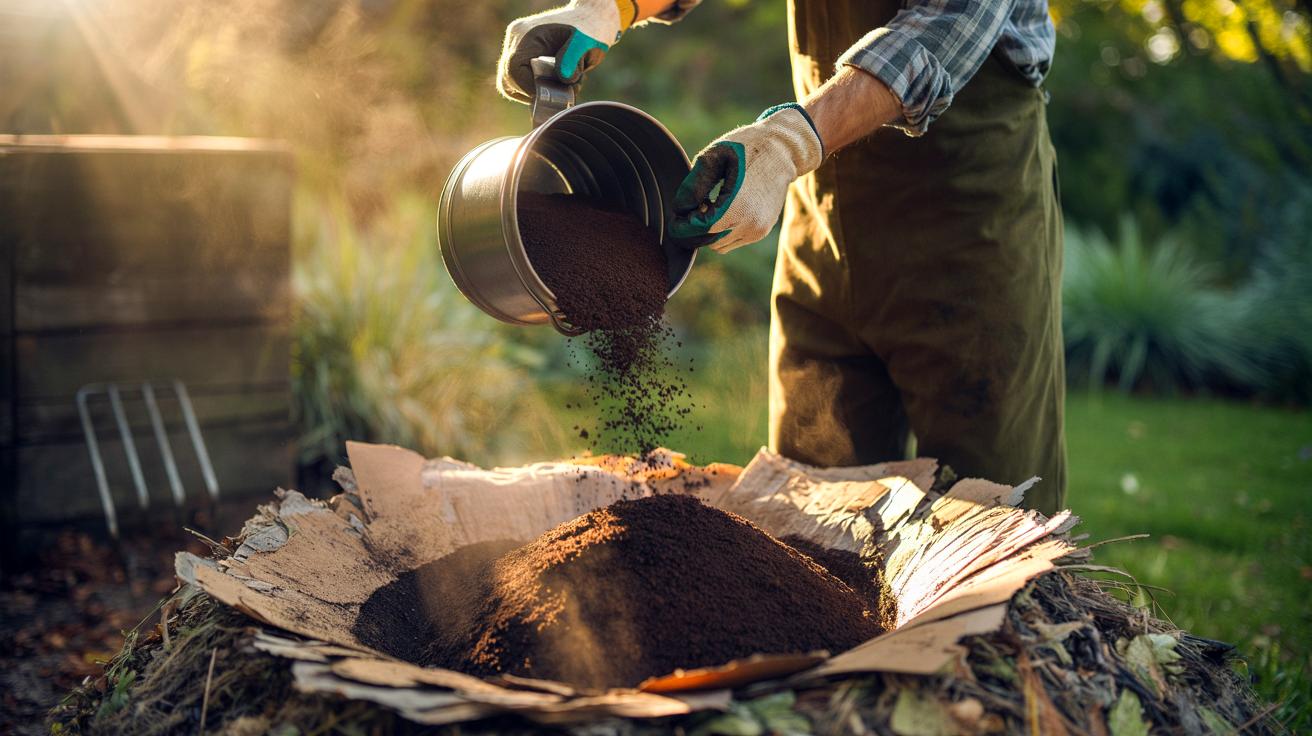
Open the kitchen cabinet, and you might find the solution to a sluggish compost pile hiding in plain sight. Scientists and extension specialists increasingly point to coffee grounds as a simple way to nudge compost toward a better nitrogen balance, helping microbes break down tough yard debris faster and cleaner. The idea is elegant: add a consistent, high-nitrogen “green” to offset all that dry carbon from leaves, cardboard, and wood chips. Used coffee grounds deliver a reliable nitrogen boost without the odor and mess of meat or dairy scraps. For home gardeners trying to hit that sweet spot of microbial activity, this kitchen staple is emerging as a practical, evidence‑backed lever.
Why Coffee Grounds Change the Compost Equation
Compost thrives when the carbon-to-nitrogen ratio hovers around 25–30:1, a range where microbes eat, reproduce, and heat the pile with impressive speed. Coffee grounds, at roughly 2% nitrogen and a C:N near 20:1, function as a strong “green” that can lift a carbon-heavy mix out of neutral. Oregon State University and Washington State University Extension publications have repeatedly flagged grounds as a consistent nitrogen source, especially compared with variable kitchen scraps. That consistency is key for small piles that struggle to maintain momentum.
There’s another benefit: structure. Damp coffee grounds interlock with shredded leaves and cardboard, improving contact between particles. That contact matters because microbes need proximity to food, moisture, and oxygen. Add too much, though, and grounds can mat, slowing airflow. The trick is simple and forgiving—layer or mix grounds with coarse browns. Many gardeners report faster heating, reduced ammonia whiffs, and a finished compost that screens cleanly and smells like forest soil. It’s not magic. It’s microbiology made visible in your bin.
The Science: Carbon-to-Nitrogen Ratios and Microbial Appetite
Think of microbes as tiny livestock with dietary needs. They require carbon for energy and nitrogen for proteins. When browns dominate—dry leaves, straw, sawdust—decomposition drags. Add a measured dose of high‑nitrogen grounds, and the pile rebounds. Research teams have documented higher internal temperatures, quicker material turnover, and fewer nitrogen losses to the air when ingredients land close to the 25–30:1 target. Balance reduces waste: too little nitrogen and the process stalls; too much and ammonia volatilizes. Coffee grounds help steer between those shoals.
| Material | Approximate C:N Ratio | Role in Pile |
|---|---|---|
| Coffee grounds | ~20:1 | Green nitrogen boost |
| Vegetable scraps | ~15–20:1 | Green |
| Fresh grass clippings | ~17:1 | Green |
| Shredded leaves | ~60:1 | Brown |
| Straw | ~80:1 | Brown |
| Sawdust | ~300:1 | Brown |
Notice where grounds sit on that spectrum: green, but not as wet or smelly as many kitchen leftovers. That makes them a favored “dial” for dialing in ratio without courting pests or leaks. When paired with coarse browns—think shredded stalks or chip mulch—grounds keep oxygen moving and microbes satisfied.
How to Use Coffee Grounds Without Creating Problems
Start small. A practical rule is to keep coffee grounds under one-quarter of your total volume at any one time, blending them evenly with browns. Sprinkle thin layers rather than dumping a thick, anaerobic mat. If you batch-compost, alternate: browns, grounds, other greens, then more browns. For continuous bins, mix as you add. Uniform mixing prevents clumps that starve the pile of air. If grounds arrive wet, fluff with shredded cardboard or dry leaves to restore texture and absorb excess moisture.
Watch signals. A hot center (120–150°F), earthy aroma, and steady volume loss suggest the ratio is right. Ammonia odors or flies? You’ve likely overdone the greens—add browns, turn for air. Cold and inert? Feed more grounds or other nitrogen sources, then moisten to a wrung‑out sponge feel. Spent paper filters are compostable and contribute carbon; tear them up to avoid layers. For worm bins, add grounds sparingly and balance with bedding to avoid acidity spikes. Above all, think in ratios, not recipes. Every batch of leaves, every bag of chips, is different. Grounds are your nimble correction tool.
Across trials, gardeners and researchers reach a similar verdict: coffee grounds are a reliable “green” input that raises nitrogen availability while keeping compost management simple. They’re plentiful, free from cafes, and easy to store short‑term in a sealed bucket. The payoff shows up in quicker heating, darker crumb, and plants that respond to the finished product with fuller growth. Still, every pile is its own ecosystem, shaped by climate, airflow, and the quirks of your feedstock. Will you run a small experiment—split your inputs in two, add grounds to one pile, log heat and smell—and see how far a humble kitchen habit can move the needle?
Did you like it?4.6/5 (28)