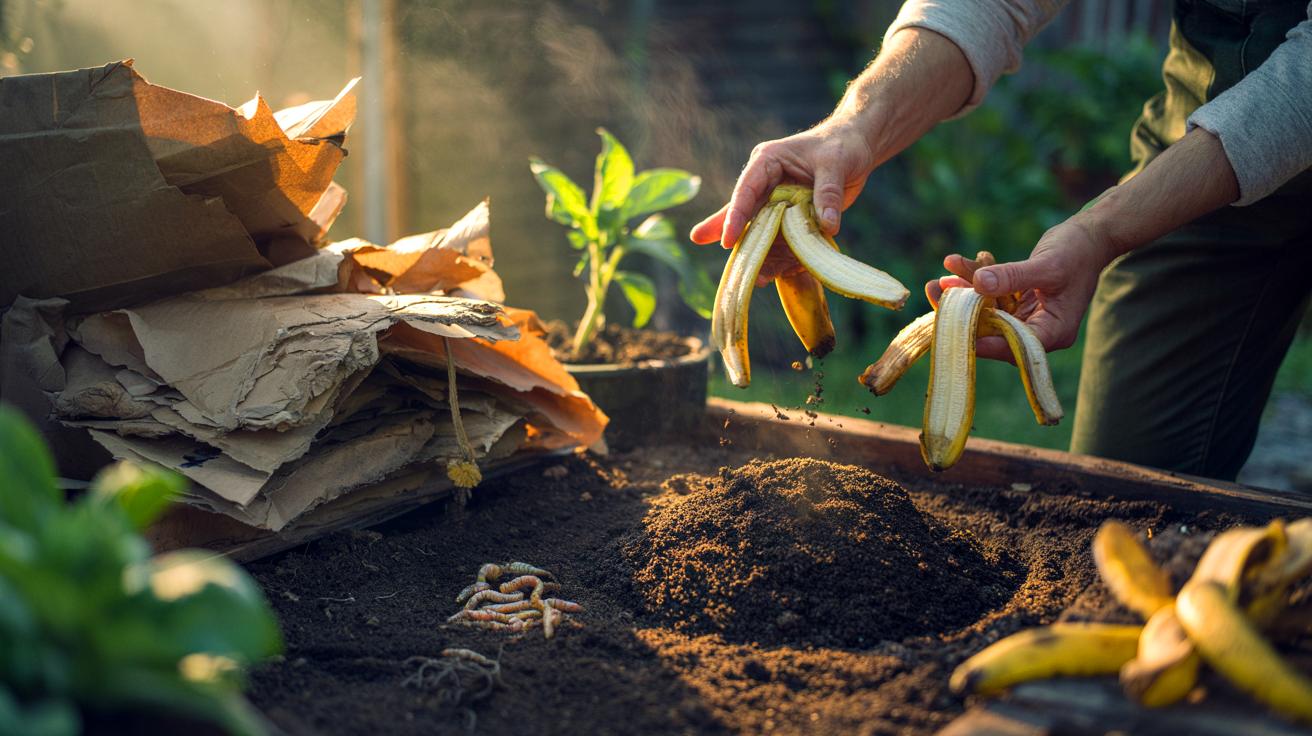
In a nutshell
- 🌱 Banana peels act as microbial fuel, with soft fibers and sugars that raise heat and speed breakdown, while delivering potassium, phosphorus, and calcium for nutrient-rich compost.
- 🧰 Prep for speed: slice into 1–2 cm pieces, blend into a slurry, or freeze–thaw to rupture cells; mix with browns to avoid mats, and bury 15–20 cm deep at a roughly 2:1 browns-to-greens ratio.
- 🔥 Manage the pile: keep moisture like a wrung-out sponge, turn every 3–5 days when the core hits 54–60°C (130–140°F), and add coffee grounds or manure if nitrogen lags.
- ⚠️ Myths and fixes: “banana peel tea” can’t replace compost; wash peels to reduce residues, cap with browns to stop fruit flies, and treat odors as a signal to aerate and rebalance.
- 🌾 Field tactics: try trench composting, use a handful of finished compost as an inoculant, and aim for a crumbly, earthy finish that feeds roots faster and more effectively.
Compost can dawdle. It slumps through cool months, sulks after rain, and refuses to heat when you need soil yesterday. The cure may be hiding in your fruit bowl. Banana peels carry a cocktail of potassium, phosphorus, and calcium, plus quick sugars that light a microbial fire. Shred them, balance moisture, and keep air moving, and you’ll watch a sleepy heap wake up. Small, strategic additions of banana peels can convert slow, carbon-heavy piles into a living engine that finishes fast. The trick is combining their chemistry with simple techniques any gardener can apply in an afternoon.
Why Banana Peels Supercharge Compost
Banana peels aren’t magic, but they behave like rocket fuel for microbes. They’re soft, low in lignin, and loaded with readily available carbohydrates that bacteria and fungi devour first. As they feast, heat rises, enzymes multiply, and tough plant scraps around them break sooner. The peel’s mineral profile is a bonus: abundant potassium (K) for root vigor, meaningful phosphorus (P) for flowering, and calcium (Ca) that helps aggregate soil and buffer acidity. Because peels are wet and sugary, they function as a “green” ingredient, even though their nitrogen content isn’t sky-high.
Chopped or blended peels can kick a stagnant pile into the thermophilic zone within days, provided air and moisture are right. That heat shortens the path from scraps to stable humus, and it also suppresses many weed seeds and pathogens. Think of peels as a primer: they energize microbes that then take apart leaves, stalks, and paper with surprising speed.
| Component in Peel | What It Does in Compost | Practical Impact |
|---|---|---|
| Potassium (K) | Regulates microbial osmotic balance | Enhances nutrient-rich, crumbly finish |
| Phosphorus (P) | Supports energy transfer (ATP) | Improves bloom and root development |
| Calcium (Ca) | Buffers acidity, aids flocculation | Better structure, fewer sour spots |
| Sugars | Instant food for microbes | Faster heat-up, rapid decomposition |
| Moisture | Prevents desiccation of the pile | Stable activity during dry spells |
| Soft Fibers | Break down with minimal lag | Shorter time to finished compost |
Smart Preparation and Application Methods
Particle size rules speed. Slice peels into 1–2 cm strips, or blitz them into a slurry with a cup of water and pour it through the pile’s core. Freezing first ruptures cells; thawed peels break apart faster. Drying is the opposite strategy: dehydrate, crumble, and sprinkle thinly for easy layering. The goal is maximum surface area without creating a dense, slimy mat that chokes airflow. Mix peels with shredded leaves or cardboard as you add them and you’ll prevent compaction.
Application matters just as much. Bury peels at least 15–20 cm deep to discourage fruit flies and rodents. In a bin, layer by volume: two parts browns (dry leaves, paper, straw) to one part greens (peels, coffee grounds, fresh grass). Trench composting is powerful for small gardens: sink peels in a narrow trench between rows and backfill; soil microbes do the rest, and nutrients release where roots will feed. If you brew “banana peel tea,” use it lightly and still compost the solids; liquids alone won’t build structure. A handful of finished compost or soil as a microbial inoculant jump-starts the party.
Balancing the Pile for Speed and Quality
Banana peels help, but balance wins races. Keep the mix airy with coarse browns—shredded sticks, stalks, or corrugated cardboard—to avoid oxygen drop-offs. Aim for a squeeze-test moisture target: when you compress a handful, it should feel like a wrung-out sponge, not drip. If the pile turns slimy after a peel binge, counter with a quick surge of dry browns and a vigorous turn. Turning introduces oxygen and redistributes those sugary peels so they don’t ferment in pockets.
Heat is the tempo. When the core tops 54–60°C (130–140°F), turn every three to five days until peak heat fades. That rhythm, paired with regular peel additions, keeps microbes in their athletic prime. Don’t overdo quantity: a family’s weekly peels are perfect for a 1 m³ bin, but a supermarket’s worth will swamp it. If nitrogen runs short and the pile stalls, add a green companion—coffee grounds, fresh grass, or a scoop of manure—to match the peel’s carbon and sugars. A light dusting of rock dust or ground eggshell can buffer acidity and round out minerals in the finished compost.
Common Myths, Risks, and Quick Fixes
Worried about pesticides? Most residues concentrate in the peel, but washing, trimming bruised spots, and hot composting reduce them dramatically. Avoid stickers—many “compostable” labels aren’t. Fruit flies swarming the lid? Bury peels deeper and add a 5–8 cm cap of browns after every feed. Odor is a signal, not a verdict: sour notes mean too wet, too tight, or too many peels in one spot. Fluff with a fork, mix in shredded leaves, and open side vents to let the pile breathe.
Another myth: “banana peel tea replaces compost.” It doesn’t. Liquids can deliver a blip of potassium, but they can’t build soil structure or stable organic matter. Some gardeners fear peels will raise potassium so high it locks out magnesium. In typical backyard volumes, that’s unlikely; balanced inputs and routine turning keep nutrients in check. If rodents visit, switch to trench composting or seal your bin, and always exclude peels from open piles in wildlife-heavy areas. The quick fix for a cold pile remains simple: add small, well-distributed peel pieces, restore the brown-to-green ratio, and turn until the center warms.
Banana peels won’t single-handedly rewrite nature’s rules, but they tilt the odds sharply in your favor. Their sugars spark microbial growth, their minerals enrich the finish, and their soft fibers vanish fast when paired with air and the right companions. Used thoughtfully, they convert a sluggish heap into fertile, earthy compost in a fraction of the usual time. What will you test first—thin slices layered with leaves, a frozen-then-blended slurry, or a quiet trench between tomato rows—and how will you measure the speed and richness of your results?
Did you like it?4.4/5 (23)