In a nutshell
- 🥔 Potato water acts as a gentle biostimulant, delivering starches and a nudge of potassium that feed soil microbes, improve stomatal function, and help drooping leaves regain turgor.
- ⚗️ Safe prep: boil unsalted potatoes, cool, strain; then use a 1:1 dilution (or 1:2 for sensitive plants). Never add salt/oil, and refrigerate leftovers for up to 48 hours only.
- 🌿 Best fits: foliage aroids (pothos, philodendron, peace lily), tropical ferns, and some indoor herbs respond well; use sparingly or avoid for succulents/cacti and treat orchids with extra caution.
- 🧭 Usage rhythm: water at the base every 2–4 weeks during active growth (monthly in winter), avoid soggy soil, and rinse cans to prevent residue that can attract pests.
- 🚫 Myths & fixes: it’s not a complete fertilizer; keep regular feeding and check basics—overwatering, light levels, drainage—while avoiding salted cooking water that can scorch roots.
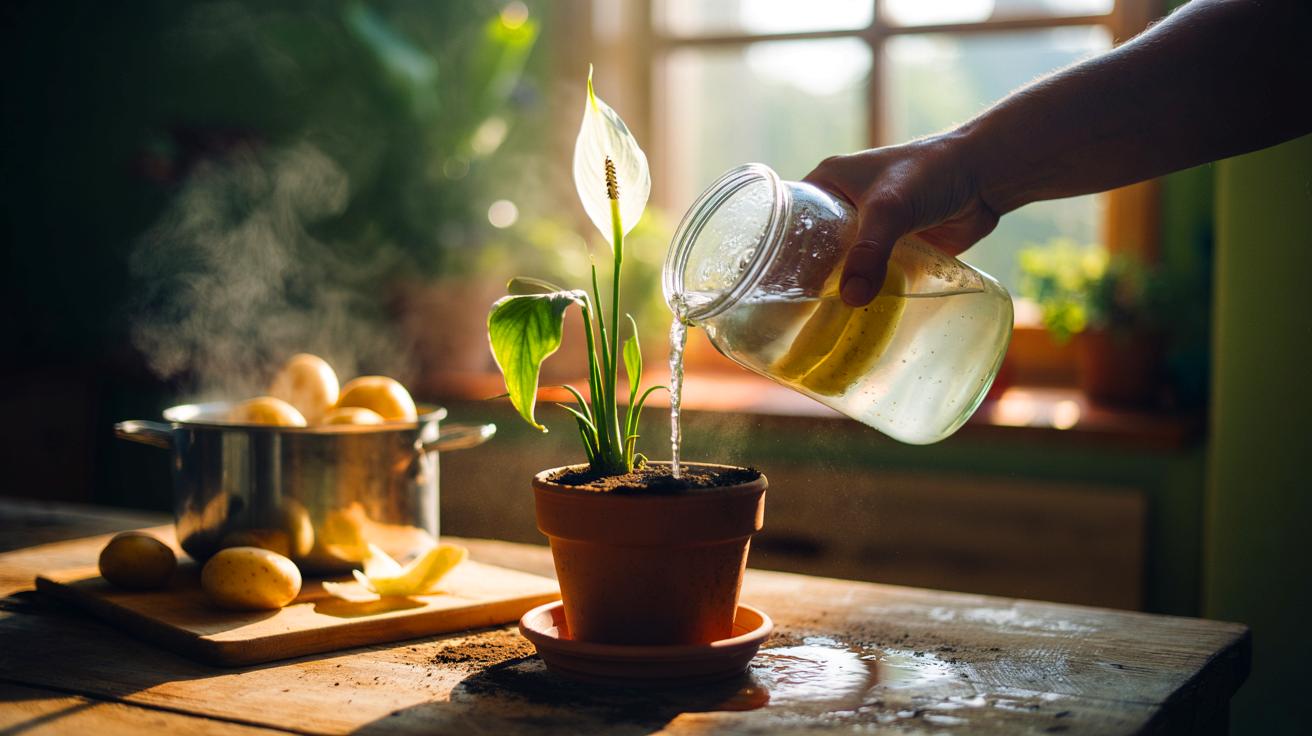
Houseplant owners know the dread: leaves droop, potting mix looks tired, and your watering can suddenly feels like a blunt instrument. The fix might be simmering in your kitchen. Gardeners are rediscovering potato water—the starchy liquid left after boiling potatoes—as a gentle tonic that helps revive sad containers without pricey additives. It’s not magic, but it’s smart biology. The water holds starches and trace minerals that feed soil microbes and support plant resilience. Used correctly, it perks up foliage, improves turgor, and coaxes new growth. Think of it as a biostimulant, not a full fertilizer. Here’s how the humble spud’s leftovers can bring a wilting windowsill back to life.
Why Potato Water Works for Plants
When potatoes are boiled—without salt—the water captures dissolved starches, a smidge of potassium, and small amounts of phosphorus and magnesium leached from the tuber and skin. Those starches act as a mild carbon source, feeding beneficial soil microbes that, in turn, make existing nutrients more available to roots. The result isn’t a fertilizer surge but a nudge to the plant’s rhizosphere. That micro-level boost often translates into crisper leaves and improved hydration within a day or two.
Potassium is the headline mineral here. It helps regulate stomatal function—the tiny pores that control water loss and gas exchange—so foliage maintains turgor and color under stress. In plain English: better potassium access can help a thirsty plant stay upright. The carbohydrate content also slightly thickens the water, which slows percolation through the potting mix, letting roots sip longer. Importantly, the nitrogen content is minimal. Potato water doesn’t replace balanced feeding; it complements it.
Scientists and horticulturists would describe potato water as a low-strength biostimulant. It won’t rescue a plant from root rot or total darkness, but it can tip borderline conditions in your favor. You get a small, steady assist for recovery after repotting, travel-induced neglect, or seasonal stress—precisely when drooping is most common.
How to Make and Use Potato Water Safely
Start with two to three unseasoned potatoes. Cover with fresh water and simmer until tender. Strain the liquid and let it cool completely. Never add salt, butter, oil, or spices—culinary add-ins can burn roots or invite pests. For a stronger microbial snack, scrub but don’t peel; many minerals concentrate in the skin. If you’re not cooking, you can also soak clean peels in hot water for 30 minutes, then strain.
Dilution matters. Mix the cooled liquid 1:1 with clean water for typical houseplants, or 1:2 for sensitive species. Water at the base until excess drains from the pot, but don’t drench already-soggy soil. Apply every two to four weeks during active growth, and once monthly in winter if light is adequate. If you recently fertilized, wait a week before trying potato water to avoid compounding stress.
Storage and sanitation are key. Keep leftover liquid in a sealed jar in the fridge for up to 48 hours—no longer—or it may ferment, sour, and attract fungus gnats. Rinse watering cans after use to prevent residue buildup. If leaves are dusty, gently wipe them; cleaner surfaces transpire better, making the most of the potassium and microbial boost you’re providing.
Which Houseplants Love It—and Which Don’t
Most leafy, fast-growing houseplants respond well to an occasional dose of potato water. Think pothos, philodendrons, and peace lilies—the kind that droop dramatically to signal thirst and bounce back quickly. Ferns appreciate the gentle carbohydrate kick, too, especially in bright bathrooms where humidity is high. But not every plant is a candidate. Succulents and cacti prefer lean, fast-draining conditions and can resent the extra organic load. Orchids and carnivorous plants, sensitive to dissolved solids, need stricter water quality. Match the tonic to the plant’s native temperament, not just your pantry.
Use the guide below to decide where potato water fits on your shelf.
| Plant Type | Examples | Response | Frequency | Notes |
|---|---|---|---|---|
| Foliage Aroids | Pothos, Philodendron, Peace Lily | Good perk-up | Every 2–4 weeks | Potassium supports turgor; keep soil evenly moist |
| Tropical Ferns | Boston, Maidenhair | Moderate benefit | Monthly | Avoid waterlogging; stable humidity helps |
| Herbs Indoors | Basil, Mint | Noticeable pep | Every 3 weeks | Sunlight is still critical for vigor |
| Succulents/Cacti | Haworthia, Mammillaria | Use sparingly | Rare, if ever | Too much moisture risks rot |
| Orchids | Phalaenopsis | Cautious | Infrequent, diluted | Flush with pure water afterward |
When in doubt, test on one plant first. Observe for a week: firmer leaves, slight color lift, and steady new growth signal success. Any sour smell, algae crust, or fungus gnats means cut back or stop.
Troubleshooting and Common Myths
Myth One: “Potato water is a complete fertilizer.” It isn’t. While it offers starches and a nudge of potassium, it lacks balanced nitrogen and phosphorus for sustained growth. Keep your regular, dilute fertilizer on schedule, especially in spring and summer. Myth Two: “Any cooking water works.” No—pasta water is usually salted, and vegetable water can contain oils or seasonings. Salt is the fastest way to scorch roots and desiccate leaves.
If plants stay droopy, run a checklist. Probe the soil with your finger or a moisture meter to spot overwatering, the most common culprit. Inspect roots for browning or mushiness—signs of rot that no tonic can cure. Confirm light levels; many “low light” plants still need bright, indirect sun to recover. Ensure pots have drainage holes, and flush the soil monthly with plain water to prevent mineral accumulation.
Worried about pests or smells? Strain the liquid thoroughly and avoid leaving residue on the surface of the soil. Water early in the day so foliage dries by evening. If you see gnats, let the top inch of soil dry and use sticky traps for a week. Potato water should be a gentle assist, never a crutch for poor light, bad drainage, or chronic overwatering. Treat it like a journalist’s favorite source: helpful, but always verified by other evidence—healthier roots, proper care, and time.
In a season of plant “miracle cures,” the humble spud offers something better: a simple, low-cost biostimulant that plays well with good habits. Make it clean. Dilute it smart. Watch your plants, not the hype. Over a few waterings, you’ll notice firmer leaves, fresher color, and fewer panicked searches for new fertilizer. The real secret is consistency—plus the courage to test, observe, and adjust. What plant on your windowsill will you try this with first, and how will you measure the difference in its recovery?
Did you like it?4.6/5 (22)