In a nutshell
- 🌿 Banana peels help plants look instantly greener by cleaning dust and adding a subtle sheen; the quick change is mostly cosmetic, while deeper color develops with improved soil health.
- 🍌 Peels supply potassium (K), plus calcium and magnesium, supporting chlorophyll function and sturdy foliage—yet they’re not a high-nitrogen fertilizer, so pair with a balanced feed if leaves stay pale.
- 🧪 Three proven methods: Leaf rub for instant shine, banana-peel “tea” for gentle K top-ups, and chop-and-compost for slow, reliable nutrient release in garden beds.
- ✅ Smart practice: dilute and strain “tea,” bury peels or compost rather than surface-placing, and test changes one at a time while tracking plant response with notes or photos.
- ⚠️ Key cautions: avoid raw peels in indoor pots (pests), don’t rub hairy or delicate leaves, and diagnose true chlorosis causes—often nitrogen or iron—before assuming a potassium fix.
Banana peels are the garden hack no one sees coming. They’re kitchen scraps, yet they carry a cache of plant-friendly compounds that can make foliage look richer, fresher, and yes, greener. Gardeners swear by them for a reason. Some effects are cosmetic and fast; others are slow, biological, and real. The trick is knowing which is which. Used right—as a gentle leaf rub, a diluted “tea,” or a compost booster—banana peels can support healthy leaf color while keeping costs low and waste even lower. The secret is matching the method to the plant and the moment. Here’s how the peel delivers.
Why Banana Peels Make Leaves Greener
Start with chemistry. Banana peels are rich in potassium (K), along with calcium, magnesium, and trace amounts of phosphorus. Potassium doesn’t directly build chlorophyll the way nitrogen does, but it regulates water movement and enzyme activity inside leaves, helping them use light more efficiently. That can translate to sturdier foliage and deeper hues over time. Calcium supports cell walls; magnesium sits at the heart of chlorophyll molecules. Together, those nutrients support the machinery that keeps leaves vibrant.
Then there’s the instant effect. Rubbing the white, fleshy side of a peel over dusty leaves lifts grime and deposits a whisper of natural waxes. The result: light reflects more evenly, colors pop, and leaves look freshly polished. That quick “green-up” is mostly an optical clean-and-shine, not overnight fertilization. Still, cleaner leaves can photosynthesize better within hours, especially on houseplants that collect dust. Longer-term greening depends on soil nutrition. Banana peels offer potassium, but they are not a high-nitrogen fertilizer. Pair them with a balanced feed if your plants show pale, uniform yellowing.
One more benefit: peels contain small amounts of antioxidants and sugars. In compost or a diluted soak, they can fuel microbial activity around roots. Healthier soil biology often correlates with steadier, richer foliage color. Think of banana peels as a helper, not a miracle.
How To Use Banana Peels: Three Proven Methods
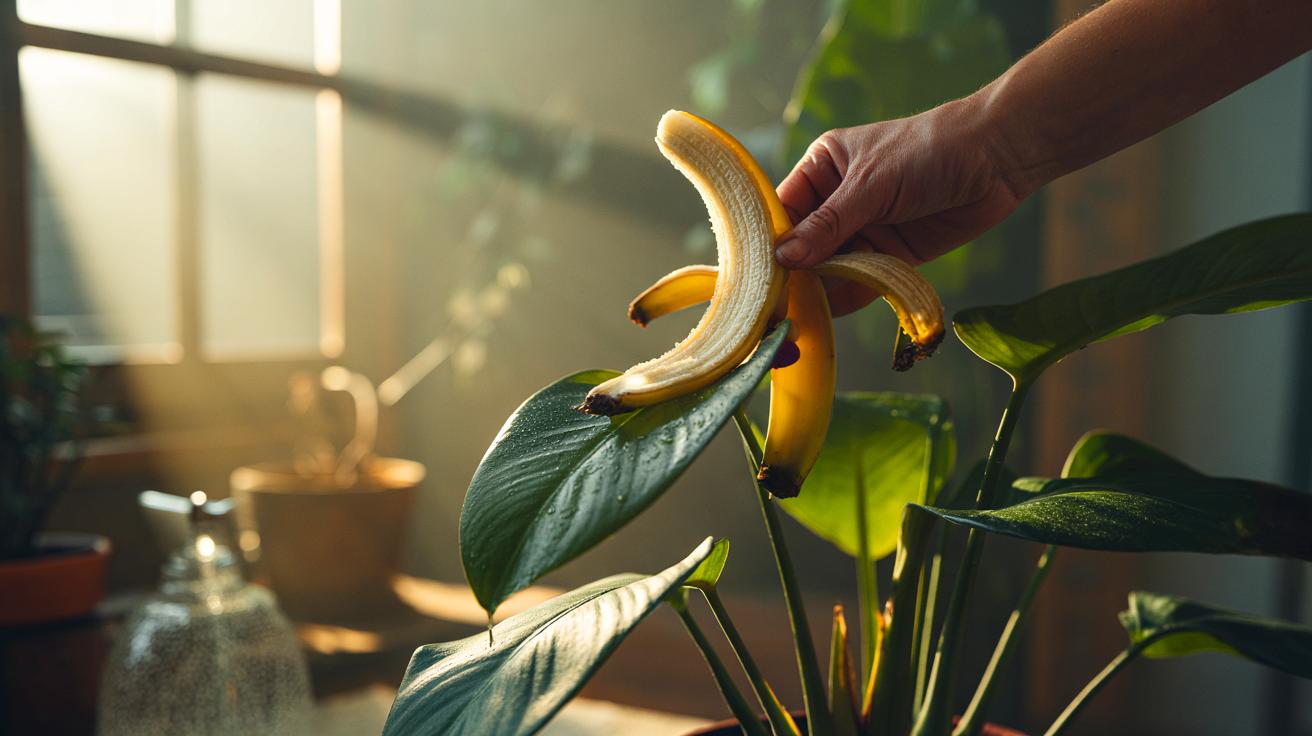
1) The Leaf Rub (Instant Visual Boost). Wipe the inside of a fresh peel across broadleaf plants—rubber plant, monstera, philodendron, ficus. Use a light hand, then buff gently with a soft cloth. You’re removing dust and adding a subtle sheen. Don’t rub tender, hairy, or rough leaves, which can bruise. Repeat every few weeks, not daily. Avoid dripping juice into soil indoors, which can attract gnats.
2) Banana-Peel “Tea” (Gentle Potassium Top-Up). Soak chopped peels in clean water for 24–48 hours, then strain well. Dilute one part tea to four parts water and water the soil, not the leaves. Expect incremental results over several weeks. Always strain and dilute; leaving bits in the pot encourages pests and odor. Use monthly during active growth for flowering annuals, fruiting peppers, and roses that appreciate extra K.
3) Chop-and-Compost (Reliable, Slow Release). Finely cut peels and bury them in an active compost pile or at least 6 inches deep in outdoor beds. Smaller pieces break down faster. The nutrients, especially potassium and calcium, return steadily to soil, supporting durable foliage color through the season. Don’t lay whole peels on the surface; they mold, smell, and invite rodents. Indoors, stick to compost or tea, not raw scraps.
Whichever method you choose, track plant response. If new leaves remain pale or growth stalls, add a balanced fertilizer with nitrogen. Banana peels are a complement, not a cure-all.
Smart Dos and Don’ts for Houseplants and Garden Beds
Do test the easy win first: the leaf rub on sturdy, smooth foliage. It’s fast, safe, and reveals the visible impact of clean leaves. Do chop peels finely for compost, and keep moisture balanced so they break down, not rot. Do use a diluted peel soak sparingly during peak growth; it’s a nudge, not a meal. Observe your plants for two weeks after each application to avoid stacking variables.
Don’t tuck raw peels into indoor pots. That’s an open invitation to fruit flies and fungus gnats. Don’t assume potassium replaces nitrogen; chlorosis often signals N or iron issues, not a K shortage. If leaves yellow between veins on new growth, consider iron chelate rather than more banana. Don’t over-soak peels for days; anaerobic stews smell and can stress roots.
Placement matters outdoors. Bury peels away from stems to avoid localized rot and curious critters digging near root crowns. In heavy clay, compost peels first to prevent slimy pockets. For edibles, incorporate matured compost before planting to drive steady color and resilience. A simple rule holds: clean leaves now, build soil for later. Combine peels with mulch, regular watering, and sunlight your plant actually wants. That trio, more than any single hack, sustains green leaves.
Quick Reference: Methods and Results
Use this snapshot to match your goal—cosmetic shine today or greener growth over weeks—to the right banana-peel approach. The timelines are realistic, and the risks easy to manage with basic hygiene and moderation. Choose one method at a time so you can see what truly works.
| Method | Fast Effect | When Nutrients Show | Best For | Risk Notes |
|---|---|---|---|---|
| Leaf Rub | Instant shine, cleaner look | None; cosmetic only | Houseplants with broad, smooth leaves | Avoid hairy/delicate leaves; don’t overdo |
| Peel “Tea” | Subtle hydration boost | 2–6 weeks | Flowering/fruiting plants needing potassium | Strain and dilute; pest control indoors |
| Compost | None immediately | Ongoing season-long support | Garden beds, perennials, shrubs | Bury or compost; avoid surface scraps |
Remember the hierarchy: cleanliness first, then nutrition, then patience. Banana peels shine as a low-cost supplement, especially where potassium is the missing link. For pale, hungry plants, pair them with a balanced fertilizer that supplies nitrogen and micronutrients. Keep notes, photograph leaves monthly, and adjust. Over time, the data will tell you whether this trick is a keeper in your specific soil and light conditions.
The banana peel trick endures because it fits real life: quick results for show, slow results for health, and nearly zero waste. Clean a leaf today, strengthen the soil tomorrow, and your plants meet you in the middle with richer color and steadier growth. For many gardeners, that’s the sweet spot—practical, frugal, satisfying. If you’ve got a bunch on the counter and a plant that looks a little tired, why not experiment? What plant will you try first, and which method will you test to see the greenest return?
Did you like it?4.5/5 (21)