In a nutshell
- 🌱 Why it works: a compost-activating mix of pantry leftovers delivers quick sugars, nitrogen, and minerals to feed microbes, maintain a 25–30:1 C:N ratio, and spark faster thermophilic heat.
- 📋 Simple recipe: combine dry “crumble” (coffee grounds, tea, eggshells, banana peel, crumbs) with a liquid booster (molasses + yeast or flat beer) and moisten layers to a “wrung-out sponge” texture—never soggy.
- 🧭 Adaptable and thrifty: tweak for seasons—more carbon in summer scraps, extra sugars/yeast in fall—and swap staples (honey for molasses, tea for coffee) while preserving the greens-to-browns balance.
- 🛡️ Troubleshooting: fix sour smells by aerating and adding dry browns; deter pests by burying activator, capping layers, and skipping meat/dairy; keep crumbs very dry in winter.
- 🔥 Safety and speed: aim for 131–149°F to curb pathogens and weed seeds, monitor with a thermometer, and use only the dry crumble in worm bins; result—quicker, odor-free, nutrient-rich compost.
Every composter knows the stall: a heap that sits, soggy or stubborn, refusing to heat up. The fix might already be in your kitchen. Gardeners are leaning on a compost-activating mix built entirely from pantry leftovers—coffee grounds, stale bread, banana peels, eggshells, even flat beer—blended to wake microbes and restore balance fast. It’s thrifty. It’s surprisingly scientific. And it turns what you’d normally toss into fuel for your soil. The secret isn’t a miracle powder but a precise blend of sugars, minerals, and nitrogen that flips your pile from idle to active. Here’s how the mix works, the ratios that matter, and how to tailor it to your bin without buying a thing.
Why This Pantry Activator Works
Composting is a microbial economy. Feed the workforce wisely and they repay you with heat, speed, and crumbly humus. This pantry-born activator centers on readily available sugars (molasses or brown sugar), which act like rocket fuel for bacteria, unlocking a quick bloom of activity. Coffee grounds and tea leaves deliver nitrogen and a porous texture that improves airflow. Dried banana peels contribute potassium, boosting plant nutrition in the finished compost. Crushed eggshells add calcium and a gentle pH buffer, stabilizing acidic spikes that can slow the process.
Then comes the push. A splash of yeast stirred into warm water—or even flat beer—seeds the pile with fermenters that multiply fast, creating metabolites that compost bacteria capitalize on. Bread or oat crumbs serve as a light, carbon-rich scaffold, improving structure and easing compaction in food-heavy bins. Hit the classic balance—about a 25–30:1 C:N ratio—and piles heat reliably. The result: faster thermophilic heat, fewer odors, and a shorter path to finished compost.
The Simple Recipe: Ratios, Tools, and Steps
Think of this as a two-part activator: a dry “crumble” plus a quick liquid booster. Both pull from leftovers you already have, so the mix is flexible. Keep proportions, not perfection. Aim for enough to lightly coat a 3-by-3-foot layer of your compost; scale up or down as needed.
| Pantry Leftover | Role | Amount per Batch | Notes |
|---|---|---|---|
| Coffee grounds | N source, texture | 2 cups | Used or fresh; avoid pods’ plastic |
| Tea leaves | N source | 1 cup | Open bags; no synthetics |
| Crushed eggshells | Calcium, pH buffer | 1/2 cup | Rinse, dry, pulverize |
| Dried banana peel flakes | Potassium | 1 cup | Air-dry, chop small |
| Stale bread/oat crumbs | Carbon, structure | 1 1/2 cups | Dry to prevent clumping |
| Molasses or brown sugar | Bacterial food | 2 tbsp | Blackstrap preferred |
| Yeast or flat beer | Inoculant | 1 tsp yeast or 1 cup beer | Optional but potent |
| Warm water + rice rinse water | Liquid carrier | 1 qt + 1 cup | Not boiling; 95–110°F |
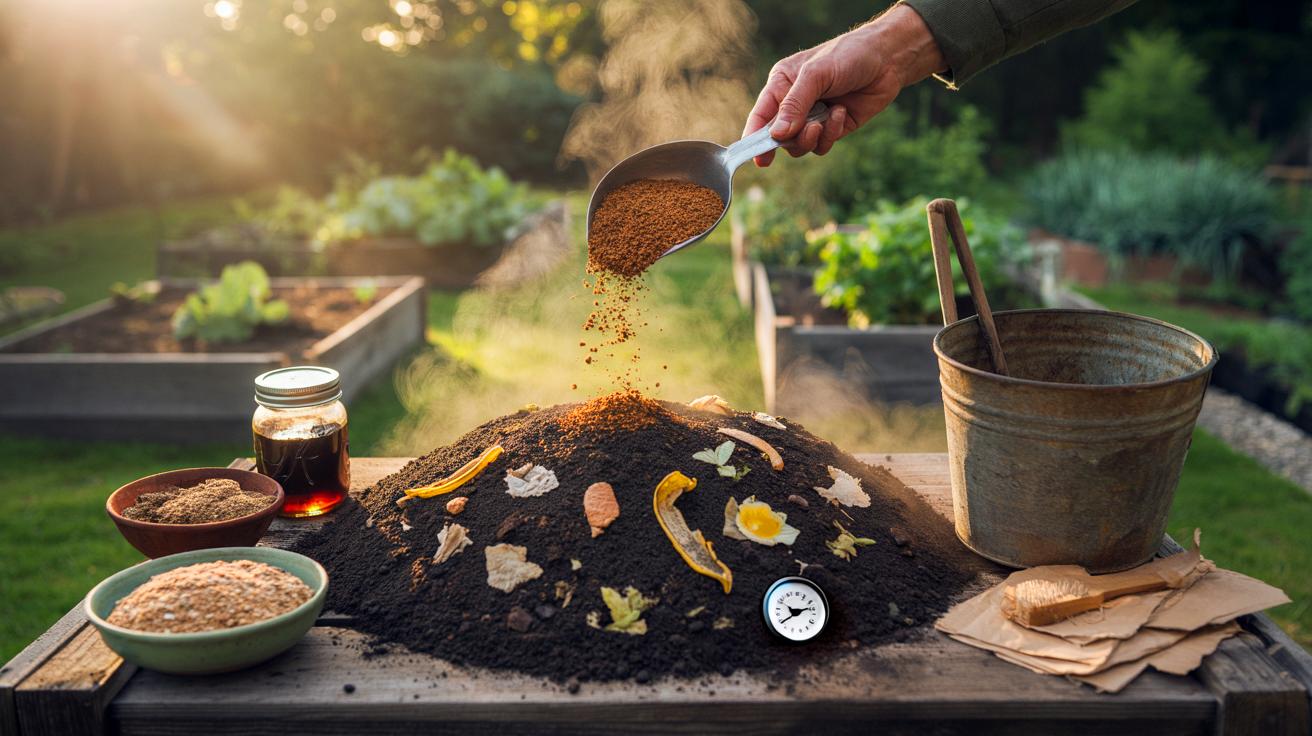
Steps: Mix the dry ingredients in a bucket. In a separate jar, whisk warm water with molasses; add yeast or beer and the rice rinse water. Layer your compost (4–6 inches), sprinkle a handful of dry crumble, and drizzle the liquid until the layer feels like a wrung-out sponge. Repeat. Do not drown the pile—aim for moist, not soggy. Cap with browns (leaves, shredded paper) and aerate within 48 hours to stoke heat.
Smart Variations for Seasons and Materials
Compost isn’t static; your activator shouldn’t be either. In summer, when kitchen scraps surge, emphasize carbon-heavy crumbs and an extra handful of dried banana peel to keep structure while adding minerals. If your bin runs cold in fall, lean on molasses and a full teaspoon of yeast to spark a faster bacterial bloom as temperatures dip. Winter piles benefit from very dry crumbs and a smaller liquid dose to prevent freezing clumps, plus more eggshells for buffering.
No coffee? Use spent tea or the dusty bottom of a cereal bag for carbon. No molasses? A spoon of honey or table sugar works, though it’s less nutrient-dense. Flat beer substitutes for yeast when you’re out. If you dehydrate onion skins or citrus peels, add sparingly—aromatics are fine in small amounts but can slow worms and microbes when overused. Customize, but keep the greens-to-browns balance in view. When a layer feels wet or compacted, double the crumbs; when it looks dry and papery, bump up coffee/tea and liquid.
Troubleshooting and Safety: Smells, Pests, and Pathogens
Smell test failing? If it’s sour or sulfurous, your pile likely went anaerobic. Fork it open, add a generous sheet of dry crumbs and shredded leaves, then reapply only half the liquid booster. Odor-free composting is possible when aeration and moisture are in check. Fruit flies swarming? Bury the activator deeper and cap each layer with two inches of browns. Rodents investigating? Skip bread in outdoor bins or pre-dry it to rock-hard crumbs; always cap with carbon and cover the bin.
On safety, the target is heat. A well-fed pile should hit 131–149°F for several consecutive days to reduce weed seeds and pathogens. The sugar-and-yeast combo helps you reach that threshold sooner. Use a compost thermometer, or at least feel for warmth at the core within 48–72 hours. If you manage a worm bin, use the dry crumble only, and in tiny doses—no liquid booster—to avoid overheating. Never add meat, dairy, or oily sauces to this activator. They attract pests and stall decomposition. Gloves, clean tools, and common sense keep the process healthy from start to finish.
This kitchen-sourced activator isn’t magic; it’s a tuned response to what microbes ask for: energy, minerals, air, and the right moisture. By converting pantry leftovers into a reliable starter, you speed decomposition, tame odors, and return more nutrition to the beds that feed you back. The method scales, adapts, and costs almost nothing. Once you learn the signals—texture, smell, temperature—you can adjust on the fly and keep the pile cooking. What will your first batch include, and how will you tweak the mix to match your climate, your scraps, and your soil goals?
Did you like it?4.5/5 (28)