In a nutshell
- 🔬 Eggshells are ~95% calcium carbonate, delivering gentle pH buffering, micro-abrasion, and extra surface area that accelerates microbial attachment and enzyme activity.
- 🌬️ Crushed shells act like micro gravel, boosting aeration, porosity, and moisture balance; a blend of powder, small shards, and coarse pieces prevents compaction and keeps oxygen flowing.
- ⚡ Stabilized pH supports thermophilic microbes, cutting odors and anaerobic slowdowns—proof that stability equals speed in turning scraps into finished compost.
- 🧰 Practical use: rinse, dry, then crush; sprinkle about a handful per gallon of wet scraps and pair with browns to preserve a 25–30:1 C:N ratio; pre-drying increases safety and reactivity.
- 🪱 Bonus wins: shells provide worm grit, reduce smells, and add slow-release calcium without risking over-fertilization—an affordable, reliable upgrade to any compost routine.
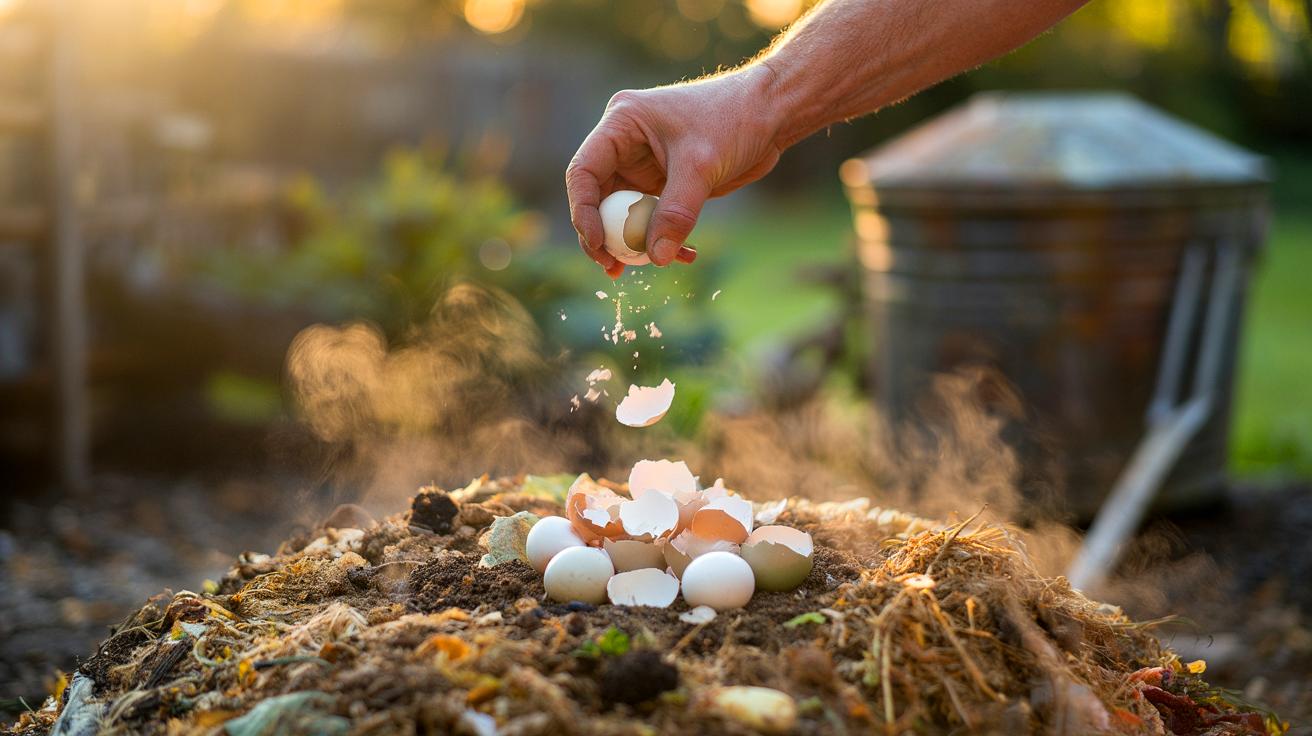
Backyard composters chase one goal: a faster, fluffier heap that turns kitchen scraps into rich soil food. Crushed eggshells do surprising heavy lifting here. Their mineral makeup, jagged edges, and slow release chemistry help microbes breathe, move, and digest. That means fewer slimy pockets and more steady heat. It also means fewer smells. With a small prep step—dry, crush, sprinkle—you can nudge a pile toward balance without buying additives. Adding shells is not a gimmick; it’s a reliable, low-cost accelerator for texture and decay. Understanding why those fragments work will change how you build every future batch.
The Science Inside an Eggshell
Eggshells are built from calcium carbonate—about 95 percent—bound with trace minerals and a protein-rich membrane. In a compost pile, this matrix offers two major advantages: buffering capacity and micro-abrasion. The carbonate moderates swings in pH, resisting the souring that slows decomposers when “greens” dominate. The shell’s rigid, gritty fragments create new surfaces for microbes to colonize and help break apart sticky food waste. Every shard increases usable surface area, which speeds microbial attachment and enzyme action. That’s the quiet engine of faster rot.
Calcium also matters biologically. Many bacteria and fungi rely on calcium ions to stabilize cell walls and optimize enzymatic processes. Worms and arthropods use the grit to macerate food. Meanwhile, the inner membrane—often discarded—adds a whisper of nitrogen and amino acids that jump-start early microbial growth. Shells don’t vanish overnight; they dissolve slowly as organic acids nibble them down. That slow burn is helpful. It sustains a moderate, microbe-friendly environment as the pile heats, cools, and reheats, keeping activity humming instead of sputtering out after a hot burst.
Texture, Aeration, and Moisture Management
Compost fails when it compacts. Water floods pores, oxygen drops, and rot turns anaerobic. Crushed eggshells act like micro gravel, propping open channels that air and heat can travel through. Porosity improves. Odor falls. Dry and wet zones even out. Gritty fragments interrupt clumps of wet vegetable matter, preventing the “pudding layer” that suffocates a pile. That mechanical benefit is immediate, unlike the slow chemistry of minerals dissolving. Mix shells through “greens” such as melon rinds, coffee grounds, or lettuce trimmings and you’ll feel the difference when you turn the heap—lighter, springier, better.
Particle size is your lever. Powder dissolves faster and buffers pH effectively. Coarse bits resist breakdown and hold tiny air pockets. Aim for a blend. A rolling pin or mortar creates a mixed crush that does both jobs: quick microbial traction and longer-lasting structure. Below is a quick guide you can reference as you prep.
| Particle Size | Primary Benefit | How To Use |
|---|---|---|
| Powder (flour-like) | Fast buffering, quick microbe access | Dust over wet “greens” and mix thoroughly |
| Small shards (rice-sized) | Aeration, moderate longevity | Layer with kitchen scraps to prevent clumping |
| Coarse pieces (pea-sized) | Long-term structure, worm grit | Blend into bottom or center of pile |
The right mix of sizes creates both immediate airflow and sustained texture, keeping microbes supplied with oxygen while moisture stays in the Goldilocks zone—damp, not soggy.
Speeding Up Decay Without Upsetting Balance
Hot composting thrives around a neutral pH and reliable oxygen. That’s exactly where shells help. The carbonate matrix resists acid dips from fruit waste and coffee, stabilizing microbial communities that digest cellulose and lignin. Stability equals speed. With pH swings tempered, thermophilic microbes stay active longer, building consistent heat that chews through yard waste. At the same time, the aeration shells provide curbs methane-producing anaerobes, so energy goes into decomposition rather than stink. Faster decay is often less about adding fuel and more about removing bottlenecks—low oxygen and pH crashes.
Use prudent amounts. Shells are not a fertilizer bomb; they release calcium slowly and scarcely move a soil test needle in the short term. That’s good news—hard to overdose. Still, aim for balance: roughly a handful of crushed shells per gallon of wet scraps, scaled to pile size. Pair them with dry browns like shredded leaves to maintain the carbon-to-nitrogen ratio near 25–30:1. For speed, pre-dry shells in a low oven or sunny window, then crush fine. This boosts surface area, reduces pathogen risk, and integrates evenly through the mass, ensuring the buffering and aeration work where it counts—between sticky bits of food waste.
To get the most from eggshells, keep prep simple. Rinse lightly, dry fully, then crush. Whole, glossy halves can persist for years; the magic is in the fracture. Store a jar of powder and shards near your scrap pail and sprinkle as you go. Turning the pile? Add another shake, especially after rain when compaction spikes. Worried about pests? Clean, dry shells have little odor, and their mineral scent fades quickly once mixed. If you run a worm bin, shells are superb grit for gizzards and a gentle buffer against acidity from fruit-heavy diets. Think of eggshells as a low-cost, always-available structural amendment—one that plays well with coffee grounds, grass clippings, and autumn leaves.
Eggshells won’t replace good habits, but they amplify them. They open space for air, temper acidity, and give microbes more footholds to work faster and cleaner. That combination turns a sluggish heap into a resilient engine that keeps breaking down tough material even when weather swings or your feedstock changes. A small, steady sprinkle can shift your compost from inconsistent to reliable. Ready to test the difference with your next batch—what particle size blend will you try first, and where in your pile will you layer it for maximum impact?
Did you like it?4.7/5 (22)