In a nutshell
- ☕ Use used coffee grounds (green, ~20:1) paired with paper filters (brown, ~170:1) to hit the ideal 25–30:1 C:N ratio and keep your compost humming.
- 🧱 Apply thin layering: scatter grounds in quarter-inch sheets, cover with torn filter shreds, and turn lightly for even aeration; aim for “wrung-out sponge” moisture.
- 🛠️ Troubleshoot fast: sharp ammonia smells mean too many greens—add browns; sour, swampy notes signal low oxygen—fluff and layer thinner.
- 🔄 Smart variations: if using a metal filter, add paper towel or cardboard; watch for plastic in tea bags; for worm bins and small systems, dose grounds sparingly and store dry grounds for steady use.
- 🌱 Payoff: faster decomposition, fewer odors, richer crumb, and day-by-day consistency—turn your coffee habit into a reliable boost for soil health.
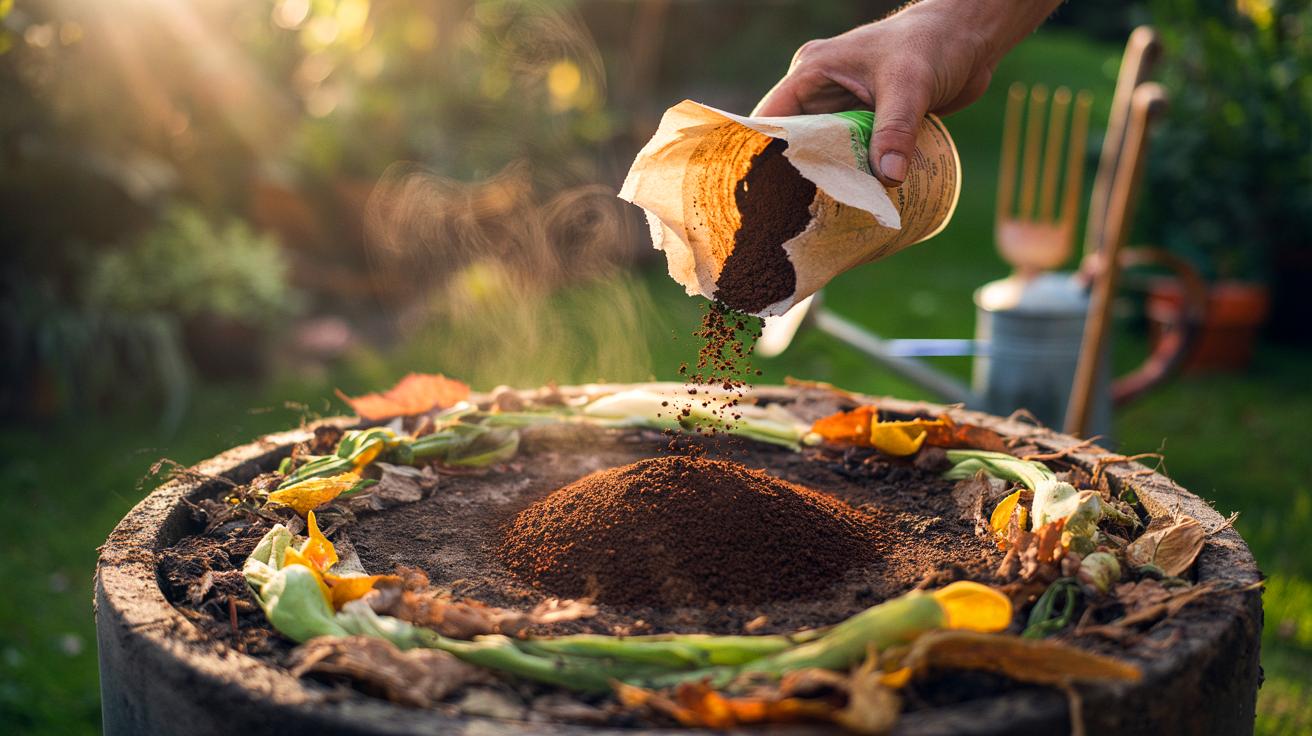
Compost is a living engine, and like any engine it hums when the mix is right. The trick is balancing “greens” (nitrogen-rich scraps) and “browns” (carbon-rich structure) so microbes feast fast without going slimy or stalling. Home composters hear formulas and ratios, then stare at a pail of peels wondering what to add. Here’s the elegant solution hiding in plain sight: your daily coffee routine. Used coffee grounds plus their paper filter can tune the entire pile. With a little layering and a few visual cues, this single kitchen staple becomes your metronome for heat, moisture, and speed.
Why Greens and Browns Matter
Think of compost as a newsroom deadline. You want speed without mistakes. Greens supply nitrogen, the protein that microbes use to build cells quickly. They include fresh yard clippings, fruit and vegetable scraps, and spent coffee grounds. Browns, loaded with carbon, provide energy and structure—dry leaves, shredded paper, cardboard, and yes, the paper filter from your morning brew. The sweet spot is a carbon-to-nitrogen ratio around 25–30:1. Hit that, and the pile heats, breathes, and shrinks on schedule.
Miss it, and problems appear. Too many greens produce odor, mats, and leachate; too many browns slow decomposition to a crawl. The goal isn’t math class—it’s consistency you can manage daily. That’s why the coffee trick works so well: it packages a predictable “green” and a dependable “brown” together, arriving at the exact cadence most households can keep. Every pot becomes an easy, ready-made adjustment knob for your bin or tumbler.
The Coffee Trick: Grounds and Paper Filter
Here’s the science in a mug. Spent coffee grounds clock in near a C:N of about 20:1—definitively “green.” The paper filter often hovers around 150–200:1—pure “brown.” Blend them thoughtfully and you’re cruising toward the 30:1 target. One brew cycle can nudge a lazy, carbon-heavy pile back to life or tame a wet, smelly mass of greens. It’s adaptable, repeatable, and it leverages a habit many Americans already have.
For quick reference, match your morning routine to this snapshot:
| Material | Type | Typical C:N Ratio | Notes |
|---|---|---|---|
| Used Coffee Grounds | Green | ~20:1 | High nitrogen, slightly acidic; heats piles fast. |
| Paper Coffee Filter | Brown | ~170:1 | Shred or tear to speed breakdown and prevent matting. |
| Healthy Compost Target | Mix | ~25–30:1 | Stable heat, minimal odor, steady shrinkage. |
In practice, a typical pot yields far more grounds than paper by weight. That natural imbalance conveniently drifts the blend toward the target range. If you brew with a metal filter, add a paper towel, a brown paper bag strip, or cereal-box cardboard to mimic the filter’s carbon bump.
How to Use It: Layering, Ratios, and Moisture
Keep it simple. After brewing, tear your paper filter into strips. Fluff the coffee grounds with a fork to break clumps. On the pile, go with micro-layers: a thin scatter of grounds (no more than a quarter-inch) followed by the filter shreds. Repeat once more if you’ve got a large batch. Thin layers prevent anaerobic mats and keep air moving. If your kitchen bucket is heavy with vegetable peels (very green), toss in an extra filter or a handful of shredded paper to compensate.
Moisture is the other lever. Grounds arrive damp, a boon in dry climates and a hazard in humid summers. Aim for “wrung-out sponge” moisture. If the pile looks glossy and clumpy, add more browns—filters, paper napkins, or leaf mold. If it’s dusty and slow, a fresh round of grounds or a splash of water revs it back up. Temperature tells the story: a warm center signals balance; a cold, wet mass begs for carbon and turning. Aeration matters—turn lightly after adding grounds to distribute nitrogen and oxygen evenly.
Troubleshooting and Smart Variations
Odor is your early warning system. Ammonia whiffs? You’ve pushed too green. Add more browns—start with extra filter shreds, then shredded mail or dry leaves. A sour smell hints at low oxygen. Fork the pile to fluff, then layer thinner next time. If your heap isn’t heating, it’s asking for protein and moisture—grounds deliver both, fast. Worried about acidity? Grounds are closer to neutral after brewing; the pile buffers pH quickly. Earthworms love the texture once decomposition begins.
No paper filters? Use alternatives that behave like them: unbleached paper towels, brown paper bag strips, or the cardboard ring from last night’s takeout. Tea is fair game, but check for plastic in bags—many contain heat-resistant polymers. Loose-leaf tea leaves act like greens; paper sleeves or tags act like browns. For balcony composters or worm bins, sprinkle grounds sparingly and pair with extra paper to avoid overheating small systems. Saving up weekend coffee? Dry the grounds on a tray to prevent mold clumps, then store in a breathable container for steady dosing during the week.
There’s a kind of newsroom satisfaction in turning routine into results. The coffee you already brew becomes a quiet metronome for your compost, delivering greens and browns in one grab-and-go package. The payoff is faster breakdown, fewer odors, and a richer crumb that feeds soil like a headline feeds clicks—reliably. The system scales, from a backyard bin to a countertop worm farm. Next morning, when the kettle sings, consider it your compost’s call time too. How will you tweak your coffee habit this week to fine-tune the heat, moisture, and tempo of your pile?
Did you like it?4.6/5 (28)