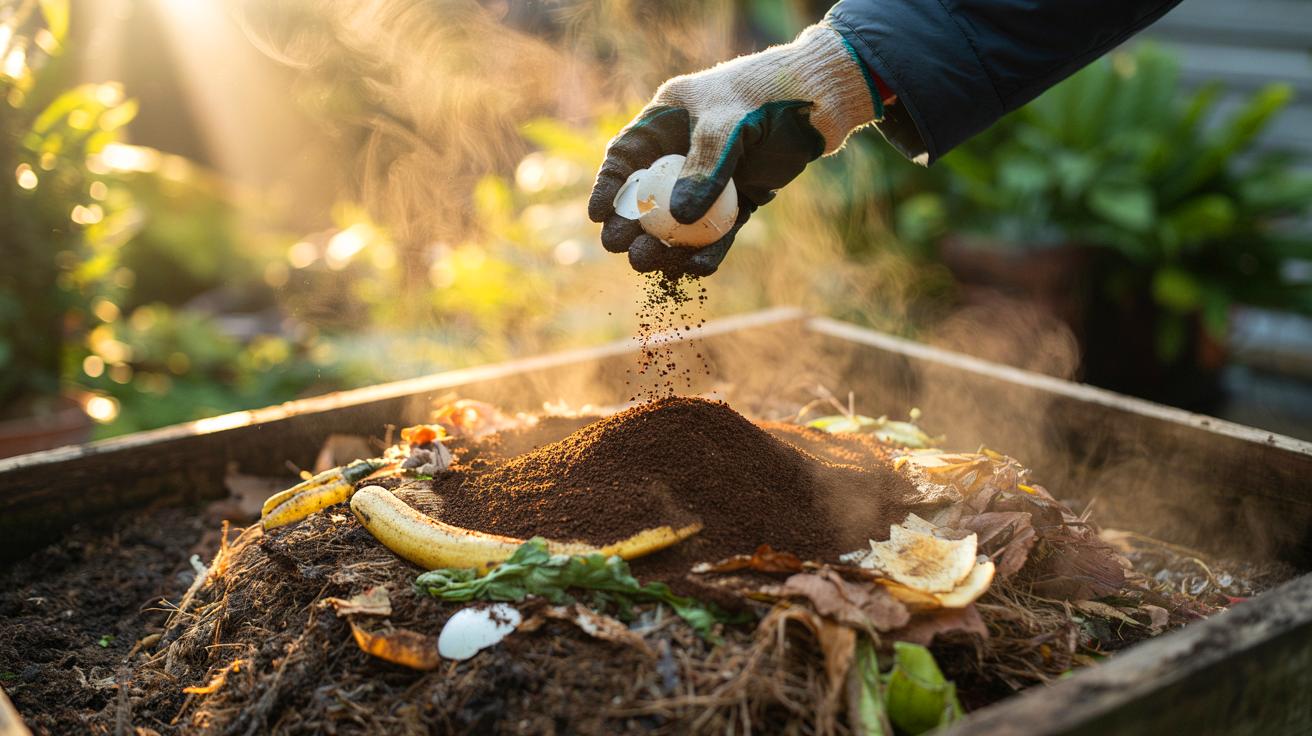
In a nutshell
- ☕ Use coffee grounds as a fast-acting nitrogen “green” to boost heat and microbes; they’re near-neutral pH and enhance aeration for rapid, thermophilic decomposition (130–150°F).
- 📚 Follow a ~2:1 ratio of browns to greens; sprinkle grounds thinly, keep moisture like a wrung-out sponge, chop scraps small, and turn often to maintain airflow and speed.
- 🥚 Add breakfast boosters: powdered eggshells for calcium, chopped banana peels for potassium/phosphorus, and shredded filters as carbon; skip fats and dairy to avoid pests.
- 🧪 Track simple metrics—temperature, smell, texture; fix ammonia odor with carbon and sour smells with aeration; expect finished compost in 4–8 weeks with the squeeze and seed tests as checks.
- 🔁 Build a rhythm: small, frequent inputs capped with browns keep piles hot and odor-free, producing dark, crumbly humus that powers healthier, higher-yield gardens.
Your morning routine can kick-start a backyard revolution. That spoon of spent espresso or drip-brew leftovers isn’t trash; it’s a secret accelerator for living soil. Add coffee grounds to your compost, and you feed the tiny workforce—bacteria, fungi, and invertebrates—that turns scraps into dark, crumbly humus. The result: faster decomposition, higher heat, and richer nutrients. Stir in a few other breakfast castoffs—think eggshells or a paper filter—and the process gains even more momentum. Small, regular inputs beat big, occasional dumps every time. Here’s how to reuse what’s on the breakfast table to build nutrient-dense compost in weeks, not months, without fuss or smell.
Why Coffee Grounds Turbocharge Compost
Used coffee grounds act like a shot of nitrogen for your pile. They’re considered a “green” input, despite the dark color, and help balance the C:N ratio toward the microbial sweet spot. That matters because microbes need nitrogen to reproduce, break down carbon-rich material, and generate heat. Used grounds are basically a fast-acting green feed for your pile. They also carry trace minerals—magnesium, potassium—and an ideal texture: fine yet porous. This structure keeps materials from compacting into anaerobic masses.
A common myth says grounds make compost too acidic. Not so. Spent grounds trend close to neutral, typically around pH 6.5–6.8. They won’t acidify your heap, and when blended with leaves or shredded cardboard, they help fuel thermophilic activity—those productive 130–150°F (54–66°C) cycles that rapidly sanitize and decompose. Another win: grounds retain moisture without turning soupy, creating a microclimate microbes love. Use them to kick a sluggish pile back into gear or to sustain momentum after turning. A handful added often beats a bucket added rarely.
How to Layer Grounds, Browns, and Greens
Think in layers and ratios, not ingredients. For speed, aim for roughly two parts browns (dry leaves, shredded paper, cardboard) to one part greens (kitchen scraps, fresh grass, coffee grounds). Sprinkle grounds thinly over a brown layer, then cap with more browns. Never dump a dense mat of grounds in a single layer; it can crust and block airflow. Mix lightly as you build to distribute moisture and nitrogen throughout the stack.
Moisture is nonnegotiable. The pile should feel like a wrung-out sponge—damp but not dripping. Grounds help, yet they’re not a substitute for turning. Aerate every 3–4 days for a week, then weekly. When the core climbs above 130°F, you’re on track. If it stalls cool, add a thin shake of grounds and a fluffed brown layer to reintroduce oxygen. Tear paper coffee filters into strips and treat them as carbon. Chop fruit peels small. Keep pieces under two inches to increase surface area. Small particles, thin layers, frequent turns—these three habits cut curing time dramatically.
Add Eggshells and Breakfast Scraps the Smart Way
Beyond grounds, breakfast offers strategic boosters. Crushed eggshells add calcium, buffering acidity and strengthening future seedlings against blossom end rot. Pulverize shells in a mortar or blender; powder works faster than coarse shards. Banana peels deliver potassium and phosphorus, great for flowering crops, but chop them to prevent leathery strips from lingering. Paper filters are perfect carbon—tear and tuck them into the browns. Tea leaves count as greens; choose plastic-free bags or empty the leaves out. Powdered shells act faster than large pieces.
Skip bacon grease and dairy unless you’re running a Bokashi system; they attract pests and slow conventional compost. Citrus peels are fine in moderation, especially if chopped; the oils can be antimicrobial, so don’t overdo it in worm bins. For speed, freeze scraps, then thaw before adding; the ice crystals pre-break tissues and boost microbial access. Use the guide below to balance your bin without math headaches.
| Breakfast Item | Compost Role | Prep | Typical Amount (per 5-gal pile build) |
|---|---|---|---|
| Coffee grounds | Green (nitrogen) | Sprinkle thin, mix | Up to 2 quarts |
| Paper coffee filter | Brown (carbon) | Shred | 1–2 filters |
| Eggshells | Minerals (calcium) | Rinse, dry, powder | Shells from 4–6 eggs |
| Banana peel | Green + micronutrients | Chop small | 1–2 peels |
| Tea leaves/bag | Green | Remove plastic netting | 1–3 bags |
Troubleshooting, Timing, and Simple Metrics
Fast compost is predictable when you watch three metrics: temperature, smell, and texture. A hot center—130–150°F—means microbes are partying; a $15 compost thermometer pays for itself in one season. If it smells like ammonia, add carbon immediately. That sharp odor signals excess nitrogen. Sprinkle shredded leaves or cardboard, then turn to re-oxygenate. If you catch a sour, swampy scent, the pile is too wet or compacted. Fork it open, add dry browns, and fold in a light layer of grounds to restart heat.
Expect finished, siftable compost in 4–8 weeks with steady additions of grounds, proper moisture, and weekly turning; a neglected heap can take 3–6 months. Texture tells the truth: you should see dark, crumbly particles with few recognizable bits. Do the squeeze test—ball holds shape, no dripping—and the seed test—radish or cress germinates quickly without yellowing. Thin, frequent inputs of grounds are safer and faster than rare, heavy doses. Keep a countertop tin for grounds and shells. Each time you add, cap with browns. The rhythm becomes habit, and the pile never stalls.
Your breakfast can be a daily investment in soil health. A shake of coffee grounds, a pinch of powdered eggshells, and a shredded filter feed the engine that turns scraps into fertile humus. The payoff shows up in tomatoes that set better fruit, leafy greens that surge after transplant, and beds that hold moisture through dry spells. Compost is the quiet backbone of resilient gardens. What will you reuse tomorrow morning—grounds, shells, peels—and how will you tweak your layering routine to shave another week off the clock?
Did you like it?4.6/5 (22)