In a nutshell
- 🍋 Turn pantry scraps into a all-purpose cleaner: use citrus peels for degreasing, white vinegar for mineral and soap scum, baking soda and salt for gentle abrasion, and a splash of vodka for faster drying.
- 🧴 Make a citrus-vinegar spray: infuse peels 5–7 days, strain, then mix a 1:1 ratio of infused vinegar to water; add 1–2 tsp vodka and a drop of mild dish soap; label clearly and avoid on stone.
- 🧽 Tackle tough messes: use a baking soda paste (optionally with salt) for ovens, sinks, and grates; fizz grout clean by sprinkling soda and misting vinegar; repurpose coffee grounds to deodorize and lightly scour.
- ⚠️ Practice smart safety: never mix vinegar with bleach or ammonia, test on inconspicuous spots, skip acids on marble and other natural stone, and remember this cleaner is not a disinfectant.
- 📦 Store wisely: keep concentrate up to 3 months and the diluted spray about 1 month; use clean bottles, discard if cloudy or off-smelling, and adjust strength for hard water or sensitive noses.
Americans throw away an astonishing amount of edible odds and ends—citrus peels, coffee grounds, the last glug of vinegar—yet those scraps can power a surprisingly capable all-purpose cleaner. Think of it as a thrifty loop: divert food remnants from the trash, mix a few safe basics, and get gleaming counters without mystery chemicals. The method is simple, adaptable, and smells bright. It also trims your shopping list. One caveat: pantry-based cleaners excel at everyday grime but aren’t hospital-grade disinfectants. Use them daily, save the heavy-duty stuff for special cases, and enjoy the satisfaction of turning leftovers into real cleaning muscle.
What Pantry Leftovers Work Best
Your best building blocks are often the ones headed for the compost bin. Citrus peels (orange, lemon, grapefruit) bring natural oils that cut grease and leave a fresh scent. White vinegar, even the bottom inch of a bargain jug, delivers mild acidity to dissolve mineral haze and soap scum. That half-used box of baking soda deodorizes and adds gentle abrasion, while a spoon of salt provides extra scouring power for cookware and grout. If you have a splash of vodka or other neutral spirits, it speeds drying and helps the spray sheet evenly. Herb stems—rosemary, thyme, mint—lend subtle fragrance to infusions.
| Leftover | Active Property | Best Uses | Avoid On |
|---|---|---|---|
| Citrus peels | Degreasing oils (limonene) | Stovetops, sinks, sealed laminate | Unfinished wood |
| White vinegar | Mild acid (acetic) | Glass, chrome, soap scum | Marble, limestone, travertine |
| Baking soda | Deodorizer, soft abrasive | Ovens, grout, tubs | High-gloss acrylics |
| Salt | Gritty scrub | Cast iron, cutting boards | Polished stainless (may scratch) |
| Vodka | Faster evaporation | Mirrors, faucets | Unsealed stone |
Never combine vinegar with bleach or products containing chlorine. The reaction releases dangerous fumes. For stone counters, skip acids entirely and use diluted soap instead. With those rules in place, you’re ready to turn scraps into a bottle that earns its keep.
Step-by-Step: Citrus-Vinegar All-Purpose Spray
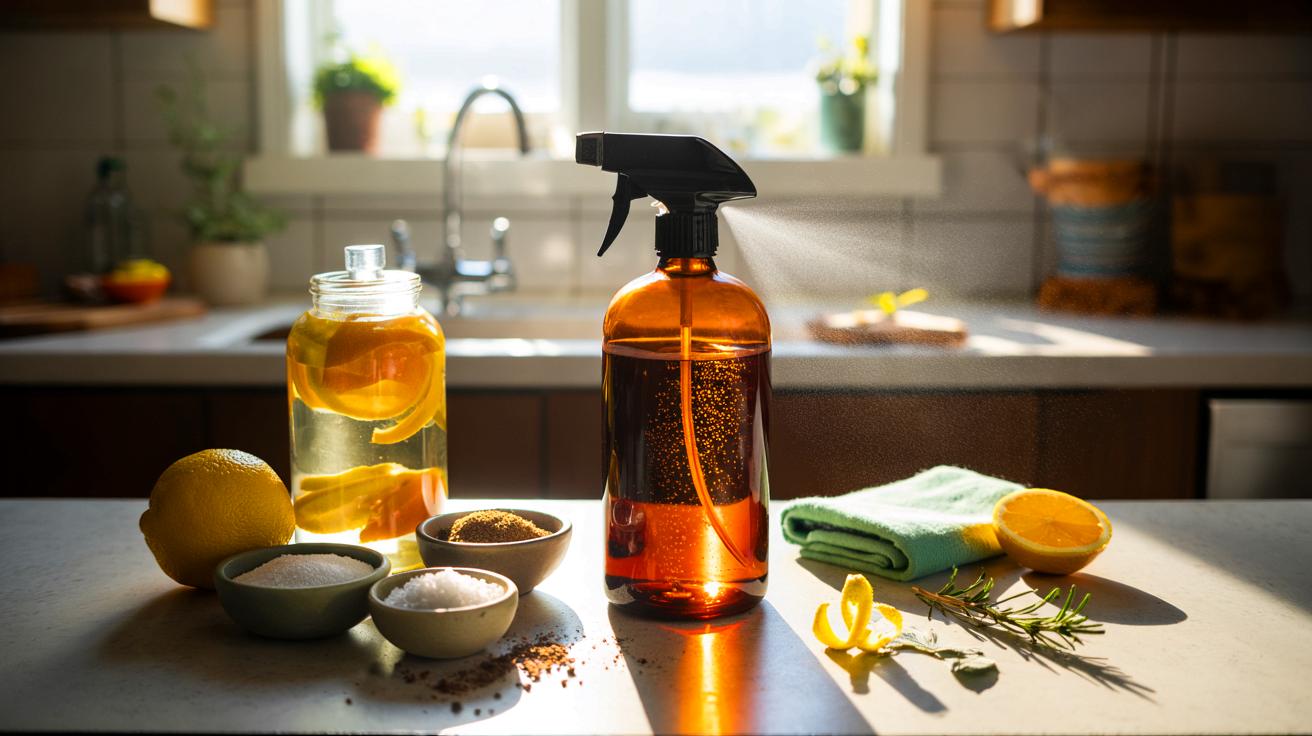
Pack a clean jar with citrus peels—enough to fill it halfway. Add a few clean herb stems if you like. Pour in white vinegar to cover by an inch, press the peels down, and cap. Label the date. Infuse for 5–7 days at room temperature, swirling daily. When the vinegar smells bright and looks golden, strain through a fine mesh or coffee filter to catch pulp and oils. Compost the peels or simmer them to scent the kitchen.
For your everyday spray, combine 1 cup citrus vinegar with 1 cup water. Add 1–2 teaspoons leftover vodka to help it dry streak-free on glass and metal. A small drop of mild dish soap acts as a surfactant, helping the solution cling to grease without leaving residue. Decant into a clean spray bottle. Label “Citrus Vinegar—No Stone/No Bleach” so everyone in the house knows the rules.
Use on sealed laminate, painted cabinets, ceramic tile, appliance exteriors, and interior fridge shelves. Spritz, wait 30 seconds, wipe with a microfiber cloth. For glass, buff dry quickly. For sticky patches—jam rings, syrup drips—spray, wait a minute, then wipe. Remember: this is a cleaner, not an EPA-registered disinfectant. When sanitizing is required, clean first, then use an appropriate product according to label directions.
Grease, Grout, and Tough Jobs: Scrubs and Boosters
When a spray won’t cut it, reach for a baking soda paste. Stir 3 tablespoons baking soda with 1 tablespoon water into a spreadable mix. For sink basins and tubs, smear, wait 5 minutes, then mist with your citrus spray. The fizz lifts grime and the mild grit scrubs without gouging. Rinse thoroughly. On greasy stove grates, add a pinch of salt to the paste for extra bite.
For grout lines, sprinkle baking soda directly, mist with vinegar spray until bubbling, and scrub with a stiff brush. Stubborn spots usually fade after one or two passes. Cutting board smells? Coat with coarse salt, rub with a halved lemon peel, and rinse hot. Coffee grounds shine here too: dry them, then use as a gentle deodorizing scour for stainless sink bowls (test first). Avoid abrasive mixes on delicate coatings or mirror-polished metals; micro-scratches are forever.
Drains getting funky? Shake in 1/4 cup baking soda, follow with a kettle of hot water, then drop a few citrus peels into the garbage disposal and run it. For fridge funk, a shallow dish of spent coffee grounds acts as a free deodorizer. If messes are baked-on, lay paper towels over the spot, saturate with hot water and spray, wait 15 minutes, then wipe. Patience often beats brute force.
Storage, Shelf Life, and Safety Tips
Homemade cleaners deserve the same respect you give food. Store the finished citrus-vinegar concentrate in a cool, dark place for up to three months; the diluted spray lasts about one month. Use clean bottles and funnels to avoid cross-contamination. If the solution looks cloudy, smells off, or grows sediment beyond the usual citrus oils, discard and remix. When in doubt, throw it out.
Keep acids away from natural stone, grout that hasn’t been sealed, and any surface the manufacturer says to treat with pH-neutral products. For stone, mix 1 teaspoon mild dish soap in 2 cups warm water instead, then rinse. Always test in an inconspicuous corner before going big. Label bottles clearly and store out of reach of children and pets. Never mix pantry acids with bleach or ammonia—write that warning right on the label.
Finally, track what actually works in your home. Hard water? Increase vinegar slightly. Sensitive noses? Skip herbs and rely on citrus alone. Greasy cooking? Keep a small jar of baking soda at the ready. A cleaner you’ll use daily is better than a perfect formula that gathers dust, and these scraps make it easy to keep plenty on hand.
With a jar, a few peels, and that stubborn inch of vinegar, you can build a cleaner that respects budgets and surfaces alike. It smells fresh, cuts everyday grime, and keeps leftovers working a second job before they retire to the compost. The bonus is psychological: you’ll see less waste, more results, and a calmer cleaning routine. What twist will you try first—herby citrus spray, salt-soda scrub, or a vodka-polished mirror test run?
Did you like it?4.5/5 (29)