In a nutshell
- 🌿 Tea-based fertilizer offers mild nitrogen, potassium, and phosphorus while boosting soil microbes; use it as a supplement, not a full replacement.
- 🧴 Simple inputs: plain tea bags + water; brew 1 bag per quart/liter and dilute 1:1 for a light amber, plant-safe tonic.
- ☕ Steps: hot brew 10–15 minutes (cool fully) or cold brew 12–24 hours; apply to soil—not leaves—and moisten the root zone without runoff.
- 🛡️ Safety: avoid flavored/sweetened teas, run small tests, and watch for stress; do not store longer than 24 hours at room temperature (up to 48 hours refrigerated).
- 🌱 Use cases: ideal for leafy ornamentals, houseplants, and acid-lovers; feed every 2–4 weeks, but it’s not enough for heavy feeders like tomatoes in bloom.
In a world of pricey fertilizers and complicated formulas, a simple kitchen staple can quietly feed your plants. Tea bags. Water. That’s it. When brewed thoughtfully and applied with care, tea-based fertilizer delivers a gentle nutrient boost, encourages microbial life, and gives container gardens and backyard beds a modest lift. Think of it as a light tonic, not a miracle cure. You’re using what you already have, saving money, and reducing waste. Keep it plain, unsweetened, and lightly diluted. With a few sensible ratios and timing tricks, you can turn a cup of comfort into a practical, eco-friendly tool for healthier soil—and greener leaves.
Why Tea-Based Fertilizer Works
Tea leaves are plant material. That matters. They contain modest amounts of nitrogen, traces of potassium and phosphorus, plus organic compounds—polyphenols and acids—that subtly nudge soil biology. When tea meets water, a small fraction of these substances dissolves, creating a very mild feed. It will not replace a balanced, long-term nutrition plan, but it can support steady growth between heavier feedings. Treat tea fertilizer as a supplement, not a substitute. Used consistently and thoughtfully, this micro-dose approach can brighten foliage, especially in leafy ornamentals and herbs that thrive with low, regular nutrition.
There’s also a microbial story. Diluted tea encourages benign soil microbes, which in turn help roots access nutrients already present in the bed or pot. That’s the real lift. Plants that prefer slightly acidic conditions—blueberries, azaleas, many houseplants like pothos—often respond well to the gentle swing tea provides. Caffeine and tannins can be a double-edged sword, though. In high concentrations, they may stress seedlings or very sensitive species. Keep it weak, keep it occasional, and watch how your plants respond. Observation beats guesswork in any garden, especially when experimenting with homemade inputs.
What You Need and Core Ratios
You need three things: plain tea bags (black, green, oolong, rooibos, or caffeine-free herbal), clean water, and a container. No flavors, no sweeteners, no oils. If you’re reusing bags, remove staples and strings first. For a baseline brew, use 1 standard tea bag per 1 quart (about 1 liter) of water. Hot brew for 10–15 minutes, then cool, or cold-brew for 12–24 hours. Strain if the bag ruptures. When in doubt, dilute: aim for a weak amber color, not coffee-dark. Before feeding, cut the brew with an equal amount of water (1:1), then test on a small patch.
| Tea Type | Key Traits | Suggested Plants | Steep Time | Typical Dilution |
|---|---|---|---|---|
| Black | Higher tannins, mild caffeine | Roses, herbs, leafy ornamentals | 10–15 min hot or 12–18 h cold | 1:1 to 1:2 (tea:water) |
| Green | Gentler tannins, micronutrients | Houseplants, greens, strawberries | 8–10 min hot or 12–18 h cold | 1:1 |
| Rooibos | Caffeine-free, soft flavor | Seedlings, sensitive ornamentals | 10–15 min hot or 12–24 h cold | 1:1 to 1:0.5 for gentle feed |
| Chamomile (herbal) | Soothing compounds | Seed-start trays, herbs | 10–15 min hot or 12–18 h cold | 1:1 |
| Mixed used bags | Variable strength | Outdoor beds, shrubs | Up to 24 h cold | 1:2 until pale amber |
Always start lighter than you think, then adjust. Indoor pots need less than in-ground beds. If your municipal water is heavily chlorinated, let it sit 24 hours before brewing so chlorine can dissipate.
Step-by-Step: Brewing, Diluting, and Applying
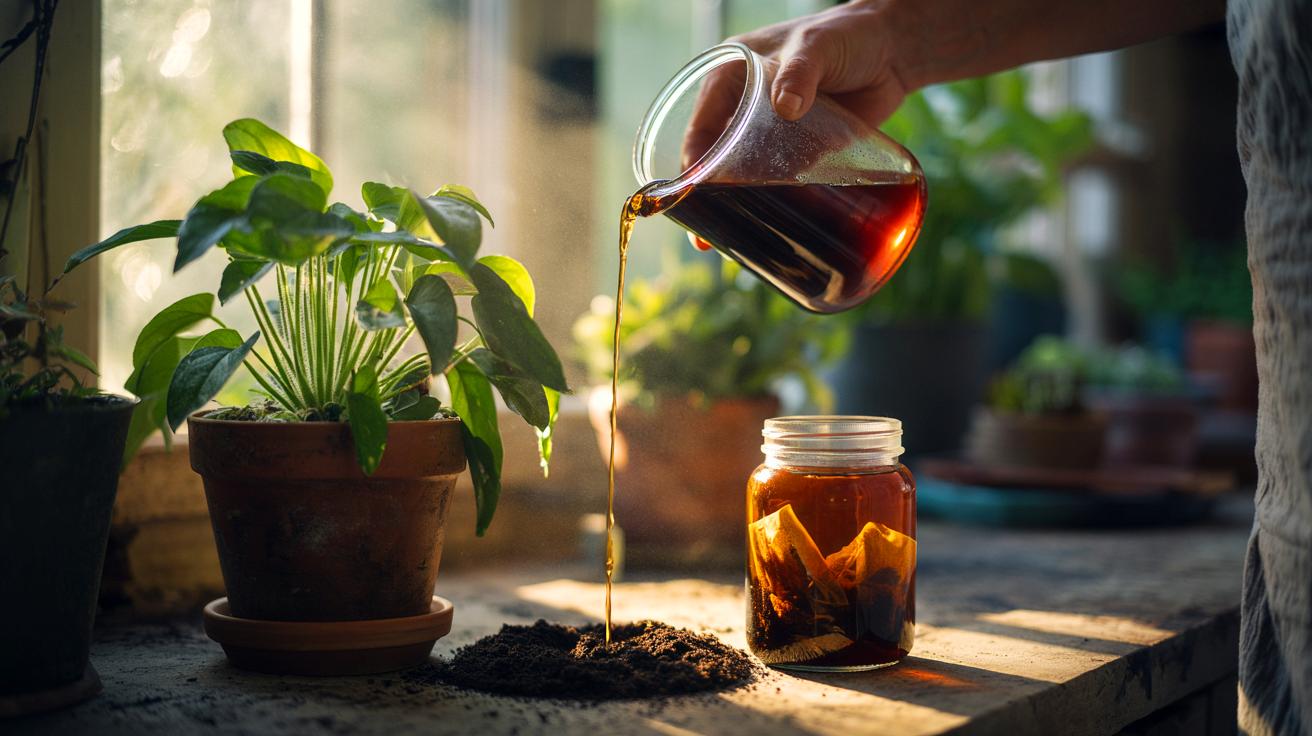
Step 1: Brew. Drop 1 tea bag into 1 quart of clean water. For a hot brew, pour near-boiling water over the bag and steep 10–15 minutes, then cool completely. For a cold brew, submerge and let sit 12–24 hours at room temperature. Remove the bag as soon as you reach a light amber color. Never apply hot tea to soil or foliage. Heat can injure roots and beneficial microbes.
Step 2: Dilute. Mix the tea 1:1 with water. If the brew looks dark, extend to 1:2. You’re aiming for a gentle tonic, not a strong extract. Step 3: Apply. Water the soil at the base, saturating the top few inches. Avoid leaves to reduce staining and potential sun scorch. For houseplants, use until it drains from the pot’s bottom. For outdoor beds, apply enough to moisten the root zone but stop short of runoff.
Step 4: Timing. Feed every 2–4 weeks during active growth. Skip if plants look stressed or the potting mix stays soggy. Do not store brewed tea fertilizer longer than 24 hours at room temperature; microbes multiply quickly, and odors signal spoilage. If refrigerated, use within 48 hours and bring to room temp before application.
Smart Safety, Troubleshooting, and Garden Use Cases
Tea is simple. Gardens are not. That’s why small tests matter. Start with one plant or a single bed section and watch for changes over a week. Pale leaves that deepen slightly? Good. Wilt or leaf curl after feeding? Pause and dilute further. When in doubt, flush with plain water and reassess. Avoid scented or flavored teas; oils and additives aren’t plant-friendly. Skip sweetened iced-tea mixes. Choose unbleached bags or cut them open and use only the leaves, especially if you’re concerned about synthetic fibers in some modern tea bags.
Match tea to plant needs. Acid-leaning species—blueberries, hydrangeas (blue forms), gardenias—often appreciate a gentle tea rinse on the soil, but succulents and cacti prefer leaner, drier conditions. In small apartments, tea feedings can keep foliage plants happy between repottings. For outdoor beds, pair tea feedings with mulch to lock in moisture and nurture microbes. If an earthy film appears on the surface, stir lightly and let the soil dry a bit. Never rely on tea alone for heavy feeders like tomatoes or roses in bloom. It’s a nudge, not a full meal.
Turning tea bags and water into a plant tonic is both frugal and surprisingly effective when done with restraint. You brew, you dilute, you listen to your plants. The result is cleaner cabinets, fewer waste bins, and a garden that hums along without constant chemical inputs. Use plain tea, keep it weak, and space out applications. That approach keeps benefits high and risks low. What plant in your home or yard would be the ideal candidate for your first batch—and how will you measure its response over the next month?
Did you like it?4.3/5 (28)