In a nutshell
- ☕️ A simple coffee filter over the drainage hole speeds water out, keeps soil in, improves root aeration, and cuts saucer mess for healthier plants.
- 🪴 Proper drainage prevents root rot; adding rocks raises the perched water table and actually worsens saturation—skip pebbles entirely.
- 🧪 How-to: choose unbleached filters, pre‑moisten, lay flat, avoid stacking, and test for quick outflow; replace at repot and compost when possible.
- 📊 Comparison: filters excel for most houseplants; mesh/screens suit oversized holes; rocks add weight but don’t improve drainage.
- 🌍 Benefits: fewer fungus gnats, steadier moisture, cleaner shelves, and better results with a chunky potting mix containing perlite, bark, or coir.
Houseplants struggle not because we forget to water but because water can’t get out fast enough. That’s where a simple kitchen staple changes everything. A humble coffee filter placed over a pot’s drainage hole acts like a smart membrane: water exits quickly, soil stays put, and roots breathe. It’s tidy. It’s cheap. It works with plastic, ceramic, even terra-cotta. Gardeners swear by the method because it mimics professional liners without the cost or bulk. The result is less mess on your saucer and fewer clogs in the hole. Most of all, it means healthier plants that actually grow.
Why Drainage Matters in Container Gardening
Healthy roots demand oxygen. When a pot holds water too long, oxygen disappears and anaerobic microbes take over, inviting root rot. Many growers try to fix soggy soil by watering less, but that starves the plant. The culprit isn’t water itself; it’s poor drainage and compaction. A coffee filter helps maintain a clean exit path for water while preventing potting mix from migrating and clogging the hole. Fast outflow plus well-aerated mix equals resilient roots. That’s the formula you want, indoors or out.
Another hidden villain is the so‑called perched water table—a saturation zone that forms where coarse and fine materials meet. When gardeners put rocks in the bottom of a pot, they raise this saturated layer, keeping roots wetter than before. Never line pots with rocks—ironically, it worsens drainage. A single, breathable barrier such as a coffee filter avoids that mismatch while catching fines that would otherwise cake in the hole. You get rapid drainage without the mess, and your soil profile stays uniform from top to bottom.
The payoff is significant: less fungus gnat breeding, fewer salt crusts, and more consistent moisture. Plants respond fast. Leaves perk up, new growth appears, and watering becomes predictable rather than stressful guesswork.
How to Use Coffee Filters for Perfect Drainage
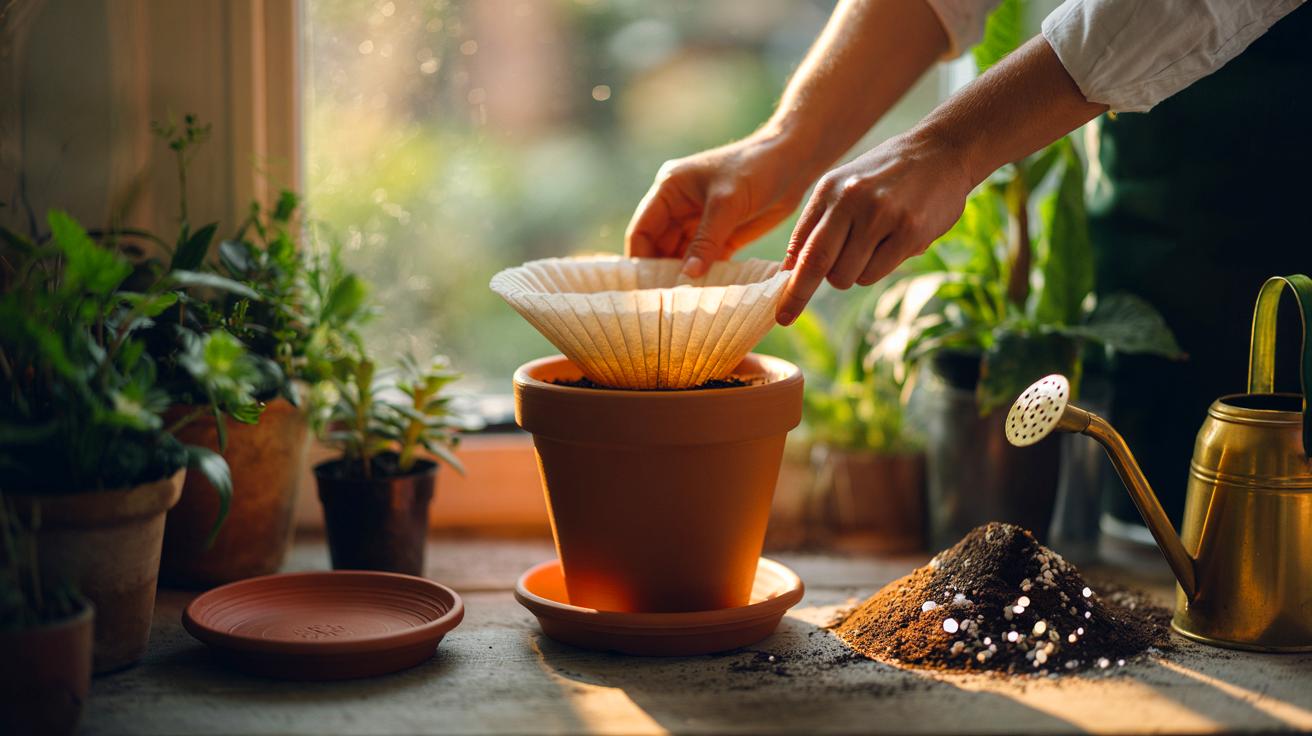
Pick an unbleached, basket-style filter sized to cover the hole. Cone filters work too; trim if needed. Always confirm the pot has at least one open drainage hole—no liner can compensate for a sealed container. Pre‑moisten the filter so it conforms, then press it flat across the base. It should sit flush, not crumpled. Add an inch of high-quality potting mix to anchor the filter before filling to planting depth. Tap the pot to settle the mix; don’t crush it. Water thoroughly to test outflow. You want a steady stream within seconds.
For wide holes, cross two filters or place a small shard of mesh under one filter to prevent tearing, but avoid thick layering. Do not stack multiple filters—the goal is to stop soil escape, not slow water. If you bottom-water, the filter actually helps wick moisture evenly upward, reducing dry pockets that lead to stress. Top-watering? You’ll notice fewer particles washing into the saucer and less cleanup on the windowsill.
Maintenance is straightforward. Replace the filter when repotting—about once a year for vigorous growers, every two years for slow ones. If you suspect salt buildup or disease, swap sooner. Compost unbleached filters; bin bleached ones if local rules require. The cost is pennies, yet the reliability is gold.
Coffee Filter vs. Rocks, Mesh, and Screens
Gardeners have choices. Some line pots with pebbles, others use window screen or purpose-made mesh. The differences matter. Here’s a quick comparison to clarify where the coffee filter shines and where another option might be smarter.
| Method | Pros | Cons | Best For |
|---|---|---|---|
| Coffee filter | Stops soil loss; maintains airflow; cheap; compostable | Can tear in very large holes; needs replacement at repot | Most houseplants; small to medium pots |
| Rocks/pebbles | Readily available; adds weight for top-heavy plants | Raises perched water table; worsens drainage | Weighting outdoor planters only (without touching root zone) |
| Plastic mesh/screen | Durable; reusable; resists tearing in oversized holes | Costs more; may still let fines escape; not compostable | Large planters; repeated reuses |
If your priority is clean, fast drainage with minimal cost and setup, the coffee filter wins. Choose mesh only when pots have gaping holes or you need a long-term liner in a heavy planter. Skip pebbles for drainage; they solve stability, not water movement. A filter gives you that sweet spot—structured outflow, intact soil profile, and a tidy saucer—without altering the physics inside the pot.
Sustainability, Costs, and Mistakes to Avoid
The trick is thrifty and green. Unbleached paper filters are typically compostable and break down with your spent potting mix. That circularity matters when you repot every season or two. Cost? A pack of 100 often runs less than the price of a single nursery liner. For renters or small-space gardeners, that’s a budget saver. It’s also travel‑friendly for plant sitters: lift the pot, no gritty trail on the shelf.
Watch for common errors. Don’t block holes with wad after wad of paper. Don’t use filters saturated with coffee oils; those can encourage mold. Use clean, food-safe filters and keep the layer thin and flat. If your pot has multiple holes, overlap one filter sheet or cut a few small discs—whichever lies flush. And remember, the filter is not a fix for dense, garden soil. You still need a light, chunky potting mix with perlite, bark, or coir to keep pores open.
Finally, check your watering rhythm. Faster drainage may mean slightly more frequent watering, but stress falls dramatically because the root zone won’t stay waterlogged. You’ll see fewer yellow leaves and less sour smell. The aim is simple: rapid outflow, even moisture, happy roots. Paired with a saucer and a quick lift test for weight, the system is practically foolproof.
One kitchen staple, one hole, big results. The coffee filter trick preserves mix structure, reduces gnats, and delivers the kind of drainage that keeps roots lithe and alive. It takes seconds to install and pays off for seasons, all while cutting mess and cost. You control the flow; your plant breathes easier. Ready to try it on your thirstiest fern, your moody fiddle-leaf, or that stubborn succulent—and if you do, which plant will you experiment with first?
Did you like it?4.2/5 (24)