In a nutshell
- 🧄 The crushed garlic method deters snails instantly by releasing allicin and sulfur compounds that create a scent-and-taste barrier they avoid.
- 🧪 Easy prep and use: crush 3 cloves, steep, strain, dilute to 1:10 (1:15 for seedlings), then spray leaf edges and perimeters at dusk; reapply weekly and after rain.
- 🛡️ Functions as a behavioral repellent, not a toxin—protects crops while sparing beneficial insects and soil life; ideal for seedlings, lettuces, hostas, and strawberries.
- 🔗 Stronger results with IPM pairings: copper tape, dry mulches, evening hand-picking, decoy boards, targeted beer traps, and improved garden sanitation.
- 🐾 Practice safety: patch-test sensitive plants, avoid midday spraying, refrigerate concentrate briefly, keep away from pets, rinse edibles, and prevent runoff near water features.
Gardeners chasing leafy perfection know the heartbreak of midnight raids by snails and slugs. A homespun fix, the crushed garlic method, has vaulted from folklore to field-tested favorite, thanks to what plant scientists describe as a potent chemical nudge that sends mollusks packing. The premise is simple. Leverage garlic’s sulfur-rich compounds, especially allicin, to create a scent-and-taste barrier that nudges pests away from tender greens. It’s inexpensive, fast to mix, and safe when used wisely. Used correctly, garlic acts as a deterrent—not a poison—so it helps protect plants without carpet-bombing your garden’s ecosystem. Here’s how it works, why pros rate it highly, and what to know before you spray.
How the Crushed Garlic Method Works
When garlic cells are smashed, they release allicin and companion sulfur compounds that smell sharp and taste harsher. To snails—creatures guided by exquisitely sensitive chemoreceptors—those cues register as a “no-go” zone. The result is a contact repellent that prompts quick retreat. Many growers report snails turning away within seconds of encountering fresh residue. Snails hate it. Not out of myth, but because their soft bodies and feeding organs are tuned to avoid irritants that promise a bad meal or risky terrain.
The effect is twofold. First, the immediate sensory hit pushes mollusks off-course. Second, dried garlic film on leaves and soil edges creates a temporary barrier that lingers through cool evenings when snails are most active. It’s not permanent, and it’s not a silver bullet. Rain and overhead watering diminish potency; heat can volatilize aroma faster. Think of it as a tactical shield that you refresh on the calendar, not a set-and-forget solution. That nuance helps gardeners deploy garlic precisely where it counts: seedlings, lettuces, strawberries, and hostas.
Experts favor garlic because it targets behavior without wholesale ecosystem disruption. Beneficial insects remain largely unaffected, soil life continues its quiet work, and crops get breathing room to recover. Crucially, garlic does not kill snails—it repels them—so you’ll still want broader garden hygiene to suppress populations.
Step-by-Step: Mixing and Applying Garlic
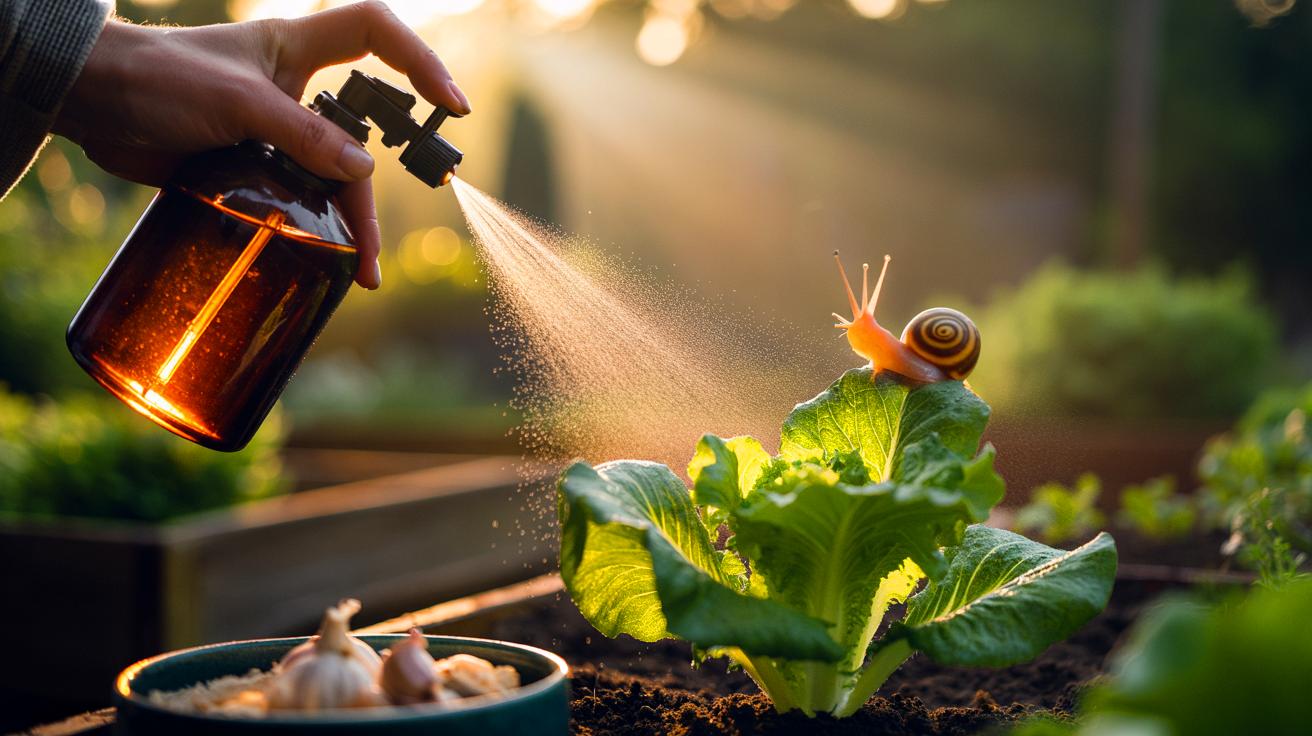
Start with three large cloves (or one full bulb for bigger batches). Smash thoroughly with the flat of a knife to rupture cells. Steep the mash in 1 cup of warm water for 30–60 minutes, then strain. Dilute into a spray bottle at roughly 1:10 (garlic concentrate to water). Add a single drop of mild, biodegradable soap to help the solution cling to leaves. Shake well. That’s your crushed garlic spray.
Spritz plant edges, leaf undersides, and the soil perimeter at dusk, when snails begin to roam. For raised beds, draw a diluted “garlic moat” around the frame. Always patch-test one leaf and wait 24 hours—some tender seedlings can show minor leaf tip burn if concentrations are too strong. Reapply after heavy dew or rainfall, and weekly during peak snail season. Store leftover concentrate in the fridge for up to 48 hours; potency fades quickly as allicin degrades.
| Aspect | Recommendation | Notes |
|---|---|---|
| Dilution Ratio | 1 part concentrate : 10 parts water | Weaker for seedlings (1:15) |
| Application Time | Dusk or dawn | Aligns with snail activity |
| Frequency | Weekly; after rain | Rain reduces residue |
| Coverage | Leaf edges, undersides, perimeter | Focus on entry paths |
| Safety | Patch-test first | Watch for leaf sensitivity |
Do not apply in full midday sun, which can compound stress on foliage and shorten the repellent’s lifespan. A measured, consistent routine beats a single heavy spray every time.
Evidence, Limits, and Smart Pairings
Field trials by horticulture educators and countless community gardens tell a consistent story: garlic-based repellents cut feeding damage when renewed on schedule. Small lab studies point to mollusk avoidance behavior in response to allicin-rich extracts, echoing what growers see at scale. Still, this is not a registered molluscicide, nor is it a population-control tool. Garlic changes where snails travel today; it does not reduce tomorrow’s hatch. That distinction matters when your beds are bordered by damp mulch, groundcover, or stacked wood—all prime snail habitat.
Blend strategies. Combine the crushed garlic method with copper tape on bed rims, dry mulches around stems, evening hand-picking, and shaded “decoy boards” that collect snails for removal. Beer traps work, but they can attract new arrivals; use them strategically away from tender crops. Elevate low-hanging fruit, prune dense skirts, and fix irrigation leaks to dry the overnight buffet. Where you alter habitat, your garlic has less work to do, and results improve dramatically.
The takeaway: garlic is a nimble, low-cost piece of integrated pest management. It shines during seedling establishment and harvest weeks when cosmetic damage is unacceptable. For long-term peace, pair it with sanitation and structural deterrents that turn your beds into low-traffic zones for hungry mollusks.
Safety, Pets, and Environmental Considerations
Used as a dilute foliar spray, garlic is considered low-risk for home gardens. That said, concentrated mixes smell intense and can irritate skin or eyes. Wear gloves and avoid breezy applications. Keep garlic concentrate and treated rags away from pets—ingestion of concentrated alliums can be harmful to cats and dogs. In practice, surface residues on plants are minimal; the key is preventing curious gulps from a mixing jar left on the porch.
Be water-wise. Avoid spraying near ponds and aquariums; any strong extract can stress aquatic life in enclosed systems. If you grow edibles, give produce a quick rinse before serving. Some leaves may show cosmetic spotting at higher concentrations; adjust dilution or skip the most delicate varieties on hot weeks. The aroma fades within a day or two, especially outdoors.
From a regulatory standpoint, household garlic used as a home remedy sits in a gray but common-sense zone for personal gardens. Never overspray to the point of runoff, never mix with harsh chemicals, and never assume “natural” means risk-free. Respect the tool, log your results, and refine the method to your microclimate and crop list.
The crushed garlic method earns its reputation because it’s fast, frugal, and rooted in real plant chemistry. It turns a nightly siege into a manageable detour, buying time for lettuces, hostas, and strawberries to rebound. Still, success hinges on cadence—smart timing, light coats, and steady reapplications after rain. Treat garlic as a behavioral cue in a broader playbook, not a one-spray miracle. That’s how home gardeners replicate pro results. As your season unfolds, where will you deploy garlic first—and what companion tactics will you pair with it to make the snail problem finally, mercifully, go quiet?
Did you like it?4.4/5 (29)