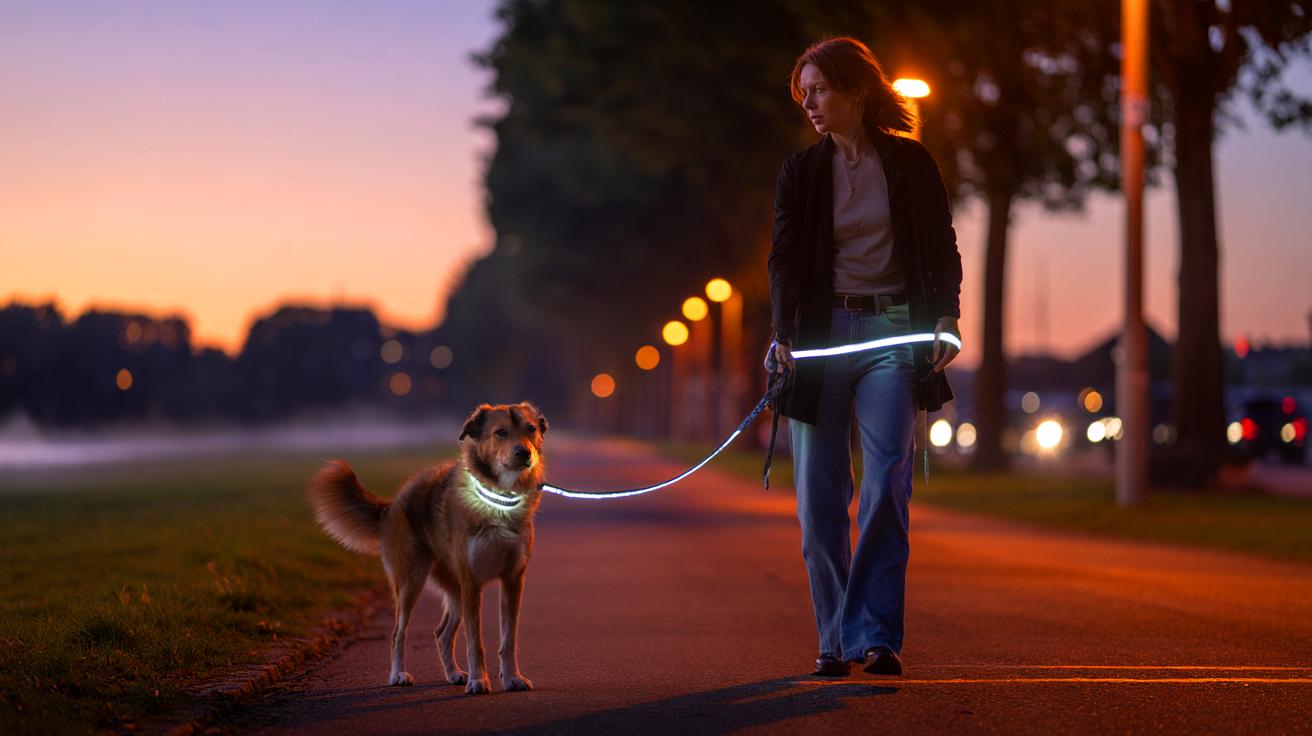
In a nutshell
- 🌆 Dusk aligns with circadian rhythms, warms the light spectrum to support melatonin timing, and a moderate walk releases endorphins for a measurable mood lift and better sleep readiness.
- 🐶 Cooling twilight enriches canine senses; olfactory enrichment from sniffing reduces arousal and anxiety, helping dogs settle into calmer post-walk rest.
- 🧠 Human–dog co-regulation boosts oxytocin, lowers cortisol, and can synchronize HRV, creating a shared calm that benefits both bodies and minds.
- 🛡️ Evening best practices: choose predictable, well-lit routes, wear reflective gear, add an LED collar, pocket the phone early, and walk 20–30 minutes at a steady, comfortable pace.
- 🔁 Ritual beats intensity: allow decompression “sniff-first” time, use warm, dim lights after returning, hydrate, and repeat—small, repeatable habits that improve mood and smooth household evenings.
Twilight is a hinge in the day. The temperature eases, the light softens, and the noise drops a notch. Scientists say that’s precisely why a brisk, attentive walk with your dog at dusk can lift both of your moods. The hour aligns with natural circadian rhythms, encourages gentle social bonding, and offers sensory enrichment that screens and fluorescent ceilings can’t. When the sky’s color temperature warms and brightness falls, the brain gets a cue: it’s time to unwind. Paired with the nudge of a leash and a wagging tail, that cue becomes a routine—small, repeatable, and powerful. Routine makes resilience. So does movement. And smell, for dogs especially, is medicine.
The Science of Twilight: Circadian Rhythms, Light, and Mood
The minutes after sunset deliver a light profile our biology recognizes. Dusk typically brings lower intensity and warmer-spectrum light, easing activation of melatonin near its dim-light melatonin onset (DLMO). Melatonin itself isn’t a sedative; it’s a signal. It tells the body night is coming, smoothing the transition from alertness to restoration. Natural twilight, unlike bright indoor LEDs or phone screens, is less likely to delay melatonin and more likely to prepare the brain for quality sleep. Better sleep, in turn, stabilizes next-day mood and attention. Walks also increase heart rate just enough to release endorphins and recalibrate stress systems without the jolt of late-night high-intensity workouts.
For dogs, twilight is a sensory jackpot. Cooling air carries richer scent information, and low traffic means fewer startling stimuli. Sniffing is not trivial; it activates canine olfactory enrichment, which has been linked to reduced anxiety-like behaviors and calmer post-walk rest. The shared outdoor context benefits humans, too. Studies of evening exposure to urban green space show small but reliable reductions in rumination and perceived stress. Even city blocks count if they add trees, birdsong, or open sky. Pair that with a familiar route at a steady pace, and you’re stacking physiological signals that whisper: unwind now, you’re safe.
| Benefit | Mechanism | Evidence Snapshot |
|---|---|---|
| Sleep Readiness | Lower, warmer light supports melatonin timing | Evening natural light associated with improved sleep quality |
| Mood Lift | Moderate activity boosts endorphins; nature reduces rumination | Walking in green settings lowers perceived stress |
| Calmer Dog | Olfactory enrichment and cooler temps reduce arousal | Sniff-focused walks linked to relaxation behaviors |
Shared Physiology: How Dogs Mirror Human Stress and Calm
You and your dog are not just companions on a leash—you’re a feedback loop. Research on human–animal interaction shows that friendly contact can raise oxytocin and lower cortisol in both species, a biochemical duet that feels like emotional exhale. During synchronized activities such as walking, some teams report patterns of heart rate variability (HRV) that move in tandem, suggesting co-regulation of stress. The calmer you get, the easier it is for your dog to get calm, and vice versa. That reciprocity is why a consistent dusk walk doesn’t just pass the time; it trains your nervous systems to meet in the middle.
Dogs also read micro-signals. Your breathing cadence, stride consistency, and voice tone act like anchors. Evening routines heighten this effect because the environment is quieter, allowing subtler cues to stand out. Meanwhile, the dog’s steady pace and focus on scent encourage you to slow your mental chatter. This is behavioral biofeedback without the sensors—just pavement, paws, and pattern. Over weeks, the habit can reduce baseline tension before bedtime and improve emotional availability at home. Families notice the spillover: fewer late-night arguments, easier homework hour, smoother transitions to lights out. Small change, big system response.
Safer, Smarter Evening Routines: Practical Tips Backed by Research
Safety amplifies the mood benefits. Choose routes with predictable footing and good sightlines. Wear reflective gear, clip a LED collar on the dog, and keep a charged phone. These are small frictions; they pay off. Feeling safe reduces hypervigilance and lets the nervous system accept the calming cues of twilight. Try a 20–30 minute walk, brisk enough to warm you, relaxed enough to talk. Put the phone away for at least the first ten minutes; uninterrupted attention deepens the oxytocin effect. For reactive dogs, start earlier—civil twilight often has fewer triggers than full dark.
Make it sensory-rich. Allow decompression time for sniffing—think “smell-first, steps-second.” Short leash for crossings, long line for quiet stretches where legal. Warm light at home after the walk supports the circadian message; dim lamps beat overhead glare. Hydrate both of you, wipe paws, then end with a familiar, low-key cue: a chew for the dog, a book for you. If allergies or heat are issues, pick tree-lined streets or waterside paths that stay cooler and cleaner. In winter, bundle up, shorten the loop, and schedule consistency over distance. Reliable routines are the stealth technology of well-being.
Dusk won’t solve everything, but it’s a surprisingly effective lever. The light softens; so do we. Your dog gets the world through her nose, you get yours back through your feet, and the shared ritual stitches the day together. The best wellness tools are often simple, free, and repeatable. Tonight, clip the leash before the emails resume. Walk until the streetlights hum. Notice how your shoulders drop and your dog’s tail settles into an easy wag. Then ask yourself: if twenty calm minutes can reshape a whole evening, what could this habit do for your week—and whom might you invite along?
Did you like it?4.4/5 (30)