In a nutshell
- 🧼 Wash frequency: food bowls after every meal, water bowls daily, and sanitize regularly (weekly or after high-risk feedings) to keep contamination low.
- 🦠 Hidden risk: fast-forming biofilm can harbor E. coli and Salmonella; consistent scrubbing and rinsing are key to disrupting this slimy shield.
- 🥣 Best materials: choose stainless steel (dishwasher-safe, nonporous); glazed ceramic works if undamaged; avoid scratched plastic that traps bacteria and can cause chin acne.
- 🧽 Cleaning routine: hot, soapy wash with a dedicated brush/sponge, thorough rinse, air-dry; sanitize via dishwasher’s sanitize cycle or safe solutions (bleach, 3% hydrogen peroxide, or vinegar); don’t forget mats and stands.
- ⚠️ Extra vigilance: raw diets, young/senior or immunocompromised pets, hot weather, and outdoor bowls require more frequent cleaning—often sanitizing after every use and refreshing water twice daily.
We lavish pets with cozy beds and premium diets, yet their bowls often miss the same care. Vets say that’s a mistake. Food residue, saliva, and standing water create a perfect incubator for microbes. Left unchecked, they can seed biofilm, trigger tummy troubles, and even spread pathogens from countertop to crate. The fix isn’t complicated, but it is consistent. Clean smarter, and clean more often than you think. Here’s what veterinarians across the country recommend, why the science backs it, and how to build a routine you’ll actually stick to—even on those chaotic mornings when the coffee hasn’t kicked in and the dog is already asking for seconds.
What Vets Actually Recommend
Veterinarians are strikingly consistent on frequency. Wash the food bowl after every single meal. That applies to kibble, wet, fresh, or homemade diets. If your pet eats raw, sanitize after each feeding as well to reduce cross-contamination. Clean the water bowl daily, then sanitize it several times a week, because invisible biofilm reforms quickly. Weekly, plan a deeper clean for all bowls and mats—think dishwasher’s sanitize cycle or a safe sanitizing soak. It sounds intense. It isn’t. Most routines take three to five minutes. The payoff: fewer odors, less slime, and a safer feeding station for curious kids and pets who lick everything within reach.
| Item | Routine | Why It Matters |
|---|---|---|
| Food bowl (kibble) | Wash after each meal; sanitize weekly | Removes fats and saliva that build biofilm |
| Food bowl (wet/fresh) | Wash and sanitize after each meal | Higher moisture means faster bacterial growth |
| Food bowl (raw diet) | Wash and sanitize after each meal; use a dedicated sponge | Lowers risk from Salmonella and similar pathogens |
| Water bowl | Wash daily; sanitize 2–3x/week | Disrupts biofilm that reforms within 24–48 hours |
| Travel/collapsible bowl | Wash after each outing | Outdoor dirt and saliva introduce microbes |
One more point vets underline: bowls live on floors, near litter boxes, entrances, and shoes. Frequent cleaning reduces what pets track back into their bodies. It’s basic hygiene with outsized benefits.
The Germs You Can’t See
Pet bowls are wet, warm, and loaded with nutrients. Bacteria love that. Residual fat from food clings to surfaces, saliva adds enzymes, and dust seeds the mix with microbes. Within hours, a biofilm begins forming—a slimy, protective layer where bacteria and yeast hunker down, multiply, and resist casual rinsing. That slippery feel? It’s not just harmless slime. It can harbor E. coli, Salmonella, and opportunistic microbes that irritate gums or stomachs. For most healthy pets, the immune system copes. But immune-compromised animals, seniors, and puppies are more vulnerable. So are toddlers who “share” the water dish.
Here’s the kicker: you can’t always see the problem. Clear water still grows biofilm. Bowls that seem “clean enough” may be anything but. Home hygiene audits by independent labs have repeatedly flagged pet bowls among the highest-contamination items in kitchens—right up there with sponges and sink drains. If a bowl feels slick, it needs soap, hot water, and a real scrub. Regular disruption of biofilm is what keeps germs from getting a foothold, and that’s why frequency beats heroic occasional deep cleans.
Best Materials and What to Avoid
Not all bowls are created equal. Vets and food-safety pros consistently favor stainless steel. It’s nonporous, tough, and stands up to high heat in the dishwasher without leaching chemicals. Look for 18/8 or 304-grade steel, ideally with a smooth, rounded interior that’s easy to wipe clean. Stainless is the safest everyday choice for most pets. Glazed ceramic can also work—if the glaze is certified lead-free and the bowl remains unchipped. Chips and hairline cracks harbor microbes and are hard to sanitize.
Plastic is the common troublemaker. It scratches, absorbs odors, and can seed stubborn biofilm inside those micro-grooves. Some pets even develop “chin acne” from bacteria lingering on worn plastic. Silicone travel bowls are handy, but they still need diligent scrubbing and periodic sanitizing. Whatever you choose, retire bowls that are scratched, cloudy, or permanently stained. Replace rubber rings when they loosen or trap grime. And favor elevated stands with removable, dishwasher-safe bowls—less floor splash, easier washing, fewer nooks for slime to hide.
A Vet-Approved Cleaning Routine, Step by Step
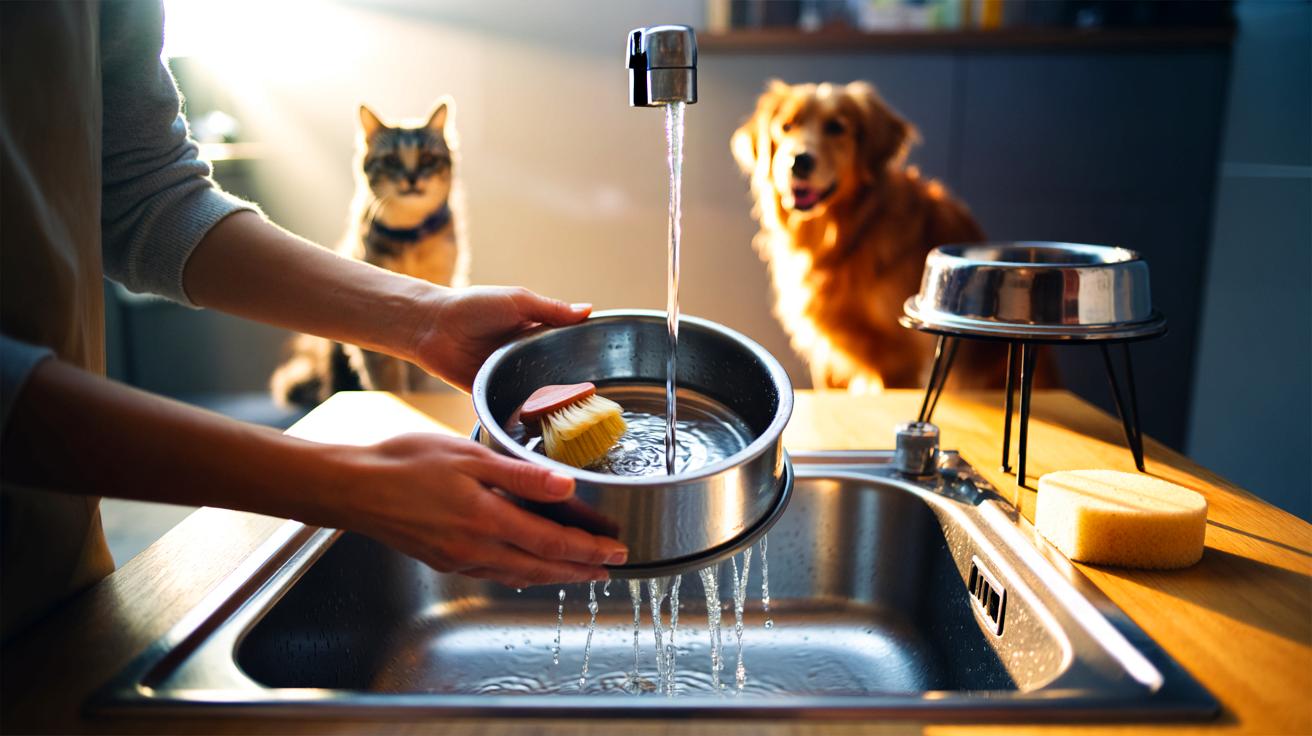
Start simple. Scrape leftover food into the trash, not the sink. Rinse with warm water to lift loose debris. Then wash with hot, soapy water—as hot as your hands tolerate—and scrub the entire interior, rim, and underside. A dedicated bowl brush or sponge prevents kitchen cross-contamination. Yes, use a separate sponge. Rinse thoroughly, then air-dry on a clean rack; air-drying discourages microbial transfer from towels. For sanitizing, either run bowls on the dishwasher’s sanitize setting or soak for two minutes in a food-safe solution (1 tablespoon unscented household bleach per gallon of water), rinse well, and air-dry.
Prefer bleach-free? Use 3% hydrogen peroxide for 10 minutes or white vinegar at full strength, then rinse. Clean mats and stands, too—drips collect bacteria. Disinfect the storage scoop and food bin lid weekly. Swap sponges often or toss them in the dishwasher after bowl duty. Consistency beats perfection. If mornings are slammed, do a quick wash after dinner and a rapid rinse after breakfast. The routine sticks when it fits your life, and that’s what keeps bowls genuinely clean.
When to Clean Even More Often
Some scenarios call for extra vigilance. Raw feeders should wash and sanitize after every meal, no exceptions, because raw meat juices spread easily to floors and hands. Puppies, kittens, seniors, and pets on immune-suppressing medications benefit from stricter hygiene, as do households with infants or elderly family members. In hot, humid weather, slime returns faster; increase water-bowl cleaning to twice daily. If the bowl feels slick or smells “off,” it’s past due. Pets with drooly jowls, yeast-prone lips, or chronic GI issues also need tighter schedules to reduce flare triggers.
Outdoor bowls deserve special attention. Sun fosters algae; soil adds spores and grit. Bring them indoors nightly, wash daily, and sanitize several times a week. If your pet gets sick—vomiting, diarrhea, respiratory bugs—cleaning should escalate until 72 hours after the last symptom. Traveling? Pack a collapsible bowl and a small bottle of dish soap or disinfecting wipes safe for food-contact surfaces. The goal isn’t sterile. It’s predictably clean, day after day, so your pet’s mouth, gut, and immune system aren’t fighting unnecessary battles at mealtime.
Clean bowls won’t make headlines, but they will make healthier pets. The routine is short. The science is clear. Wash food bowls after every meal, refresh and clean water bowls daily, and sanitize regularly. Choose materials that clean easily, build habits you can maintain, and retire worn gear without guilt. You’ll notice fewer odors, less slime, and a neater feeding zone almost immediately. What will your new cleaning cadence look like, and which small tweak—better bowls, a dedicated brush, or a nightly dishwasher run—will make it effortless for your household?
Did you like it?4.3/5 (24)