In a nutshell
- 🐶 The quiet settle-and-sigh—a relaxed sprawl beside you followed by a long, unforced exhale—signals deep trust and safety.
- 🌬️ This behavior marks a shift into the parasympathetic “rest-and-digest” state, often supported by human–dog co-regulation and bonding chemistry.
- 🔍 Context distinguishes trust from fatigue: soft body, loose eyes, and choosing contact indicate contentment, while stiff posture or alert eyes suggest boredom or mild frustration.
- 🤝 Nurture more trustful sighs with consent-based touch, predictable routines, calm communication, decompression activities, and cooperative care training.
- 🧭 Track patterns over time—where, when, and after what events the sighs occur—to confirm growing secure attachment and sustained relaxation near you.
We expect trust to come with fireworks: a bouncing greeting, a belly-up display, a thumping tail against the sofa. Those are loud signals; they grab attention. Yet the most revealing sign that your dog truly trusts you can be so quiet you might miss it. Picture this: your dog pads over, lowers their body near you, and releases a long, unhurried exhale as their muscles melt. No drama. No demands. Just a gentle settling and a breath that seems to say, “I’m safe here.” That moment—the soft settle-and-sigh—is your dog’s whispered vote of confidence.
The Settle-and-Sigh: A Whispered Vote of Confidence
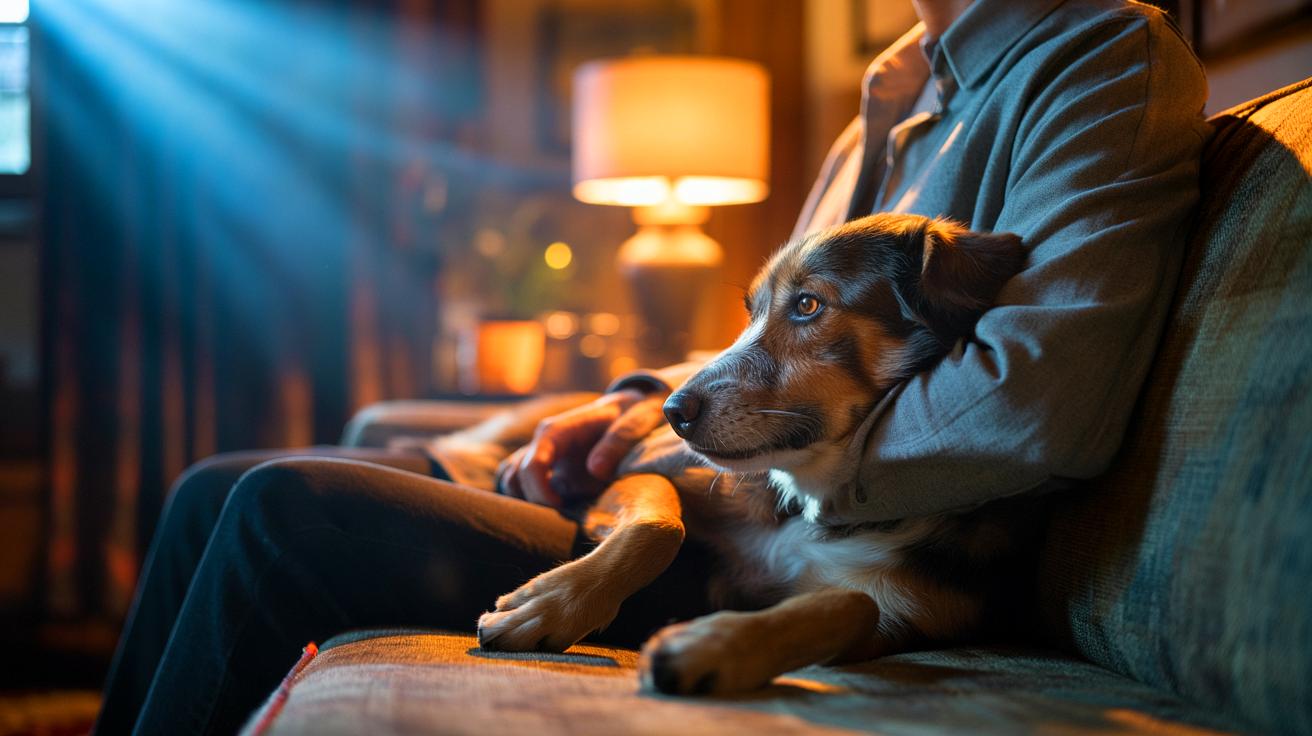
Watch closely. The sequence often unfolds the same way: your dog approaches without urgency, circles once, then sinks against your leg, the couch, or the floor nearby. Their body spreads. Weight drops. Their jaw slackens, eyes half close, and a long, airy exhale rises from the chest through the nose. It’s not a huff. It’s not a groan. It’s a relaxed, unforced breath paired with stillness. That quiet exhale signals a nervous system settling, and it happens most readily in places and with people a dog trusts.
This behavior isn’t just cute. It’s physiological. As arousal fades, dogs shift into a parasympathetic state—the body’s “rest-and-digest” mode—marked by slower breathing, softened facial muscles, and a posture that sprawls or leans. A genuine settle-and-sigh places their vulnerable torso and throat within reach, a silent message: you’re safe to me. The cue is understated, which is why it flies under the radar. But it’s reliable, repeatable, and profoundly intimate. When your dog surrenders their full weight beside you and exhales, they’re not just tired, they’re trusting.
Why This Quiet Breath Means Safety
Trust in dogs isn’t an abstract feeling; it’s a measurable state of ease. In safe contexts, mammals experience a cascade that includes steadier heart rhythms, lowered stress hormones, and, often, elevated oxytocin, the bonding chemical. That unhurried breath you hear is part of the body’s downshift into calm. Dogs who feel protected allow themselves to rest fully, because vigilance can finally drop. It’s an earned pause, not a passive one.
Many owners know about soft eye contact and the slow blink. The settle-and-sigh is their quieter cousin, with a twist: it requires proximity and permission. Your dog elects to be close, touches you or the space near you, and releases tension there. This mirrors human-animal co-regulation, where our calm steadies their calm. Scientists have documented similar patterns during relaxed mutual gazing between people and dogs, and you can feel the same chemistry at work in this breathy moment. The dog is making a calculation—no need to scan, no need to brace—and choosing to offload the weight of the day at your side. Safety makes serenity possible; trust makes it sustainable.
Reading the Context: Trust vs. Fatigue
Not every exhale is a love letter. Dogs also sigh when bored, disappointed, or simply exhausted. Context separates trust from everything else. A trust-driven settle-and-sigh typically arrives with a loose body, softened eyes, and a preference for contact—hip-to-leg, shoulder-to-ankle, or draped across your feet. The breath is long and quiet, followed by stillness. A “meh” sigh, by contrast, often follows an unmet request—a toy removed, a cue not reinforced—and is paired with alert eyes, a stiff mouth corner, or a quick reposition. The difference sits in the body’s conversation with gravity: trust melts; frustration perches.
Use this quick guide to decode the moment in front of you.
| Signal | Likely Meaning | What You Should Do |
|---|---|---|
| Settle-and-sigh while touching you | Trust, contentment, parasympathetic calm | Stay still or offer slow petting; protect the calm |
| Sigh after denied treat/toy | Mild frustration or boredom | Offer a chew or rest; avoid reinforcing pushiness |
| Short huff, alert posture | Environmental check-in, low-level arousal | Scan environment; reduce triggers if needed |
| Heavy panting, tension | Heat, stress, pain | Cool down, hydrate, consult a vet if persistent |
As a rule of thumb, softness equals safety. Soft ears, soft mouth, soft eyes—and a body that drapes instead of perching—point to trust. Let that guide your interpretation.
How to Nurture More Trustful Sighs
Trust grows where predictability and respect live. Build routines your dog can set their internal clock by—walks, meals, quiet windows, training sessions that end on a win. Offer consent-based touch: extend your hand, let them lean in, then pet slowly along preferred areas (often chest or shoulders). If they shift away, pause. The message is powerful: your choices matter here. When dogs control the social distance, they learn that closeness is safe.
Layer in calm communication. A steady voice, unhurried movements, and clear cues reduce uncertainty. Use high-value chews and scatter feeding to encourage nose-down, decompressive activities that naturally lengthen the breath. Introduce cooperative care—teaching chin rests for grooming, paw targets for nail trims—so handling becomes a dialogue, not a demand. Prioritize quality rest spaces scented with your worn T-shirt; familiar odor can act as a tether to safety. Most of all, protect their settle. When you hear that long exhale, resist the urge to chatter or fuss. Guard the quiet, and it will visit more often.
A Quick Look at What Not to Miss
Small details amplify meaning. Where your dog chooses to settle tells a story: at thresholds equals guard duty; tucked in a corner may be decompression; pressed against you often reads as secure attachment. Time of day matters too—late-night sighs can be routine fatigue, while mid-afternoon sighs after a startling sound suggest recovery in your presence. Consider the arc of activity: after a brisk walk, a sigh aligns with physical relief; after a household commotion, it points to social reassurance. Seen through this lens, the same breath becomes a map from arousal back to safety.
Don’t over-interpret a single moment. Look for patterns across weeks. Are the sighs happening closer to you? Are they longer, followed by deeper rest? That’s progress you can chart. Pair those observations with practical care—adequate exercise, mental enrichment, veterinary checkups—to ensure calm isn’t masking discomfort. The result is a feedback loop: you provide reliable comfort; your dog invests more relaxation near you; trust compounds quietly, day by day.
In the end, the sign is almost silent: a body settling, a long breath, and the decision to rest at your side. The settle-and-sigh doesn’t shout its meaning, it hums it—steady, soft, and sure. Listen for it in the evening quiet, after the doorbell rings, or when you return to the couch. Protect those moments and celebrate them, lightly. Trust rarely arrives with a parade; it arrives with a breath. When your dog exhales and melts into the moment beside you, what small changes could you make to invite that calm even more often tomorrow?
Did you like it?4.6/5 (26)