In a nutshell
- 🌥️ Winter light drops fast: low sun angle and glass reduce photons, so focus on total dose over time—your plant’s photoperiod and daily light integral matter most.
- 💡 One simple tweak: set a consistent 12–14 hour day with a full‑spectrum LED grow bulb on a plug‑in timer; consistency beats intensity and costs only a few dollars monthly.
- 🛠️ Easy setup: use desk, clamp, or floor lamps; place LEDs about 4–12 inches from foliage depending on plant type, and ramp up gradually to avoid shock while “topping up” window light.
- 🧭 Smarter placement: match strategy to window direction, rotate weekly, and keep bulbs dust‑free; look for compact internodes, steady color, and new growth as success signals.
- 🌿 Supportive care: sync watering with increased light, prevent overwatering, maintain 40–50% humidity, and keep LEDs at safe distances to prevent leaf bleaching.
Winter doesn’t just chill the air; it thins the sunshine your houseplants rely on. Days shrink. Sun angles flatten. Window glass eats photons. The result is predictable: leggy growth, yellowing leaves, stalled roots. Here’s the good news for anyone with an apartment fern or a kitchen pothos: your plants don’t need a greenhouse to bounce back. They need a single, strategic lighting tweak that mimics summer. Swap guesswork for a reliable rhythm. Set their day. With a simple photoperiod adjustment using an inexpensive bulb and timer, you can turn gloomy afternoons into a steady, plant-friendly light diet—and do it without remodeling your living room or raising your electric bill.
Why Winter Light Starves Your Plants
Across much of the United States, winter sunlight drops by half or more compared to June. The sun’s low angle means rays pass through more atmosphere—and more window glass—before reaching leaves. Inside, even “bright” rooms often measure under 100–200 foot-candles for much of the day, far below what many tropicals evolved to expect under broken jungle canopy. This is why your ficus sheds leaves in December even though you didn’t change a thing. Nothing’s “wrong” with the plant. The light budget is.
Plants don’t see lumens the way we do; they respond to photosynthetically active radiation and the total photons they receive over time—often expressed as a daily light integral. In plain terms, think dose, not flash. A weak winter sunbeam at 3 p.m. can look romantic and still be functionally useless for photosynthesis. When the daily dose shrinks, plants stretch, burn stored sugars, and fade. That’s why watering schedules feel unpredictable, too. Less light means slower metabolism, slower thirst, and higher risk of root rot if you keep pouring.
The fix isn’t just “more brightness.” It’s consistent, appropriate duration plus adequate intensity at the leaf surface. That’s the essence of winter survival indoors.
The One Tweak: Set a 12–14 Hour Photoperiod
Here’s the single change that rescues houseplants in winter: establish a dependable 12–14 hour day using a full-spectrum LED on a plug-in timer. That’s it. By extending daylength, you raise the total photon dose even if intensity isn’t greenhouse-grade. A modest, efficient LED grow bulb (9–15 watts) positioned close to the foliage fills in the hours your latitude steals. The timer enforces routine—no forgetting, no weekend swings that confuse plants.
Target a schedule like 7 a.m. to 9 p.m. for most foliage plants. For bloomers—orchids, African violets—lean to the longer side during bud formation. The bulb doesn’t have to scream purple; many white “full-spectrum” LEDs at 4000–6500K supply the wavelengths leaves use, while keeping your room pleasant. Consistency beats intensity for most common indoor species. And it’s frugal: running a 12-watt bulb 14 hours costs only a few dollars per month in many regions.
What about heat or plant burn? Quality LEDs run cool, but keep them 8–18 inches from leaves and increase exposure over a week to avoid shock. If you already get some window sun, you’re not duplicating it—you’re topping up the daily budget so metabolism stays steady, growth stays compact, and color snaps back.
How to Implement It With Everyday Lamps
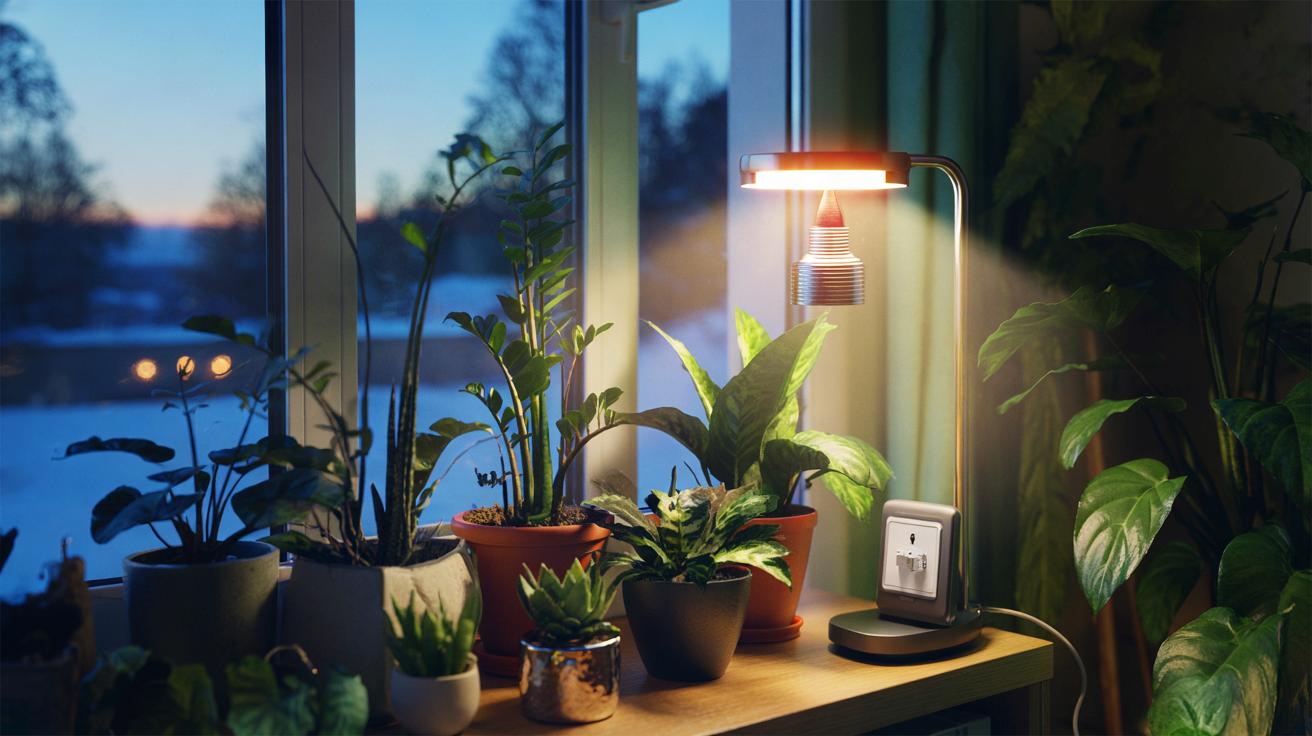
Start with what you own. A desk lamp, clamp light, or floor lamp can become a “grow rig” by simply screwing in a full-spectrum LED bulb. Place it so the beam covers the plant’s canopy, not the pot rim. Aim for 8–12 inches away for low-light foliage like pothos and ZZ plant, 6–10 inches for medium-light plants like peperomia or pilea, and 4–8 inches for light-hungry herbs or succulents—while watching for bleaching. Plug into a basic timer, set 12–14 hours, and let it run daily. Keep bulbs clean; dust blocks photons. Rotate pots weekly for even growth. Think sunrise to long, gentle sunset—on schedule, every day.
Window direction still matters. North-facing rooms benefit most from longer hours. East windows add a useful morning boost; west can be harsh but brief. South windows provide intensity but short winter duration; the timer fills the gap. If you’re mixing species on one shelf, pick a compromise height and hours, then fine-tune by raising/lowering individuals on inverted saucers or books. Use your eyes and your phone camera: compact internodes, new leaf sheen, and steady color signal you’ve hit the sweet spot.
| Plant Type | Examples | Distance from 10–15W LED | Total Lighted Hours |
|---|---|---|---|
| Low-Light Foliage | Pothos, Snake Plant, ZZ | 8–12 inches | 12–13 hours |
| Medium-Light Foliage | Peperomia, Philodendron, Ferns | 6–10 inches | 13–14 hours |
| High-Light/Bloomers | Succulents, Herbs, African Violets | 4–8 inches | 14 hours |
Two final tips keep the tweak airtight: match water to light (more photons, slightly faster drying) and mind humidity. LEDs don’t heat the air, so leaves may transpire less; aim for 40–50% relative humidity and let the top inch of soil dry before watering. Your timer sets the day; your hands keep it balanced.
Winter can still be beautiful indoors when your plants get the daylight math right. A cheap timer, a single full-spectrum LED, and a consistent 12–14 hour photoperiod turn weak daylight into reliable fuel for growth, color, and compact shape. You’ll see tighter nodes, sturdier stems, and fewer mystery drop-offs. No special shelf? No problem. No south window? Still fine. Make the day longer, and your plants remember how to live. Which corner of your home will you light first—and what plant are you most excited to watch rebound under its new winter “sun”?
Did you like it?4.6/5 (20)