In a nutshell
- 🌿 Controlled stress via deficit irrigation boosts concentration of essential oils like terpenes, intensifying aroma and taste.
- 💧 The growers’ rhythm: deep soak → measured dry-down → repeat; water in the morning and set consistent intervals using pot weight, soil feel, or sensors.
- 🗓️ Herb-specific cadence: basil and mint prefer light dry-down (2–3 days), rosemary/thyme/sage tolerate firmer cycles (4–6 days); add a short pre-harvest hold for peak flavor.
- 🧰 Tools and setup: fast-draining mix, ample drainage holes, and a moisture meter or tensiometer; adjust cycles for heat, wind, and indoor LED intensity.
- 🚫 Common pitfalls: overwatering dilutes flavor and invites rot; under-watering stalls growth—fix with a soak-and-dry reset, improved drainage, steady cues, and periodic salt flushes.
Ask herb growers how they coax more flavor from basil, thyme, rosemary, or mint, and you’ll hear a counterintuitive mantra: water less often, but more deliberately. The trick isn’t neglect. It’s rhythm. By cycling between deep hydration and measured dry-down, cultivators report richer aromas and denser, longer-lasting taste. Science backs them up: a little water stress can push plants to stockpile essential oils. Flavor follows stress, not neglect. The balance is delicate, because too little water scorches leaves while too much dilutes volatile compounds. Here is the cadence they use—rooted in field practice, tuned by physiology, and made practical for windowsills, patios, and backyard beds.
Why Controlled Stress Makes Herbs Taste Bolder
When water gets scarce for a day or two, herbs don’t panic; they prepare. Roots sense tension in the soil and send signals—especially abscisic acid—that trigger drought defenses. Trichomes on leaves ramp up production of terpenes and phenolic compounds, concentrating the very molecules that smell like clove, pine, lemon, or pepper. The result is not just a stronger aroma. It’s a tighter bouquet that lingers on the palate. Short, predictable stress amplifies the plant’s natural perfume.
Growers call the strategy deficit irrigation. The idea: give a thorough drink, then allow a controlled dry-down before the next watering. Mediterranean herbs—rosemary, thyme, sage, oregano—evolved for this. Basil and mint respond too, but need gentler cycles. The payoff is measurable. In trials, moderated dry periods increased oil concentrations while keeping growth steady. Push too far, though, and leaves yellow or crisp. Stress is a dial, not a switch.
Think of water like seasoning. A pinch elevates flavor; a handful ruins it. The sweet spot is where plants defend themselves without shutting down photosynthesis. That balance, growers say, is found in rhythm—consistent, repeatable intervals that tell the plant exactly when to toughen up and when to relax.
The Growers’ Rhythm: Soak, Dry, Repeat
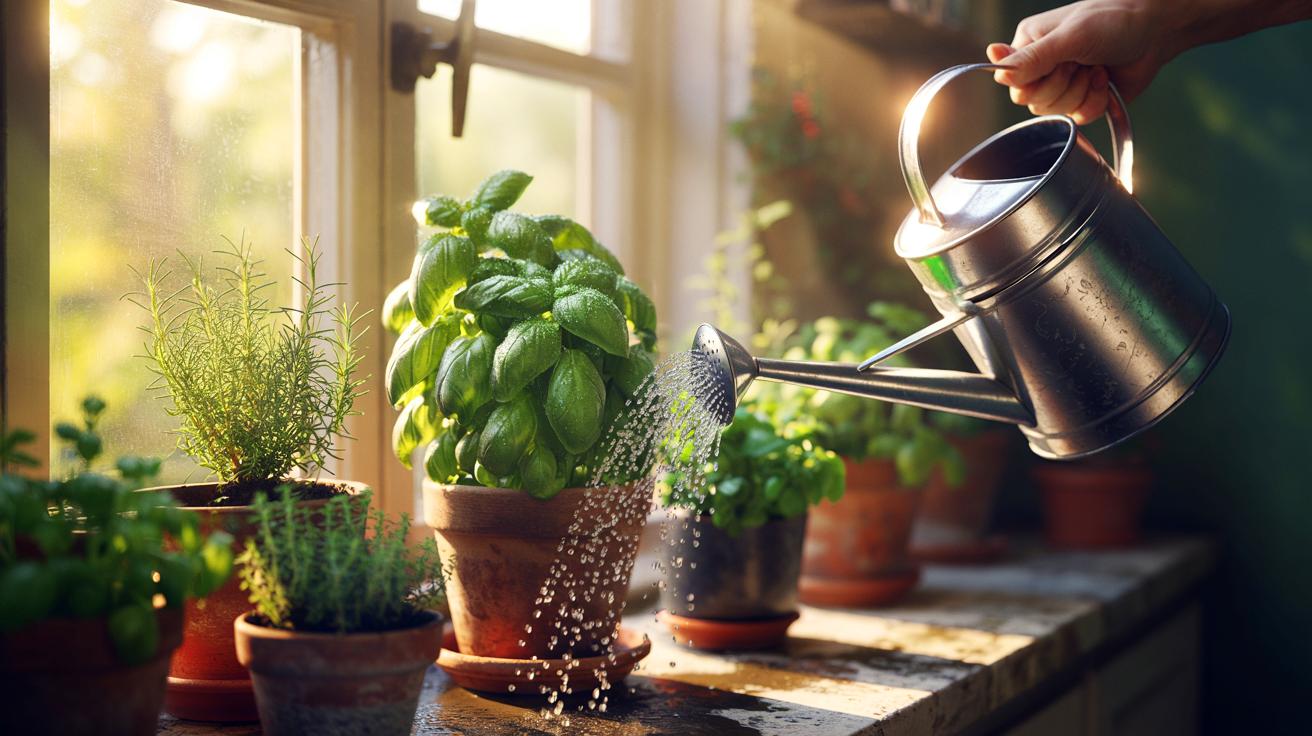
The cadence is simple. Start with a deep soak until you see a bit of runoff, saturating the root ball. Then wait. Allow soil moisture to fall significantly—never to dust, but low enough that the pot feels notably lighter and the top inch is dry. For many home setups, that means watering every 2–6 days, not daily. Early morning is best; it primes the plant for heat and reduces disease. Consistency beats frequency.
Here’s a field-tested reference growers share for warm conditions with good sunlight and drainage. Adjust one notch shorter in extreme heat, one notch longer in cool weather or larger containers.
| Herb | Preferred Dry-Down | Typical Interval | Pre-Harvest Hold | Flavor Note |
|---|---|---|---|---|
| Basil | Light to moderate | 2–3 days | 24–36 hours | Sweeter, clove-like punch |
| Rosemary | Moderate to firm | 4–6 days | 48–72 hours | Resinous, pine-forward |
| Thyme/Sage | Moderate to firm | 4–5 days | 48–72 hours | Earthy, concentrated |
| Mint | Light | 2–3 days | 18–24 hours | Cool, sharper menthol |
| Cilantro/Parsley | Light to moderate | 2–4 days | 24–36 hours | Brighter, less watery |
To set the rhythm, lift the pot after a deep soaking to learn its “full” weight, then again at dry-down. Pair the hand test with a low-cost moisture meter or a finger check down to the second knuckle. Repeatable cues beat calendars. Finally, add a mild pre-harvest drought: hold water briefly before cutting. That final nudge boosts oils right when you need them.
Timing and Tools: Getting the Cycle Right
Start with drainage. Herb roots crave air as much as water. Use containers with multiple holes and a fast mix—potting soil cut with 20–30% perlite or coarse sand. In raised beds, loosen soil to spade depth and top with compost. Water in the morning. Sun and airflow will dry excess moisture through the day, keeping leaves clean and mildew at bay. Hot spell? Use a two-pass approach: half the water, wait ten minutes, finish the soak. Deep, even hydration reduces stress spikes.
Tools help. A simple moisture meter gives consistent readings; mark your “rewater” point after a week of observations. For data-minded growers, a soil tensiometer or Bluetooth sensor sets precise thresholds. Indoors, mind the lights. Higher LED intensity raises transpiration; your dry-down shortens. Outdoors, wind does the same. Shield tender herbs from blast-furnace gusts that dehydrate leaves faster than roots can keep up.
Hydro and semi-hydro growers echo the rhythm too. In ebb-and-flow, shorten flood times and extend intervals before harvest to mimic a mild drought. In Kratky or wick systems, lower solution levels slightly to expose more root to air. The principle remains constant: oscillate between comfort and a nudge of scarcity, then harvest on the flavor crest.
Common Mistakes and How to Fix Them
Overwatering is the classic error. Constantly wet soil suffocates roots, washes out flavor, and invites rot. Remedy: repot in a lighter mix, add drainage holes, and switch to the soak-and-dry cadence. Under-watering can be just as bad—leaves wilt hard, oils crash, growth stalls. Fix with a deep reset soak and a return to measured intervals. Recover first, then resume stress.
Another pitfall: inconsistent cycles. Watering twice in a day, then skipping a week, confuses plants. Aim for a repeatable pattern anchored to real cues—pot weight, soil feel, sensor thresholds. Avoid saucers of standing water. Flush salts monthly by watering until heavy runoff, especially if you fertilize. Use a balanced, modest feed; too much nitrogen before harvest swells leaf water and blunts aroma.
Finally, harvest technique matters. Frequent, light cuts stimulate new growth that responds well to deficit irrigation. Crowd control helps too: split root-bound clumps and give each plant more soil volume, which stabilizes your rhythm. When heat spikes, offer temporary afternoon shade to stretch the dry-down without leaf burn. Small tweaks. Big flavor dividends.
The growers’ message is clear: flavor is trained, not chased. A deliberate watering rhythm—deep soak, honest dry-down, short pre-harvest hold—pushes herbs to store more oils without sacrificing plant health. It’s actionable on a windowsill and scalable in a market garden. Start gently, watch the leaves, adjust the interval, and let your nose confirm the gains. Then cook with it. Your sauce, tea, and grill rub will tell the story. What will your first week of soak-and-dry experimentation look like, and which herb will you push to its aromatic peak?
Did you like it?4.5/5 (21)