In a nutshell
- 🌿 The “one big mistake” is over-pruning—removing too much foliage too quickly—weakening plants by stripping their “solar panels” and exposing fruit to stress, especially in determinate varieties.
- ☀️ Excess leaf removal slashes photosynthesis, invites sunscald, and opens disease pathways; follow the rule: never remove more than one-third of healthy foliage in a single session.
- 🛠️ Prune the right way: prioritize sanitation (yellowed or ground-touching leaves), use clean tools on dry mornings, support vines, and keep a dappled canopy to shade fruit.
- 🌱 Adjust by type: for indeterminate tomatoes, pinch a few suckers weekly below the first truss; for determinate plants, limit cuts to disease removal to preserve fruiting sites.
- 🔄 If you’ve gone too far: pause pruning, add a 2–3 inch mulch, water deeply, provide temporary 30% shade, feed moderately, and allow select suckers to rebuild canopy before resuming light cuts.
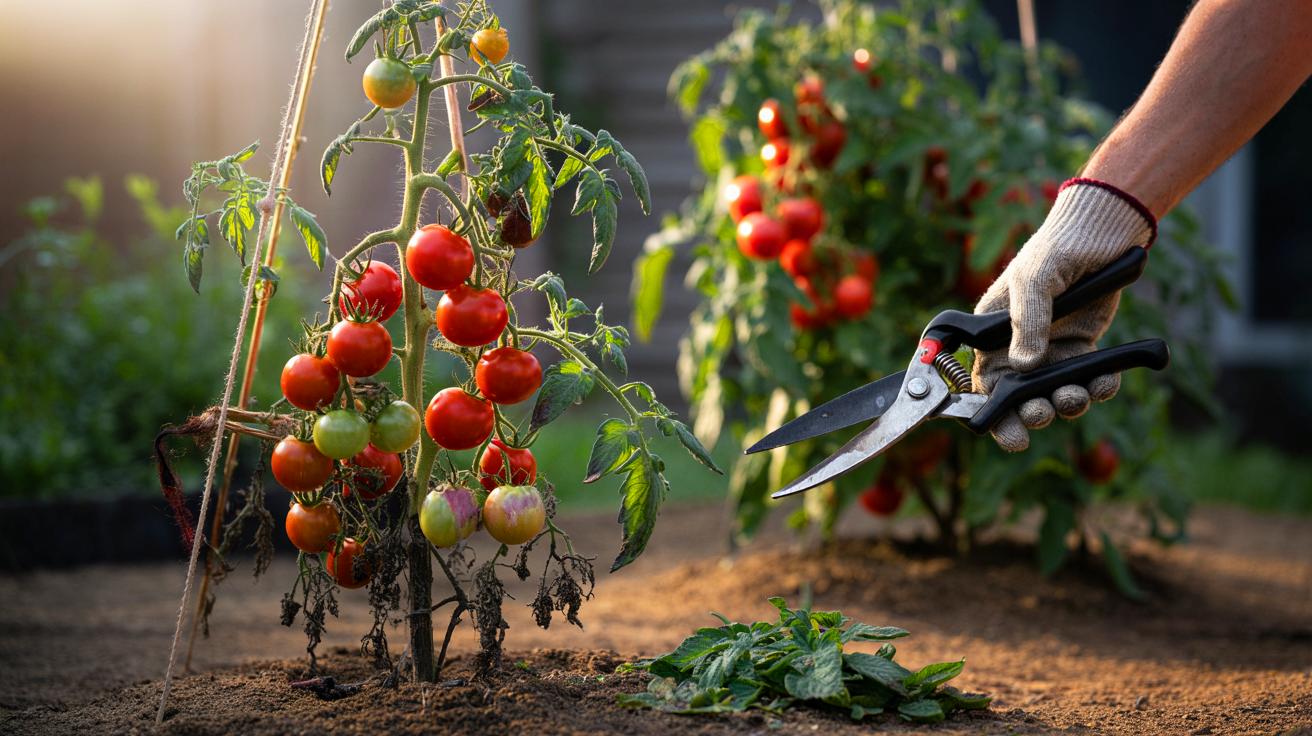
Every summer, hopeful tomato growers reach for their pruners with the same intention: stronger plants and sweeter fruit. Yet seasoned gardeners warn that one habit quietly sabotages that goal. It isn’t neglect. It’s zeal. The single pruning mistake that weakens tomato plants is removing too much foliage too quickly, often in a bid for airflow or tidiness. That aggressive “haircut” drains energy, exposes fruit to harsh sun, and can stall production just when vines should be surging. Think of leaves as solar panels and shock absorbers for heat and disease—lose too many, and the plant staggers. The fix isn’t complicated. It’s about restraint, timing, and knowing when a sucker is friend, not foe.
What Gardeners Call the “One Big Mistake”
Ask experienced growers, and you’ll hear the same refrain: over-pruning. It shows up as wholesale stripping of leaves, cutting off multiple suckers at once, or “cleaning” stems until they’re nearly bare. Well-meaning gardeners do it for airflow, to tame sprawl, or because a video showed a perfectly manicured vine. But tomatoes, particularly indeterminate types, rely on a steady canopy to power growth and protect fruit clusters. Remove too much at one time—especially early in the season—and you blunt the plant’s momentum.
Determinate tomatoes suffer even more. Their genetic clock is short, and heavy pruning robs a finite set of fruiting sites. Gardeners call this the “one big mistake” because the damage isn’t always obvious in the moment; the plant still looks neat. The consequences arrive later: smaller trusses, pale foliage, and fruit that sunburns. The solution begins with a slower hand—snipping only what clearly competes with airflow at the base, diseased leaves, and the occasional sucker that congests a joint.
Why Excess Leaf Removal Backfires
Leaves are the plant’s factory floor. Strip them, and you slash photosynthesis, reducing the sugars that drive blossom initiation, fruit fill, and root growth. With fewer leaves, tomatoes can’t feed both foliage and fruit, so yield and flavor often suffer. A thinned canopy also increases sunscreen failure: fruit and stems take direct sun, leading to sunstald—bleached, leathery patches that never heal. Heat stress rises, transpiration falters, and calcium delivery can wobble, raising the risk of blossom-end rot in stressed plants.
There’s a disease angle, too. Wounds from excessive cuts become entry points for pathogens, especially if tools aren’t clean or the foliage is wet. That “open architecture” many chase can be met with moderate thinning and good staking, not a near-bare vine. Most pros follow a rule of thumb: never remove more than one-third of healthy foliage at a time. Instead, they prioritize the bottom 12–18 inches for sanitation and keep a dappled canopy over ripening clusters to guard against the fiercest midday rays.
How to Prune Tomatoes the Right Way
Effective pruning is incremental. Start by supporting the plant—stakes, cages, or string trellises—so vines aren’t dragging in soil. Then, focus on sanitation: remove yellowing leaves and any foliage that touches the ground. In indeterminate plants, selectively pinch suckers below the first fruit truss to simplify the structure, but leave enough greenery to shade fruit. Prune on dry mornings with clean, sharp tools, and sanitize between plants. That reduces pathogen spread and gives wounds a full day to seal.
Determinate tomatoes require a lighter touch. Limit pruning to disease removal and the lowest leaves. Overdoing it cuts potential yields markedly. For both types, pace matters: adjust canopy gradually over weeks, not in a single session. Water deeply, mulch, and feed consistently so the plant can recover from minor cuts without stress spikes. Use the quick guide below to keep cuts within safe bounds.
| Pruning Action | Safe Guideline | Risk If Exceeded |
|---|---|---|
| Leaf removal | Max 1/3 healthy foliage per session | Photosynthesis crash, sunscald, yield loss |
| Suckers (indeterminate) | Pinch a few weekly; keep canopy dappled | Stunted vines, fewer trusses, heat stress |
| Suckers (determinate) | Remove only congested or diseased growth | Reduced fruit set on short-season plants |
| Timing | Dry mornings; never when foliage is wet | Disease spread through fresh wounds |
Signs You’ve Gone Too Far and How to Recover
Over-pruned plants tell on us. Leaves go pale or curl. Fruit blushes then scorches on the sun side. New growth slows, and clusters stall at marble size. You may even see a sudden flush of thin, weak side shoots as the plant scrambles to regain leaf area. If stems look bare between nodes, the canopy has likely been stripped beyond a safe threshold.
Recovery is possible. Stop cutting for at least two weeks. Boost consistent soil moisture—deep, infrequent watering under a 2–3 inch mulch—to reduce heat stress. Provide temporary shade during peak sun with a 30% cloth or a simple board leaned to cast dappled light over fruiting clusters. Feed moderately with a balanced fertilizer; avoid heavy nitrogen that makes soft, disease-prone foliage. Allow one or two strategic suckers to grow and rebuild the canopy above fruit trusses. Resume pruning only to remove diseased leaves, and then in small, spaced-out sessions. Let the plant regain its “solar panels” before shaping again.
Tomatoes reward moderation. The difference between a tidy, productive vine and a weakened one often comes down to restraint, clean tools, and well-timed cuts that keep a protective canopy intact. Over-pruning is tempting because it looks instantly organized, but tomatoes thrive under managed abundance, not austerity. The next time you reach for the pruners, ask: Which leaves feed this fruit, and which truly invite trouble? Cut a little, then wait. Your harvest will reflect that patience. What rules—or hard-earned mistakes—guide your hand when you decide how much to prune?
Did you like it?4.4/5 (24)