In a nutshell
- 🌱 Cardboard layering (sheet mulching) blocks light while letting water through, delivering season-long weed suppression without herbicides.
- 🧰 Installation matters: overlap sheets by 6–8 inches, remove all tape, soak thoroughly, and finish with 3–4 inches of mulch for a tight, light-proof seal.
- 📦 Choose materials wisely: use plain, unwaxed corrugated cardboard and pair with appropriate mulch (wood chips, shredded leaves, or straw) to balance longevity and nutrition.
- ⚠️ Avoid common mistakes: don’t leave gaps, keep mulch off trunks, and double-layer or edge-trench to contain aggressive perennials like bindweed or bermudagrass.
- 🌿 Beyond weeds, the method boosts soil health by feeding microbes and earthworms, conserving moisture, reducing erosion, and improving structure for stronger plant growth.
Gardeners love shortcuts that work. The cardboard layering trick—also called sheet mulching—is one of those rare, low-cost methods that delivers all season. It smothers weeds, protects moisture, and quietly feeds the soil as it breaks down. No fancy tools. No herbicides. Just overlapping sheets of plain cardboard topped with a generous blanket of organic mulch. The result feels almost unfair: fewer weeds, richer earth, happier plants. This simple barrier starves weeds of light while letting water pass through. Done right, it can convert a scruffy patch or turf into a plant-ready bed in weeks. Here’s how it works—and how to make it last.
Why Cardboard Smothers Weeds
Cardboard blocks sunlight. That’s the heart of the strategy. Most annual weeds exhaust their seed reserves when they germinate, then die in darkness. Without light, photosynthesis stalls and shoots fail. By denying weeds light while still allowing air and water to move, cardboard creates a lethal bottleneck for unwanted plants. The cellulose fibers wick moisture; rain and irrigation seep through, but not enough light reaches the weed canopy underneath. Seeds above the cardboard can’t access soil, so they desiccate under mulch before establishing roots.
Unlike plastic sheeting, plain, unwaxed cardboard is porous and biodegradable. It moderates soil temperature and creates a humid microclimate that wakes up microbial communities and attracts earthworms. As those organisms chew through fibers, they incorporate organic matter, improving structure and tilth. Perennial bruisers—think bindweed or bermudagrass—may still probe through seams, but a thick, well-overlapped layer greatly slows them. For most gardens, a single season of coverage reduces the weed bank dramatically. The balance is elegant: cardboard lasts long enough to smother weeds, then vanishes into the soil food web.
How To Lay Cardboard Correctly
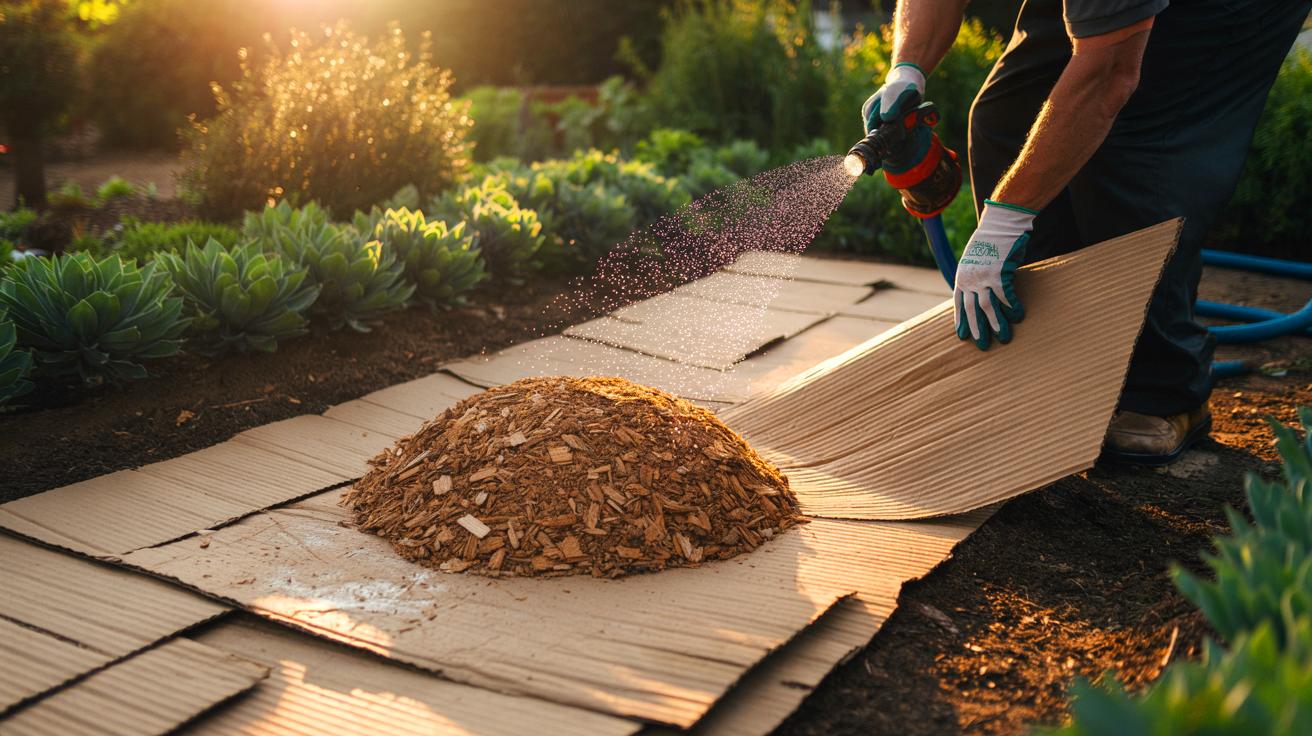
Start clean. Break down boxes, strip all tape, labels, and staples. Avoid glossy or waxed finishes. Lay sheets on bare soil or close-cropped turf; scalping with a mower speeds results. Overlap every edge by at least 6–8 inches so no cracks admit light. Double up if you’re battling rhizomatous grasses. Soak each layer thoroughly; wet cardboard contours to the ground and seals gaps. Water is your friend here—saturated cardboard molds itself into a tight, light-proof quilt. Finish with 3–4 inches of mulch (wood chips, shredded leaves, or straw), keeping mulch pulled 3–4 inches back from trunks and crowns.
Don’t skip the edges. Create a shallow edge trench or tuck the perimeter under itself to stop weeds and mulch migration. On slopes, pin layers with landscape staples or sticks. Planting now? Slice an X, peel back, add compost, and set transplants; water deeply. For direct sowing, wait until the cardboard softens or reserve open strips. Thickness matters: too thin invites weeds, too thick can shed water on compacted soils. A single season is typical, though in cool, dry climates, cardboard may persist into spring—usually a benefit.
| Layer | Material | Recommended Depth | Purpose |
|---|---|---|---|
| Base | Cardboard (plain, unwaxed) | 1–2 layers, 6–8 in overlap | Light block, weed suppression |
| Top | Mulch (chips, leaves, straw) | 3–4 inches | Moisture retention, UV protection, appearance |
What Materials Work Best
Choose corrugated cardboard with no wax and minimal printing. Brown shipping boxes are ideal. Remove plastic tape, nylon strapping, and glossy labels—contaminants slow decomposition and can surface later. Skip waxed produce boxes and heavily coated cereal cartons; coatings repel water and resist breakdown. Recycled kraft paper or 6–10 layers of newspaper can substitute in tight spots, though they decay faster. Think breathable and biodegradable—your goal is a temporary shield, not a permanent tarp.
Top with a mulch that matches your goal. Fresh arborist wood chips excel for pathways and perennials; they are chunky, cool the soil, and last. Shredded leaves feed microbes fast and glide into soil by spring. Straw is light and tidy but may carry a few seeds; look for certified weed-free bales. Compost works as a finish layer around vegetables but compacts if used alone. A mix often wins: compost for nutrients close to roots, then chips or leaves for bulk cover. Pair the right top layer with sound cardboard and you’ll extend weed suppression for the entire season.
Common Mistakes And How To Fix Them
Gaps are the number one failure. If you can see soil, weeds can see sunlight. Overlap generously and weigh corners. Too little mulch is a close second; under 2 inches, the sun bakes the cardboard and seams curl. Apply 3–4 inches, then spot-check after the first rain. Never mound mulch against stems or trunks—it invites rot and pests. Using glossy or waxed cardboard slows water infiltration and can suffocate roots on heavy soils; swap for plain corrugated and re-wet.
Dealing with persistent perennials? Add a second cardboard layer, trench the edge, and patrol monthly. Slice spears of bindweed as they appear; repeated exhaustion works. Slugs sometimes love the cool, damp interface; set simple beer traps or rough up the top mulch with wood chips to deter them. On steep grades, staple layers every 18 inches and break long runs with mini-contours. If water pools, poke small holes sparingly or add a looser top mulch. Maintenance is minimal but not zero—five minutes a week keeps the system tight.
Beyond Weed Control: Soil Health Benefits
Cardboard sheet mulching does more than silence weeds. It sets the table for soil regeneration. As fibers decompose, they feed fungi and bacteria that glue soil particles into stable aggregates, increasing aeration and water holding capacity. Earthworms drag fragments down, leaving nutrient-rich castings behind. On urban lots or compacted yards, that slow-motion renovation is a game-changer. The method saves water, cuts fertilizer needs, and reduces herbicide use. It also curbs erosion by softening raindrop impact and protecting bare ground during shoulder seasons.
Converting lawn? Lay cardboard in fall, top with leaves and chips, and plant in spring. The turf decomposes under cover, adding organic matter right where roots will grow. For edible gardens, the approach shines between rows or around perennials like berries and fruit trees. In drought-prone regions, the moisture savings are tangible; in wet climates, the moderated surface prevents crusting. The beauty is practical: it’s cheap, scalable, and forgiving. Small backyard or community farm—the physics and biology work the same.
With a stack of boxes, a hose, and a pile of mulch, you can buy yourself a season of quiet beds and richer soil. The technique isn’t glamorous, but it is resilient, reversible, and rooted in ecology. Start small, test a strip, and watch weed pressure collapse while soil life surges. Then scale up when you see the difference. One afternoon of layering can save you months of weeding. Ready to try the cardboard trick on a patch you’ve been battling—where will you lay your first sheet this weekend?
Did you like it?4.6/5 (29)