In a nutshell
- ☁️ Cloudy conditions reduce evaporation, giving cleaning solutions longer dwell time and preventing surfactant residue from drying into streaks.
- 🔍 Diffuse light reveals residue, making smears, arcs, and lint visible while you work, so corrections happen before the glass dries.
- 🌡️ Cooler glass improves safety and protects seals and films, reducing fatigue, ladder risk, and material damage.
- 🧰 Sharper technique and tools—squeegee “S” strokes, edge feathering, microfiber applicators, and clean channels—deliver pro-level clarity.
- 📊 Higher efficiency and fewer reworks: steadier rhythm, clearer panes on the first pass, and less time spent on touch-ups.
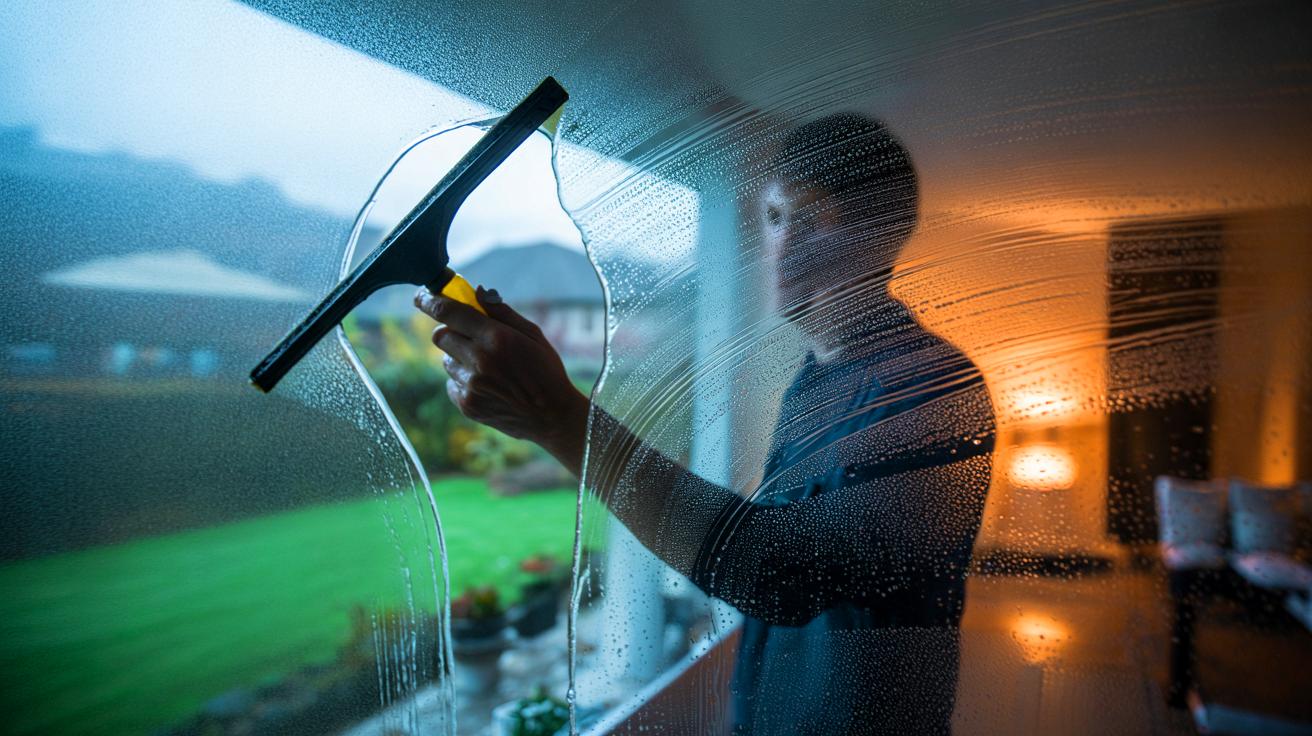
Sunlight feels like the right time to tackle chores, yet seasoned window cleaners whisper a different truth: cloudy days win. On overcast mornings, evaporation slows down, giving your cleaning solution time to dissolve oily films and lift mineral dust before a squeegee pulls it clean. In bright heat, water flashes off and leaves surfactant residue behind as streaks. Diffuse light reveals smears you would miss in glare. Work becomes calmer. Edges get the attention they deserve. For the clearest glass with the fewest do‑overs, shift your schedule toward gray skies. Here’s why experts insist the results are noticeably better—and how to use that advantage at home or on the job.
The Science of Evaporation and Streaks
Glass looks simple. It isn’t. Cleaning solutions rely on surfactants to break surface tension so water can wet and lift grime. They also need dwell time—a short window when the chemistry can loosen greasy fingerprints, pollen, and airborne pollutants. Under direct sun, that window slams shut. Water evaporates, surfactants concentrate, and dissolved soil re-deposits as the liquid “flashes” away. Slower evaporation equals cleaner glass and fewer streaks. That’s the cloudy-day advantage in one line.
Temperature matters too. Hot panes expand, changing how fluid sheets across the surface and causing “tear drops” that the squeegee misses. A cooler, overcast day keeps the glass in a stable range, so solution forms an even film and the rubber blade glides without chatter. Pros talk about “edge bleed”—residual moisture sneaking from gaskets after a pass. Lower heat reduces that bleed, so your detailing towel actually finishes the job. The chemistry is simple: more time to emulsify, less chance to dry in place, better transfer of soil from glass to cloth—then to the bucket, not back on the window.
Visibility and Technique: Why Diffused Light Reveals More
Direct sunlight hides sins. Glare throws reflections at your eyes and masks faint residues until the glass is already dry. Diffuse light on a cloudy day acts like a softbox, highlighting smears, arcs, and lint before they lock in. You see the trail you’re making, not the one you hope you made. That changes technique. Your squeegee “S” strokes can overlap precisely. You can “feather” edges—light, short strokes along frames—to stop those pale halo lines. And you can spot monofilament scratches or hard-water ghosts quickly enough to switch tactics.
Clarity is contagious: process improves when you can actually see it. Use a microfiber applicator with a modestly soapy solution (just enough slip, not suds). Work top to bottom. Keep a dry detailing cloth in your back pocket for corners and muntins. On a bright day, you might miss a faint arc until you’re packing up the ladder. Under clouds, a simple check—step back, sight the pane from two angles—catches it immediately. The result is fewer callbacks, fewer re-wipes, and a pane that looks invisible, which is the whole point.
Safety, Speed, and Real-World Efficiency
There’s a practical side that experts rarely skip: safety and pace. High sun heats glass, metal frames, and the air you’re breathing. That raises fatigue and adds wobble to ladder work. Cloudy conditions keep surfaces cooler and hands drier, so grips stay confident and movements are deliberate. Cooler glass also protects seals and films; hot panes can soften old caulk, and the wrong solvent might etch or haze when heat accelerates reactions. Overcast conditions reduce both physical strain and material risk while boosting throughput.
Consider how the variables stack up during a normal route or weekend project. The table below distills what technicians report on job sheets and what homeowners notice after the last pane is done.
| Condition | Sunny | Cloudy |
|---|---|---|
| Evaporation Rate | Fast; solution flashes | Moderate; longer dwell |
| Streak Risk | High, especially edges | Low with proper technique |
| Glare/Visibility | Strong glare hides smears | Diffuse light reveals residue |
| Worker Comfort | Heat, sweat, eye strain | Cooler, steadier rhythm |
| Rework Likelihood | Frequent touch-ups | Rare, first pass holds |
None of this demands fancy gear. A sharp squeegee, clean channels, a wetting applicator, and two cloths—one for heavy moisture, one “polish” dry—are enough. Schedule exteriors for overcast stretches, save interiors for bright days, and rotate around wind gusts that spray dust back onto wet glass. Small change, big payoff.
So the expert consensus isn’t superstition; it’s physics, optics, and workflow cooperating at once. Clouds slow the clock, reveal the flaws, and make every stroke count. If you want glass that disappears, pick gray over glare, use just enough solution to glide, and finish edges like a pro. The satisfaction is immediate—no streaks, no hazy arcs, just clean daylight. Will you rewrite your cleaning calendar and try your next window day under a soft, overcast sky, then judge the difference with your own eyes?
Did you like it?4.4/5 (30)