In a nutshell
- 🧊 The freezer trick works by pushing gum toward its glass transition so it turns brittle, letting you snap it off instead of smearing it.
- 🧥 Steps: seal, freeze, snap—bag the item with gum exposed, freeze 30–60 minutes, scrape with a card edge, re-freeze stubborn spots, then pre-treat and launder; do not heat until residue is gone.
- 🧵 Fabric-specific tips: denim and cotton need longer freezing and a dull tool; synthetics require lighter scraping; wool/silk demand gentler edges; upholstery benefits from an ice pack to localize the chill.
- 🧪 Troubleshooting: lift residue with isopropyl alcohol or a citrus remover, use compressed air to flash-freeze bulky items, avoid blades that cut fibers, and remember heat sets stains.
- 🛡️ Prevention and follow-up: pre-treat, wash, air-dry, recheck; keep spare wrappers and a zip bag for quick triage; the cold method also helps with sticker residue and tree sap.
Chewed gum on a sleeve. A streak on the seat of your favorite jeans. Sticky, stubborn, maddening. There’s a surprisingly easy fix hiding in plain sight: your freezer. The freezer trick turns tacky, elastic chewing gum into a brittle chip you can flick away in seconds, saving fabric and your sanity. It’s low-cost, low-risk, and fast once the chill sets in. No harsh chemicals. No messy smearing. Just a clean break. Seal, freeze, snap, and wash becomes the mantra, and the method works on everything from cotton tees to couch cushions. Here’s how—and why—the cold conquers gum when scrubbing and scraping often fail.
Why Freezing Works on Gum
Gum is a blend of elastomers, resins, and plasticizers—a flexible polymer engineered to stretch. Warmth keeps it rubbery. Cold changes the rules. When you drop the temperature, the polymer approaches its glass transition, turning less elastic and more glass-like. At home freezer temps (around 0°F / -18°C), the sticky wad loses its grip, growing rigid enough to shatter or peel cleanly. That’s the entire advantage: you’re not dissolving gum, you’re changing its behavior. No aggressive scrubbing, no spreading the mess deeper into fibers.
Heat, by contrast, often guarantees disaster. It softens, smears, and drives the gum further into the weave. The freezer method avoids that trap and preserves dyes, stitching, and delicate finishes. It’s especially effective on textured fabrics where gum burrows between threads. Think denim, canvas, twill. Add careful scraping with a dull edge, and the wad lifts in flakes. Even the residue comes away with a second chill or a quick spot treatment. Cold turns a sticky problem into a simple mechanical one. That’s why it feels almost instant the moment the gum goes brittle.
Step-by-Step: The Freezer Trick for Clothing and Upholstery
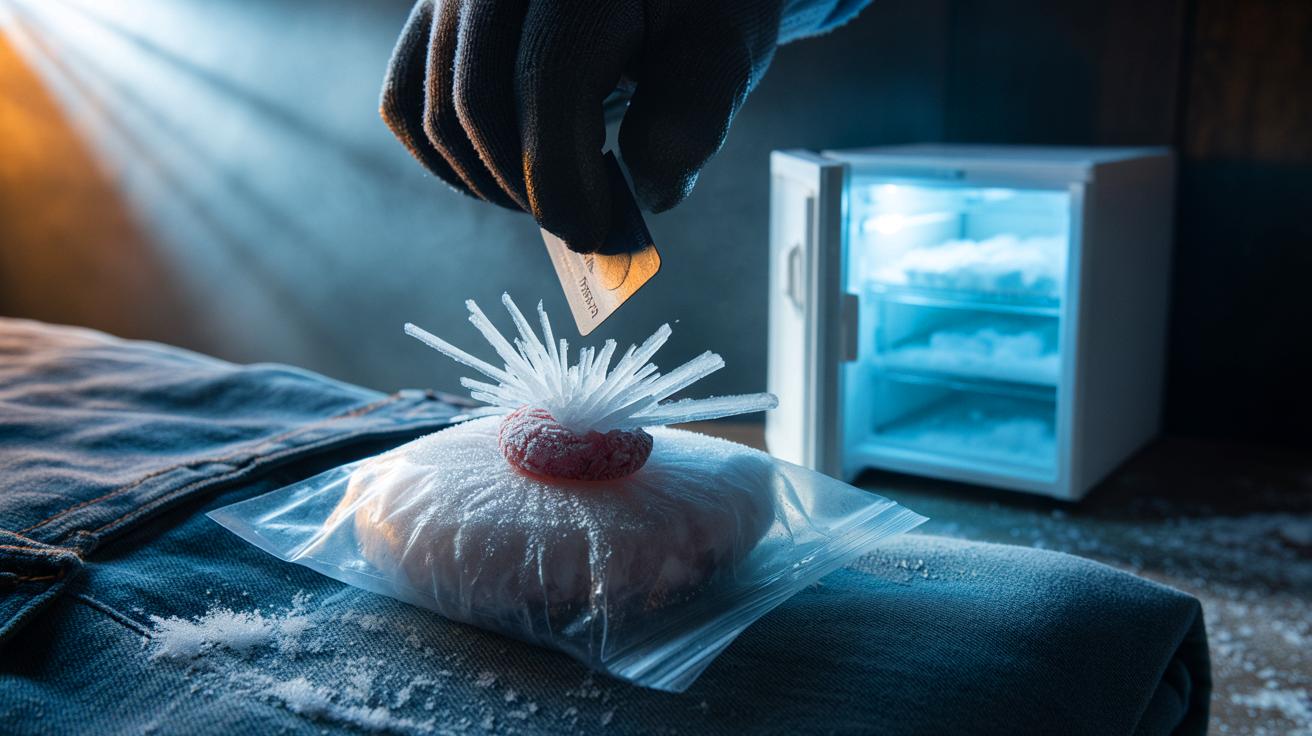
First, isolate the mess. Fold the garment so the gum faces upward. Slide it into a sealed plastic bag, keeping the gum exposed and not pressed into fabric. Seal the garment in a bag before freezing to prevent moisture and odor transfer. Place it flat in the freezer for 30–60 minutes. Thicker wads may need up to two hours. For items you can’t bag—like cushions—press a sealed bag of ice or a frozen gel pack on the spot until the gum turns rock-hard.
Work quickly after removing from the cold. Using a credit card edge or a dull butter knife, flick from the fabric toward the gum, not into the fibers. Chips should snap off. Stubborn flecks? Re-freeze for 10 more minutes. Lift remaining crumbs with a strip of packing tape. Pre-treat the spot with liquid laundry detergent or a stain remover, then launder on the warmest safe setting. Air-dry and inspect. Do not machine-dry until every trace of gum is gone, because heat can set invisible residue.
| Fabric | Freezing Time | Scraping Tool | Caution |
|---|---|---|---|
| Denim/Cotton | 45–60 min | Card edge or dull knife | Pre-treat seams; inspect pockets |
| Polyester/Blends | 30–45 min | Card edge | Avoid aggressive scraping to prevent pilling |
| Wool/Cashmere | 30–45 min | Spoon edge | Support from underside to protect knit |
| Silk | 20–30 min | Plastic scraper | Blot only; test any solvent on seam |
| Upholstery/Carpet | Ice pack 10–20 min | Card edge | Freeze spot only to avoid condensation |
Troubleshooting Stubborn Residue and Sensitive Fabrics
If a faint film remains after freezing and flicking, repeat the chill. The second round often releases what the first round missed. Still tacky? Dab a cotton swab with isopropyl alcohol (70% or 91%) or a citrus-based adhesive remover and blot, don’t rub. Always test on a hidden seam. For natural fibers, a tiny amount of glycerin can loosen residue before a cold-water rinse. Avoid knives and razor blades; they cut fibers and leave a visible scar where the gum once sat.
Can’t fit a bulky item into the freezer? Use an upside-down compressed-air duster to spray a short burst; the propellant flash-freezes gum on contact. Keep ventilation in mind and wear gloves to prevent frostbite. On knits, support the fabric from behind with a spoon to avoid stretching. For dark garments where gum dyes transfer, pretreat with an oxygen-based bleach (color-safe) and wash again. Skip chlorine bleach on colors. Leather or suede are special cases: freeze the wad, lift gently, then consult a pro cleaner for any remaining haze. And remember, heat sets stains, so no irons or dryers until the spot is truly clear.
Preventive Tips and Laundry Follow-Up
After removal, pre-treat what’s left with liquid detergent, dish soap, or an enzymatic cleaner, working it in with your fingers. Wash on the warmest safe cycle per the care label. Air-dry, check under bright light, then wash again if needed. Never send a “maybe” stain into the dryer. Heat will lock it in. A vinegar rinse can lift odors from solvent use, while a final cold rinse smooths fibers and reduces lint. If pilling appears on synthetics, snip pills carefully with small scissors post-wash.
A little planning prevents most gum disasters. Stash spare wrappers in bags and cars. Teach kids the pocket check ritual. Keep a zip bag in the laundry room for quick “freeze later” triage when time is tight. The freezer trick isn’t just for gum: the same cold snap helps with sticker residue, price tags, and even tree sap on workwear. It’s clean, cheap, and reliable. When a sticky surprise strikes, you now have a newsroom-tested playbook. What fabric in your closet deserves its first victory lap against gum, and which trick—bag-and-freeze or spot-ice—are you ready to try tonight?
Did you like it?4.5/5 (30)