In a nutshell
- 🌱 Why it works: banana peels supply potassium (K) plus modest phosphorus, magnesium, and calcium, making a gentle fruiting-stage booster (low in nitrogen) for sturdier stems and better fruit.
- 🧪 Recipe: rinse and chop 4–5 peels, steep in dechlorinated water for 24–48 hours, strain, and dilute 1:4 for established plants or 1:6 for young transplants; bury solids or compost to avoid pests.
- ⏰ Timing & dosage: begin light feeds two weeks after transplanting, then apply weekly/biweekly at flowering; water 1–2 cups of the diluted solution per plant onto moist soil, and skip before heavy rain.
- 🛡️ Safety: refrigerate concentrate up to 5 days, avoid foliar spraying, keep applications a couple inches from the stem, and practice clean handling to prevent odors and gnats.
- 🍅 Results & add-ons: expect improved fruit set, color, and water regulation; for extra minerals, add finely crushed eggshells (calcium) or a pinch of Epsom salt (magnesium); pair with a balanced fertilizer for complete nutrition.
Home gardeners swear by the humble banana peel, and for tomatoes the hype has a kernel of truth. Rich in natural potassium and helpful minerals, peels can be transformed into a simple, low-cost fertilizer that nudges vines toward sturdier stems, better water regulation, and fruit with deeper color. The trick is to use them wisely. Keep it clean, keep it dilute, and know what this DIY feed can—and cannot—do. Below is a practical, research-informed recipe that turns kitchen scraps into a tomato tonic, along with timing and safety guidance that prevents smells, pests, and disappointment. Think of it as a supplement, not a silver bullet.
Why Banana Peels Feed Tomatoes
Tomato plants are hungry. When flowering and setting fruit, they demand a steady stream of potassium (K) to shuttle sugars, regulate water balance, and strengthen cell walls. Banana peels deliver that in spades, alongside modest phosphorus (P) for root vigor and bloom support. They also supply trace magnesium and calcium, two minerals that help chlorophyll production and cell integrity. While peels are famously low in nitrogen, that’s not a flaw—it’s a feature for midseason feeding, when excessive nitrogen can encourage foliage at the expense of fruit. This is a fruiting-stage booster, not a leafy-growth rocket.
How it works is simple biology. As peels steep or break down, soluble potassium and some phosphorus move into water, while microbes nibble the rest in soil. The plant sees a gentle bump in K that can tighten flavor and improve firmness. Results aren’t instant; they’re cumulative and subtle, which suits tomatoes sensitive to harsh, salty fertilizers. Still, balance matters. Pair peel fertilizer with a complete nutrient source so tomatoes don’t miss essential nitrogen and micronutrients across the season. Used in tune with the plant’s calendar, the humble peel becomes strategic.
| Nutrient | What It Does for Tomatoes | Source in Recipe |
|---|---|---|
| Potassium (K) | Improves fruit set, color, and water regulation | Banana peel infusion |
| Phosphorus (P) | Supports rooting and bloom energy | Banana peel solids |
| Calcium | Aids cell walls; helps prevent disorders | Minor in peels; optional eggshell add-in |
| Magnesium | Boosts chlorophyll and photosynthesis | Trace in peels; optional Epsom pinch |
Step-By-Step: Banana Peel Fertilizer Recipe
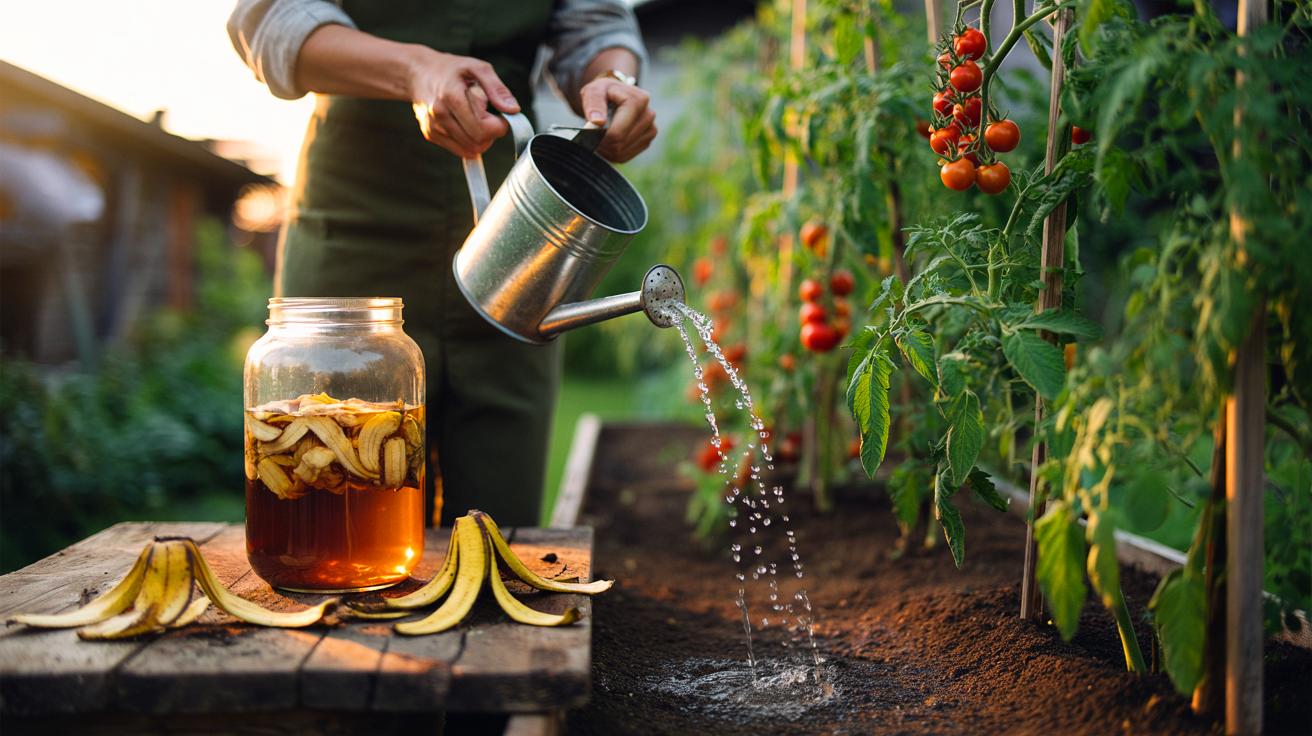
Rinse 4–5 ripe banana peels to remove residues. Chop into 1-inch pieces to increase surface area. Pack them into a clean glass jar, then cover with 1 quart (1 liter) of non-chlorinated water. Weigh the peels down with a small saucer so they stay submerged, and cap loosely. Steep 24–48 hours at room temperature; strain through a fine sieve or cloth to prevent clogging watering cans. Do not ferment longer than 48 hours without an airlock. Past two days, anaerobic microbes multiply, creating odors and potential plant stressors.
Use the darkened liquid as a concentrate. For established tomatoes, dilute at a 1:4 ratio—1 cup concentrate to 4 cups water. For young transplants, go gentler at 1:6. Apply to moist soil, not bone dry, to avoid root burn from sudden osmotic changes. If you want a calcium lift, bake clean eggshells at low heat, crush finely, and whisk a teaspoon into the dilution; for magnesium, dissolve a tiny pinch of Epsom salt (magnesium sulfate). Strained peel solids? Bury two inches deep in the bed or add to hot compost to deter fruit flies. Keep it clean, keep it moving, and your garden stays stink-free.
Application Timing, Dosage, and Safety
Timing is everything. Start light applications two weeks after transplanting, once roots are exploring. Shift to weekly or biweekly feeds as the first flower clusters open—the window when tomatoes crave potassium. Water 1–2 cups of the diluted solution per plant, depending on container size and soil moisture. In heat waves, scale back frequency rather than volume to avoid waterlogging. Wet soil plus rich feed is an invitation to root stress. If rain is forecast, wait; nutrients wash through quickly when media is saturated.
Safety is straightforward. Store the strained concentrate in the refrigerator for up to five days; discard if it smells foul or appears slimy. Avoid foliar spraying—wet leaves invite disease; instead, drench around the drip line, keeping two inches away from the stem. Remember, this is not a complete fertilizer. Pair it with a balanced organic or synthetic feed that supplies nitrogen and micronutrients, especially in containers where leaching is rapid. Watch for signals: dark, lush leaves but pale fruit edges can mean excess N and low K; the peel tea helps correct that tilt. If fungus gnats appear, you steeped too long or left solids on the surface—tighten your hygiene. Small, regular, diluted doses beat heroic dumps every time.
Banana peel fertilizer is frugal, fast, and surprisingly effective when used with intention. It won’t replace a full feeding program, yet it can sharpen fruit quality while keeping waste out of the bin. The recipe above respects plant physiology and your nose, giving tomatoes the right nudge at the right moment. Try a side-by-side test on two similar plants and track what changes: firmness, color, yield, even flavor. The results may be modest—but measurable. What tweaks or timing strategies will you test first to dial in a peel-powered tomato harvest this season?
Did you like it?4.4/5 (27)