In a nutshell
- 🌊 The overnight soaking method restores plant turgor pressure by rewetting hydrophobic soil evenly, dislodging trapped air, and flushing salts that impede water uptake.
- 🪣 Step-by-step: submerge the pot in room-temperature water (30–60 minutes for mild wilt, 2–6+ hours for severe), then drain thoroughly for 20–30 minutes; never leave the plant standing in water and wait a week before fertilizing.
- 🌿 When it works—and doesn’t: ideal for under-watered tropicals and herbs; risky for succulents and a no-go if there’s root rot (mushy stems, sour odor)—repot instead; it’s a rescue, not routine.
- 🧪 Pro tips: add a teaspoon of kelp extract (very dilute), use a drop of unscented soap as a wetting agent, oxygenate the basin, soak in the evening, and briefly boost humidity with airflow; avoid heavy feeding during recovery.
- 🧭 Long-term fixes: if wilt returns, upgrade to higher-retention mix, up-pot one size, adjust heat/light, and refine watering cadence; for arid plants, stick to short bottom soaks only.
By morning, a slumped houseplant can look like a lost cause. Leaves curl, potting mix feels like dust, and the whole thing seems to sigh. Yet many plants bounce back dramatically with one overnight intervention: a full, controlled soak that restores turgor from the roots up. This simple method is less guesswork than it sounds. It relies on physics, plant anatomy, and patience. Done right, it rehydrates tissue, clears trapped air in the root zone, and resets water pathways. Done wrong, it drowns roots. Here’s how to use the overnight soaking method to rescue wilted plants quickly, safely, and with the least stress on the plant—or you.
What the Overnight Soak Actually Does
Plants wilt when cells lose pressure. The fix is not splashing the surface; it’s restoring turgor pressure throughout the plant by saturating the root ball so water can move through xylem efficiently. A controlled soak lets dry potting media rewet evenly, eliminating hydrophobic pockets that make water bead and run off. In extreme dryness, peat- or coco-based mixes can actually repel water; an extended soak gives time for capillary action to pull moisture back into stubborn particles. The goal is uniform moisture from the core of the root ball to the outer edges, not just a wet crust.
There’s a second, quieter benefit. Prolonged contact with oxygenated water helps dislodge trapped air after severe dry-down—those bubbles that block root hairs from contacting moisture. Soaking can also dissolve accumulated salts, which draw water away from roots via osmotic pressure. After a soak, the plant resumes uptake and the leaves can refill like tiny balloons. Bottom-watering has similar logic, but an overnight soak is a reset button: deeper, longer, and meant for emergencies rather than routine care.
Step-by-Step: The Simple Soaking Method
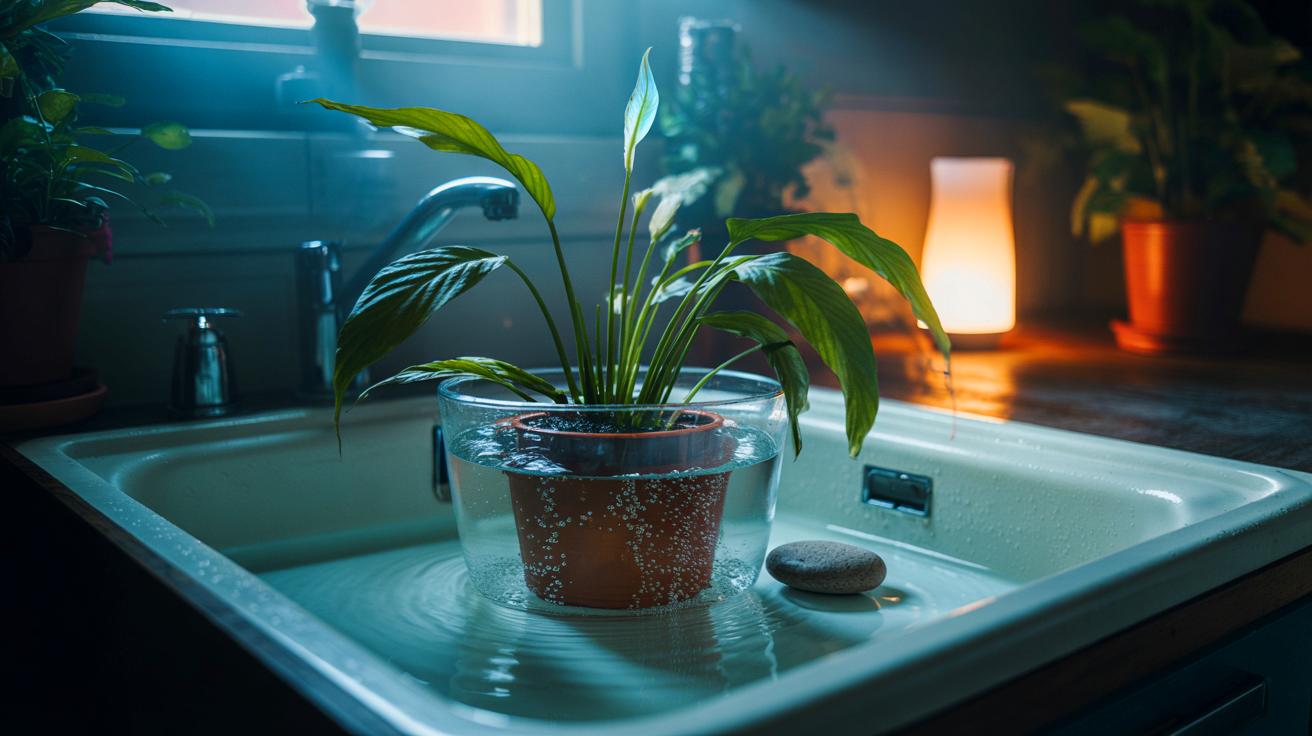
Choose a basin, sink, or bucket wider than the pot. Fill with room-temperature water to reach just below the pot’s rim once the plant is set in. Add the potted plant, ensuring the drainage holes are submerged. If it floats, weigh it down gently with a clean stone. Use plain, room-temp water; cold shocks roots, hot cooks them. Let the plant sit 30–60 minutes for mild wilt, up to 2–4 hours for bone-dry media. For thick terracotta pots or large containers, you may need 6 hours. Overnight (8–12 hours) is reserved for severe dryness and compacted mixes that resist rewetting.
Check hydration by pressing a finger deep into drainage holes or lifting the pot to feel weight. When the surface is evenly dark and the pot feels heavy, remove it. Let excess water drain for 20–30 minutes. Never leave a plant standing in water indefinitely—roots need air as much as they need moisture. Trim obviously dead leaves to reduce transpiration load. Move the plant to bright, indirect light, not full sun. Within hours, many leaves perk up. If you’re tempted to fertilize immediately, don’t; stressed roots absorb salts too aggressively. Wait a week before feeding.
When It Works—and When It Doesn’t
This method shines for plants that wilt from under-watering: peace lilies, herbs in small pots, thirsty tropicals, and newly potted annuals. It can help woody houseplants recovering from travel or a missed week of care. It’s risky for succulents and cacti; their roots rot easily when saturated. Plants with mushy stems, sour-smelling soil, or blackened roots are suffering root rot or fungal issues and need repotting, not soaking. If the potting mix smells anaerobic or the stem base is soft, skip the soak and perform a fast intervention: unpot, trim rot, and repot in fresh mix.
Use the guide below to match symptoms to action. Think of time-in-water as a dial, not a switch—adjust to plant type, pot size, and media.
| Symptom | Likely Cause | Soak Time | Helpful Additive |
|---|---|---|---|
| Limp leaves, dry soil pulling from pot | Severe under-watering | 2–6 hours | None or kelp extract (very dilute) |
| Water runs off surface | Hydrophobic potting mix | 4–8 hours | Drop of mild surfactant (unscented soap) |
| Yellow tips, crust on soil | Salt buildup | 1–3 hours + flush | None; rinse-through after soak |
| Mushy stems, sour odor | Root rot (over-watering) | Do not soak | Repot; prune rot; fresh mix |
Smart Add-Ins and Overnight Pro Tips
Most rescues need only water, but a few gentle tweaks can speed recovery. A teaspoon of kelp or seaweed extract per quart provides trace hormones that support root function without the burn risk of strong fertilizer. For aeration, stir or splash to oxygenate the basin before submerging the pot. A single drop of unscented dish soap acts as a wetting agent for stubborn hydrophobic mixes; rinse lightly after draining. Avoid heavy feeding during recovery—nutrients don’t fix wilt, water movement does. If you must fertilize later, use quarter-strength and only when new growth resumes.
Time your soak for late afternoon or evening. Night brings cooler temperatures and reduced transpiration, letting cells refill without solar stress. After draining, cluster plants together or place a loose plastic dome for a few hours to raise humidity, but keep airflow; stagnant air invites fungus. For succulents, skip full submersion: bottom-water for 10–20 minutes, then dry thoroughly. Finally, use this as a diagnostic moment. If wilting recurs weekly, upgrade to a higher-retention mix, up-pot by one size, or reduce direct heat. Soaking is a rescue, not routine. Build better watering habits from the data your plant just gave you.
Reviving a wilted plant overnight feels like a magic trick, but it’s really disciplined hydration: time, temperature, oxygen, and restraint. This simple soaking method restores pressure, clears blockages, and buys you time to correct the underlying cause—too-small pots, hydrophobic media, erratic watering. Keep it controlled, keep it temporary, and your plant will likely reward you by standing tall before breakfast. What stubborn species or tricky soil mixes have pushed you to try an overnight soak, and how might you fine-tune the process for your particular home environment?
Did you like it?4.5/5 (22)