In a nutshell
- 🌿 Epsom salt (magnesium sulfate) fuels chlorophyll and photosynthesis, boosting carbohydrate flow and lignification for stronger stems.
- 🔎 Spot magnesium deficiency: interveinal chlorosis on older leaves, thin stems; confirm with a soil test to avoid misdiagnosis.
- 🧪 Apply safely: soil drench 1 tbsp/gal every 4–6 weeks; foliar spray 1–2 tbsp/gal every 2–4 weeks; small transplant dose; remember it adds Mg and S, not NPK.
- ⚠️ Know limits: fix light, water, spacing, and pH first; excess Mg can block calcium and potassium and raise EC, stressing roots.
- 🍅 Expect best results on tomatoes, peppers, and roses when Mg is low; research shows mixed outcomes in Mg-sufficient soils—target, observe, adjust.
Gardeners whisper about it like a kitchen-shelf miracle: Epsom salt sprinkled or sprayed, and suddenly stems stand straighter, leaves deepen to emerald, and blooms hold their heads high. The science isn’t sorcery. It’s chemistry and plant physiology working in lockstep. Epsom salt is magnesium sulfate, a simple compound that can ease specific nutrient bottlenecks that keep stems from developing robustly. Use it wisely, though. Epsom salt is not a cure-all and not a substitute for balanced fertilization. But when soils run short on magnesium, or container mixes leach nutrients fast, a measured dose can be the difference between spindly and strong.
What Is Epsom Salt and Why Stems Respond
Epsom salt is simply magnesium sulfate (MgSO4·7H2O). Two elements, one big payoff. Plants use magnesium at the heart of chlorophyll, the pigment that captures light and drives photosynthesis. When chlorophyll production lags, energy production drops; growth stalls; stems elongate weakly in search of light. The sulfate side matters, too. Sulfur supports amino acid formation, which underpins structural proteins. Put together, magnesium and sulfur can help a plant mobilize sugars and build stronger cell walls.
Here’s the stem story. When photosynthesis ramps up, plants produce more carbohydrates, feeding tissues that reinforce stalks and branches through lignification. Healthier photosynthesis can translate to sturdier stems and better fruit set. Magnesium also assists in enzyme activation that governs nutrient transport, aiding calcium movement—another backstage player in cell wall integrity. That’s why, in the right context, a modest Epsom salt boost can turn floppy growth into resilient architecture. Keep perspective: If your soil already has adequate magnesium, adding more won’t help—and may hinder. Start with your context, not a trend.
Signs Your Plants Need a Magnesium Boost
Plants telegraph shortages. The classic signal of magnesium deficiency is interveinal chlorosis on older leaves—yellowing between green veins—while new growth initially stays greener. Stems may grow thin and lax, with leaves curling upward and edges crisping. Fruit quality can slip. Tomatoes and peppers show lackluster color and weaker peduncles; roses push leafy growth that tires quickly. If stems are stretching, not thickening, and lower foliage pales while veins stay dark, magnesium may be in play.
Don’t confuse it with other shortages. Nitrogen deficiency yellows leaves more uniformly. Iron deficiency strikes newest leaves first. Potassium shortfalls scorch margins; calcium issues show blossom end rot and distorted new growth. Clues overlap, so a simple soil test is the smart first step. Containers, raised beds with fast-draining media, and regions with sandy or acidic soils are more prone to magnesium leaching. In those settings, a targeted Epsom salt plan can be a practical patch for a real gap—not a ritual for every plant, every time.
How to Use Epsom Salt Safely in the Garden
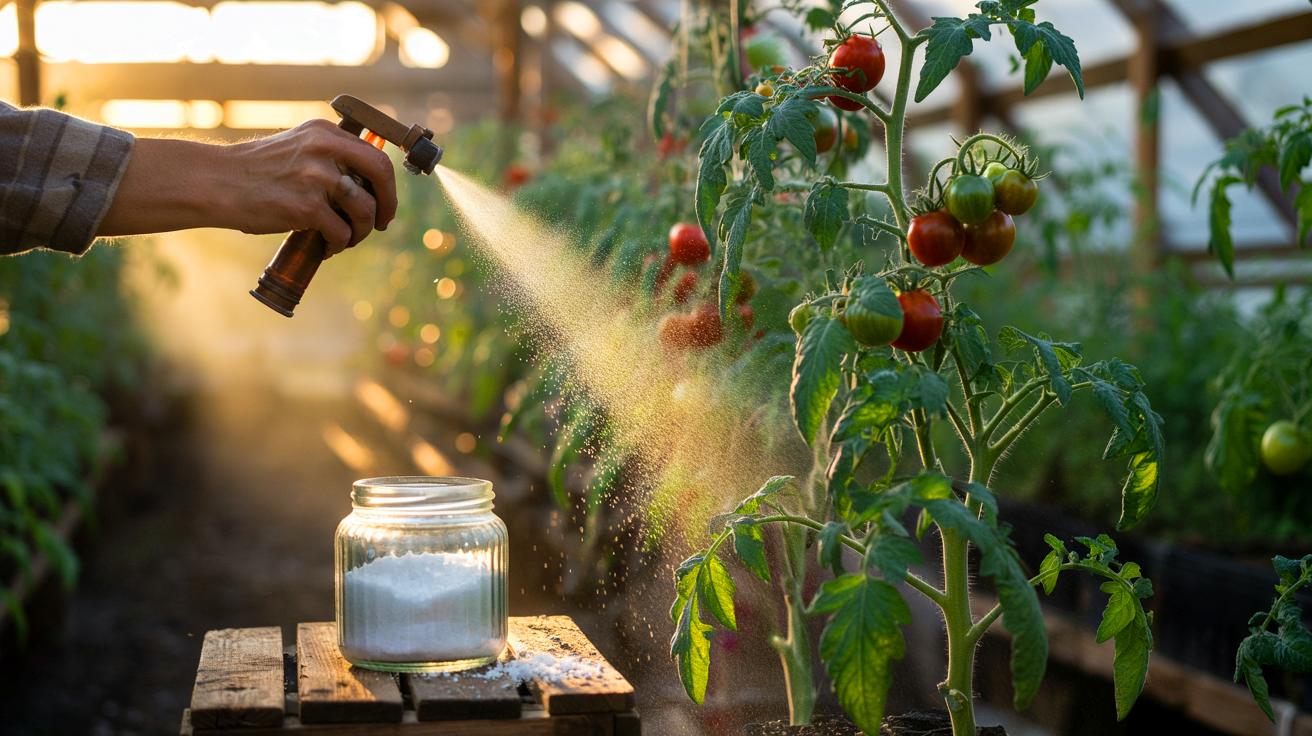
Match method to need. For steady support, a soil drench works: dissolve 1 tablespoon of Epsom salt per gallon of water and apply around the root zone every 4–6 weeks during active growth. For quick greening, try a foliar spray: 1–2 tablespoons per gallon, misting leaves on a cool, calm morning every 2–4 weeks. At transplanting, you can mix 1–2 teaspoons into the backfill of large containers or lightly around the planting hole, then water in. Always water before and after application to reduce leaf scorch and salt stress. Avoid piling crystals against stems.
Balance is everything. Epsom salt adds magnesium and sulfur, but not NPK. If your base fertilizer is lean, address that first. In calcareous or high-pH soils, magnesium uptake can be limited; organic matter and pH management often deliver better returns. When in doubt, test soil and leaf tissue before repeating applications. Too much magnesium can antagonize calcium and potassium uptake, subtly weakening the very stems you want to strengthen.
| Method | Recipe | Frequency | Best For |
|---|---|---|---|
| Soil drench | 1 tbsp/gal water | Every 4–6 weeks | General maintenance, raised beds |
| Foliar spray | 1–2 tbsp/gal water | Every 2–4 weeks | Rapid response, visible chlorosis |
| Transplant boost | 1–2 tsp mixed in | Once at planting | Containers, peppers, tomatoes, roses |
When Epsom Salt Doesn’t Help
Some problems wear a magnesium mask. Overcrowding and low light cause leggy stems regardless of nutrients. Insufficient nitrogen limits growth even if magnesium is ample. Drought stress? No salt fixes a dry root ball. Address water, light, spacing, and baseline fertility before you reach for any supplement. Another pitfall is pH. In very acidic soils, magnesium may leach rapidly; in very alkaline soils, it may be present but unavailable. Correcting pH often unlocks more benefit than adding anything new.
There’s also salt load. Epsom salt raises electrical conductivity (EC) in media. In containers, that can accumulate fast, risking root burn or nutrient antagonism. Flush pots periodically and avoid stacking Epsom salt on top of complete fertilizers without a plan. Finally, recognize diminishing returns: if stems are already thick and leaves richly green, more magnesium is not more strength. Use Epsom salt where a deficiency is plausible, proven, or historically likely, not because a neighbor swears by a tablespoon in every hole.
Real-World Results: Tomatoes, Peppers, and Roses
Warm-season crops and ornamentals with heavy fruit or bloom loads showcase the best outcomes. In tomatoes and peppers, correcting a magnesium dip can deepen leaf color, bolster photosynthesis, and indirectly thicken peduncles and stems supporting clusters. Gardeners report fewer snapped branches and steadier trusses in windy spells after a measured regimen. Roses often respond with glossier foliage and can hold blooms higher on sturdy canes when magnesium was previously scarce. The common thread: stronger stems follow improved energy flow and balanced nutrient uptake.
But not every trial glitters. University studies show mixed results in magnesium-sufficient soils. Some plots see no change, because there wasn’t a problem to fix. Others show subtle gains masked by weather swings or cultivar differences. The pragmatic takeaway is simple: target, observe, adjust. If interveinal chlorosis fades, stems thicken, and growth feels more resilient within a few weeks, stay the course—lightly. If nothing changes, stop, retest, and redirect effort to light, watering discipline, or a complete fertilizer that meets the crop’s actual demand.
The quiet secret of Epsom salt is not magic but matching dose to deficit. When magnesium is truly short, the compound’s swift solubility delivers fast relief, powering photosynthesis and the structural chemistry that builds tougher stems. Used with restraint—and respect for pH, EC, and overall fertility—it’s a cheap, reliable tool in a gardener’s kit. Test first, apply modestly, and watch your plants speak back through their leaves and stems. Where in your beds or containers do the signs suggest a targeted Epsom salt experiment this season?
Did you like it?4.4/5 (28)