In a nutshell
- 🧂 Salt is a dual-action cleaner: its coarse crystals provide gentle abrasion while its hygroscopic nature draws out moisture-bound pigments and odors from wood fibers.
- 🔬 Triple mechanism at work: abrasion lifts films, absorption wicks colored compounds, and osmosis pulls liquids from micro-capillaries, reducing set-in stains.
- 🍋 Boost with add-ins: pair salt with lemon for mild acidity, use baking soda for oily residues, and finish with diluted white vinegar to deodorize before rinsing.
- 🧂 Choosing the right grain: coarse kosher or sea salt delivers control and scouring power; fine table salt dissolves too quickly for effective scrubbing.
- 🧽 Simple method, better longevity: scrub, brief dwell, rinse, and dry upright, then condition with food-grade mineral oil to prevent future staining and extend board life.
Your cutting board takes the brunt of everyday cooking—beet juice, turmeric rubs, seared steak drippings, garlic oils. When those marks seem baked in, a pantry staple does the heavy lifting: salt. It looks simple. It isn’t. Granular crystals provide physical scrubbing power while the compound’s chemistry pulls discoloration and odors out of wood fibers. Salt works as both a gentle abrasive and a moisture magnet, a two-for-one that targets stains without damaging the board. Paired with lemon or a splash of water, it quickly forms a thin brine that loosens stuck-on residues. The result is practical and inexpensive: cleaner boards, less lingering odor, and better hygiene, all powered by the same mineral that seasons dinner.
The Science Behind Salt’s Stain-Lifting Power
Salt’s effectiveness starts with structure. Dry crystals—especially larger ones—behave like countless tiny scrapers, buffing the surface to dislodge pigments. Simultaneously, sodium chloride is hygroscopic: it attracts water. That matters because many tough stains are water-based or carry moisture that drags dyes and tannins into the board’s cellulose pores. When salt pulls that moisture outward, it helps reverse the migration. Think of it as coaxing color back to the surface, where friction can lift it away. In simple terms, salt helps stains let go.
Chemically, chloride and sodium ions interact with polar parts of food residues. These ion–dipole attractions make pigments and denatured proteins easier to mobilize in a thin film of liquid. Add a cut lemon and you introduce gentle acidity; now the forming brine can slightly loosen protein-based smears (from meat juices or egg) and brighten color. The process doesn’t bleach wood or break covalent bonds; it exploits capillary movement, mild acidity, and ionic interactions to reduce adhesion. Result: fewer shadows, less odor, and a board that feels new without harsh chemicals.
Abrasion, Absorption, and Osmosis: The Triple Action
Salt cleans by three complementary mechanisms. First is abrasion. Coarse crystals—think kosher salt—shear away surface films without gouging the grain. Second is absorption. The crystals wick up moisture that carries colored compounds, so the slurry you wipe away isn’t just water—it’s the problem itself. Third is osmosis. Salting creates a concentration gradient that pulls liquid from the wood’s micro-capillaries, reversing the path stains traveled in. This push–pull dynamic helps evacuate deeply seated color and odor.
Consider real-world offenders. Beet and berry anthocyanins embed quickly; turmeric’s curcumin binds stubbornly; garlic and onion sulfur compounds linger. Salt doesn’t erase every trace, but it reduces the intensity fast and safely. When paired with lemon, the mild acid brightens red-purple pigments and helps deglaze oils. With a few minutes of dwell time, the crystals soften, transforming into a paste that scours evenly. It’s a rare cleaning tactic that’s tactile, food-safe, and reliable across wood and bamboo boards—no bleach, no harsh solvents, no warping soak.
Choosing the Right Salt and Simple Add-Ins
Not all salt behaves the same. Grain size dictates scrubbing power, melting speed, and control. For cutting boards, coarse beats fine: it stays put, won’t dissolve instantly, and provides uniform abrasion. Specialty finishes aren’t essential—the mineral is still sodium chloride—but texture matters. Add-ins amplify results. Lemon adds acidity for protein smears. A pinch of baking soda boosts gentle alkalinity for fatty residues. A splash of white vinegar can deodorize once the board is rinsed and dried. Keep it simple, food-safe, and quick.
| Salt Type | Grain Size | Best Use on Boards |
|---|---|---|
| Kosher salt | Coarse, flat | Primary scrub; excellent control and coverage |
| Sea salt | Coarse to medium | Good scrub; variable crystal shapes add bite |
| Table salt | Fine | Minimal abrasion; better as finishing rinse in brine |
| Rock salt | Very coarse | Use sparingly; may be too aggressive for soft woods |
For maintenance, keep food-grade mineral oil on hand. After cleaning, oiling limits absorption of future stains, making salt’s job easier next time.
Step-by-Step Cleaning Method and Care Tips
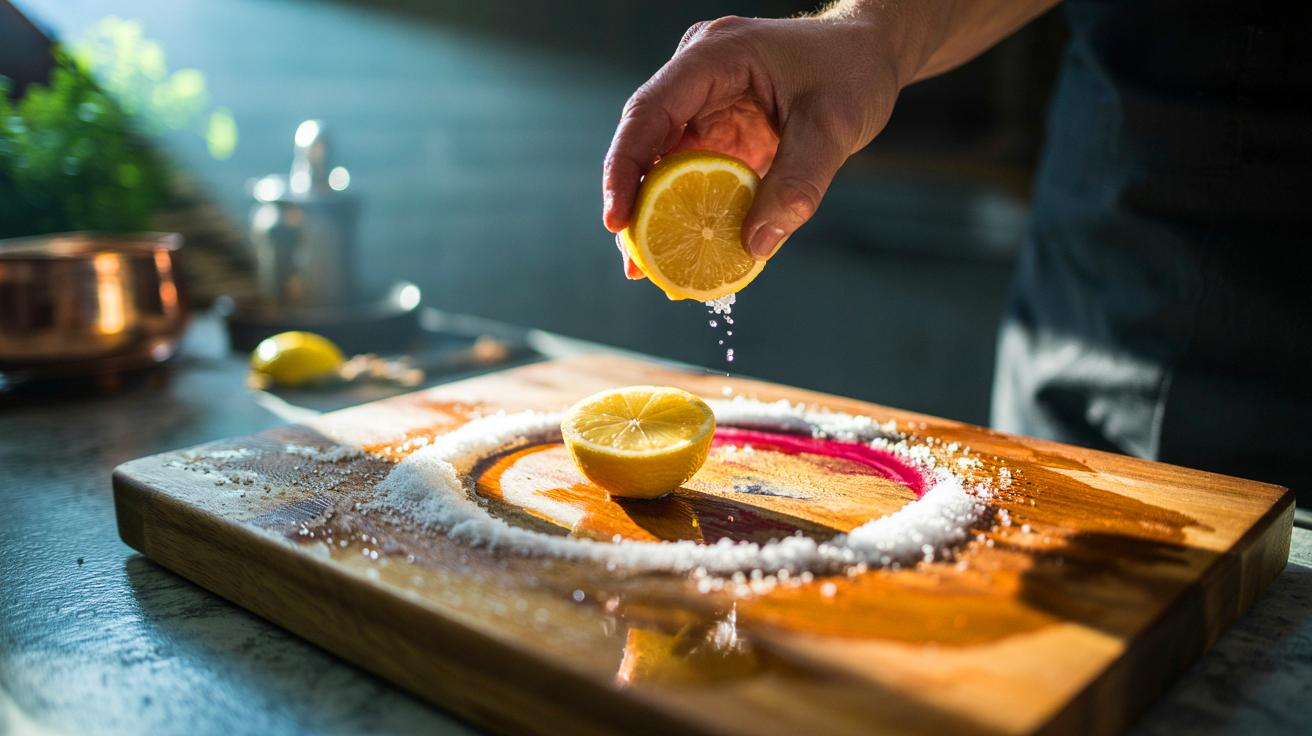
Sprinkle a generous layer of coarse salt over the stained area. Halve a lemon and use the cut face as your scrubber, pressing gently. Work in overlapping circles. Let the salted surface rest for 3–5 minutes—long enough for osmotic pull and brine formation—then scrub again. Rinse quickly with warm water, wipe, and dry thoroughly with a clean towel. Always stand the board upright to dry so air can reach both sides evenly.
For oil-heavy stains, add a teaspoon of baking soda to the salt before scrubbing; it helps emulsify leftover fats. For lingering odors, do a brief post-rinse wipe with diluted white vinegar, then rinse and dry. Never soak wooden boards or run them through the dishwasher; heat and prolonged water exposure warp fibers and split glue lines. When fully dry, condition with food-grade mineral oil to keep pores less absorbent. Regular oiling turns quick salt scrubs into a preventative instead of a rescue mission. Done right, the ritual takes minutes and extends the life of your favorite prep surface.
Salt isn’t just seasoning; it’s a smart cleaner that uses physics and chemistry you can see and feel. The crystals scrub. The brine loosens. The moisture moves outward. Partnered with lemon, it becomes a brightening paste that’s safe for wood and bamboo alike. You end up with a board that looks fresher, smells cleaner, and resists tomorrow’s stains a bit better. It’s affordable, tactile, and effective—exactly the kind of kitchen trick that sticks. What stain on your cutting board is the toughest right now, and how will you tweak the salt method to tackle it first?
Did you like it?4.3/5 (21)