In a nutshell
- 🧪 Microfiber’s split filaments physically trap contaminants via mechanical scraping, electrostatic attraction, and capillary action, removing up to 99% of bacteria from nonporous surfaces—emphasizing remove, not kill.
- 🧵 Engineered design matters: ultra-fine, wedge-shaped fibers and an 80/20 polyester–polyamide blend boost surface area, grip oils and biofilm, and enhance absorbency without scratching delicate finishes.
- 🧼 Technique drives results: use pre-folding to create eight clean panels, keep cloths lightly damp for best pickup, rotate panels per zone, and respect disinfectant contact times; launder at 140°F/60°C, no fabric softeners.
- 🆚 Microfiber vs. cotton: microfiber delivers higher bacteria removal, lower residue, and strong performance with just water; cotton is more heat-tolerant but tends to push soil and streak on hard surfaces.
- 🏥 Real-world payoffs: widely adopted in hospitals, airlines, and homes for reduced chemical use, better touchpoint hygiene, and minimized cross-contamination through color-coding and standardized workflows.
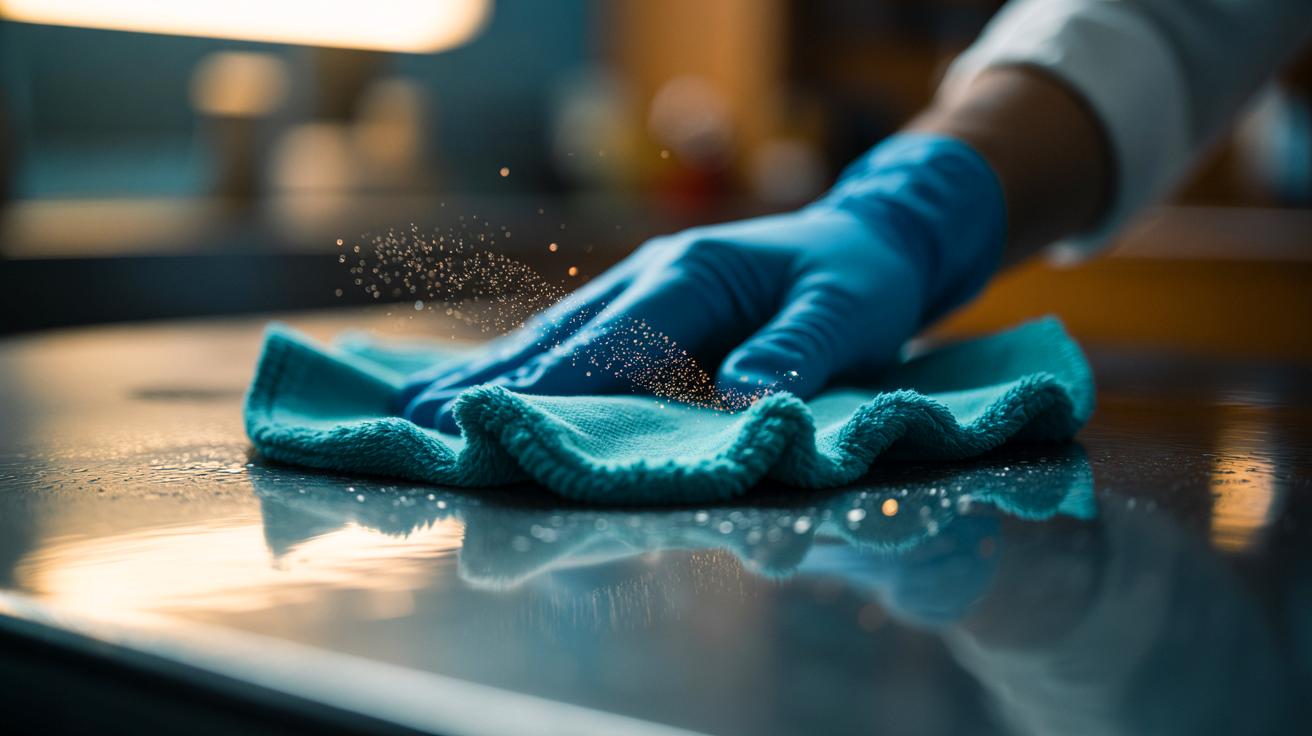
From hospital corridors to home kitchens, the workhorse of modern cleaning isn’t a bleach bottle—it’s the humble microfiber cloth. Experts across custodial training programs and infection-prevention teams point to one reason it’s everywhere: microfiber can remove up to 99% of bacteria from hard surfaces when used correctly. That performance surprises people who assume “clean” requires harsh chemicals. The secret, though, isn’t magic. It’s engineering. Ultra-fine synthetic filaments, split into thousands of sharp-edged strands, physically trap microscopic contaminants. Paired with smart techniques—folding, dampening, color-coding—these cloths turn routine wiping into a precision capture-and-hold operation that slashes cross-contamination risks and cuts chemical use.
What Makes Microfiber Different
The standout feature of a microfiber cloth is right there in the name: micro-sized fibers, often 1/100th the diameter of human hair. These filaments are “split” during manufacturing into wedge-like strands that create a dense forest of hooks and channels. That geometry multiplies surface area dramatically, giving dirt, oil, and bacteria countless places to lodge. Unlike cotton, whose round fibers push soil around, microfiber’s sharp edges grab and hang on. This isn’t just absorption; it’s mechanical entrapment.
Composition matters too. Most quality cloths use an 80/20 polyester–polyamide blend. Polyester provides backbone and scrubbing bite; polyamide (nylon) boosts absorbency and softness. The result is a fabric that glides over glass yet bites into grout lines. When used dry, microfiber builds a mild electrostatic charge that attracts dust and dander. When damp, capillary action pulls moisture—and the microbes suspended in it—into the fiber network. Crucially, microfiber removes contaminants; it doesn’t “kill” them. That’s why laundering and proper storage are nonnegotiable for maintaining that famous 99% removal rate in real-world routines.
How Microfiber Captures Bacteria and Soil
Cleaning experts often describe microfiber as a “grab-and-lock” system. The split wedges glide across the surface, shear off biofilm, and corral particles into micro-channels. Several forces work together: mechanical scraping, Van der Waals attractions at the fiber–soil interface, and, when dry, a mild electrostatic pull on dust and skin flakes. Add a little water and you create “bridges” that move bacteria into the dense matrix, where they’re trapped until washing. That’s why a lightly damp cloth often outperforms a soaking one—you want capillary suction, not smearing.
In controlled tests cited by custodial programs, a high-quality microfiber cloth can remove up to 99% of bacteria from nonporous surfaces with water alone, and even more with an EPA-registered disinfectant applied correctly. That phrase—“remove,” not “kill”—matters. Killing happens when chemistry or heat disrupts cells; removal happens when fibers lift them off the surface and hold them. The immediate benefit is lower bioburden. The downstream benefit is less chemical dependency and fewer residues, which translates to clearer glass, less streaking on stainless steel, and longer coatings life on resilient floors.
Best Practices to Reach the 99%
Technique can make or break performance. Pros start by pre-folding a cloth into quarters, creating eight clean panels. Rotate to a fresh panel after each small zone—think one panel per doorknob or two by two feet of counter. Work from clean to dirty, high to low. For touchpoints, use a lightly damp cloth; for dusty surfaces, start dry to leverage electrostatic pickup. If you’re pairing microfiber with disinfectant, follow label contact times, then remove residues with a fresh damp panel.
Laundering is the other half of the equation. Wash hot (around 140°F/60°C) with a free-rinsing detergent. Skip fabric softeners; they coat fibers and choke the micro-channels. Use low to medium heat to dry, and avoid bleach except for periodic sanitizing if the manufacturer allows it. Color-code cloths—bathrooms one color, food-contact another—to crush cross-contamination. Store clean cloths dry and flat, not crumpled in a bucket. These small steps compound. Consistent process is how teams hit that headline 99% removal, day after day, without relying on harsh chemistry or endless wiping.
Microfiber vs. Cotton: At a Glance
Not all cloth is created equal. Cotton has virtues—high heat tolerance, classic feel—but when the goal is microbial removal from nonporous surfaces, microfiber wins on mechanics. The table below distills the key differences professionals weigh when choosing a wiping system for hospitals, schools, and homes.
| Attribute | Microfiber | Cotton |
|---|---|---|
| Fiber Diameter | Micro-scale, split wedges | Larger, round fibers |
| Bacteria Removal | Up to 99% with proper use | Typically lower on hard surfaces |
| Chemical Dependence | Effective with water; excels with disinfectants | Often needs more chemistry |
| Residue/Streaking | Low, tight soil retention | Higher, tends to smear oils |
| Laundering Sensitivity | Avoid softeners; moderate heat | More forgiving; high heat tolerant |
The takeaway: microfiber’s engineered geometry does the heavy lifting. That geometry traps soil and microbes so they leave the surface on the first pass. Cotton still has a place—shop spills, high-heat sanitation—but for touchpoints, glass, and stainless, a good microfiber system delivers faster results and cleaner finishes with less effort.
Microfiber’s promise isn’t hype; it’s physics stitched into fabric. Split filaments, smart folding, and sensible laundering work together to make a cloth that pulls bacteria off surfaces and keeps them there until wash day. That’s why hospitals, airlines, and busy households have converged on the same tool. Less chemical, more control, cleaner outcomes. The next time you reach for a rag, consider what you want it to do: push soil around or capture it. What surfaces in your space could benefit most from a microfiber upgrade, and how will you adapt your routine to unlock that 99% removal consistently?
Did you like it?4.4/5 (25)
Great breakdown on “remove, not kill.” Quick q: when laundering at 140°F/60°C, is a free-rinsing detergent without optical brighterners best, and how much is too much? Also, absolutely no fabric softener, right?
Thanks for the clear tips on pre-folding and color-coding! I switched my bathroom cloths to yellow last week and noticed less cross-contamination between zones. Feeling oddly excited about eight tidy panels now 🙂
So microfiber is basically a tiny Velcro forest that kidnaps grime—got it. My glass finally looks less streaky, and my phone screen is grateful. Any trick for avoiding lint on matte monitors without extra sprays?
How often do you retire a cloth? After a certain number of wash cycles, does the split-fiber edge dull or get clogged, and is there a quick test to know when performance has dropped?
Could you show the eight-panel fold for lefties? I keep flipping the square wrong way round and end up reusing a grubby side—total facepalm. A simple diagram or gif would be ace.
I cleaned my stainless fridge with just water and a microfibre towel—no streaks, no harsh smell. For oily fingerprints on handles, do you recommend slightly warmer water or a tiny bit of neutral pH cleaner?
Is 80/20 always ideal? I’ve seen 70/30 cloths marketed for glass. Any guidance on GSM weight for bathrooms vs. kitchens, and weave types—waffle, terry, suede—for best bacteria removal on nonporous surfaces?
Love the grab-and-lock explanation. In our clinic, color-coded protocols cut re-wipe time a ton. We use red for loo surfaces, blue for glass, green for desks. Training techs on panel rotation was the gamechanger.
Tiny laundry note: I accidently used fabric softner once and the cloth went smushy and useless. One extra hot wash fixed most of it, but lesson learned—no softeners, ever. Thanks for the reminder and temps.
For pet hair tumbleweeds, starting dry to build that electrostatik pull, then doing a damp pass, works brilliantly. Also reduces chemical smells around my cat. Do you suggest separate cloths just for litter box zones?
Can I pair microfiber with vinegar for kitchen splatters, or does acidity nibble at the polyamide over time? What pH range keeps fibers safe while still helping with greasy film on stovetops?
Travel hack: I pack a small cloth for flights and wipe the tray table, armrests, and phone. Way less single-use wipes, and it dries fast in hotel rooms. Any storage tips to keep it fresh between washes?
Pre-folding into eighths is the secret sauce. My counters get two panels, doorknobs one panel, then into the wash bag—boom, predictable results. It sounds fussy, but it’s actually faster tbh.
My toddler calls it the ‘magic rag’ because crumbs just vanish; I call it physics stitched into fabric. Thank you for explaining the why, not just the how 😀
Quick confirm: after disinfectant dwell time, you reccomend a fresh damp panel to remove residue, right? That step stopped the streaks on my hob and kept the finish shiny without scratching. Thx!