In a nutshell
- 🧭 Audit arrivals: Track a week of what enters, define categories, assign homes, and post visible rules—only daily-use items earn hallway residency.
- 🗄️ Design a frictionless drop zone: Narrow console, key tray, covered bin, and bench with cubbies; hooks at two heights; make “away” the shortest path to prevent floor piles.
- 🥾 Shrink shoes and coats: Cap hallway shoes at two pairs per person, use a boot tray and labeled bins, rotate in-season pieces, and try a capsule outerwear approach.
- ⏲️ Set maintenance rituals: Do a 120-second daily reset, a 10-minute weekly sweep, and seasonal swaps; use the two-minute rule and the Doorman Rule to keep clutter moving.
- 🧩 Leverage vertical space and cues: Add shelves, over-door racks, discreet labels, and better lighting; keep a shredder and pen nearby so mail and returns are handled instantly.
Your hallway is the first impression your home makes—and the last scene you see before stepping into the world. When it’s clogged with coats, kicked-off shoes, and scattershot mail, stress spikes instantly. Clear it and the whole place feels orderly, lighter, breathable. The good news: hallways respond fast to small, intentional changes. Start by deciding what belongs, what doesn’t, and where each item will land. Then set simple rules that everyone can follow. The hallway sets the tone for your day—and your home’s mood. A tidy threshold acts like a pressure valve. Release the clutter here and calm spreads everywhere.
Audit What Comes Through the Door
Before you buy a single basket, track reality. For one week, note every item that crosses your threshold: mail, backpacks, umbrellas, dog leashes, soccer cleats, packages, returns, pocket litter. You’ll uncover patterns—spikes on school days, parcel pileups on Fridays—that determine what your hallway truly needs. Clutter is just delayed decisions, so make them quickly and visually. Anything without a predetermined “home” becomes hallway sediment. Define categories, cap quantities, and write a short, visible rule for each. When the family knows the system at a glance, the hallway stops being a dumping ground and becomes a transit hub.
| Incoming Item | Storage Solution | Rule to Keep Calm |
|---|---|---|
| Wall slot + shred bin | Sort in 60 seconds: keep, act, shred—nothing on surfaces | |
| Keys & Wallets | Tray or small bowl on a narrow console | One tray only; nothing else allowed |
| Shoes | Shallow rack or lidded bin | Two pairs per person max by the door |
| Coats & Bags | Sturdy hooks at two heights | One coat, one bag per person in season |
| Parcels/Returns | Labeled tote near exit | Out in 48 hours or stored elsewhere |
| Pet Gear | Leash hook + small caddy | Refill waste bags every Sunday |
Use the audit to eliminate freeloaders. Sports equipment? Garage. Out-of-season coats? Bedroom closet. Seasonal décor? Storage bin elsewhere. Only daily-use items earn hallway residency. That single boundary thins out visual noise and keeps your pathway clear.
Design a Frictionless Drop Zone
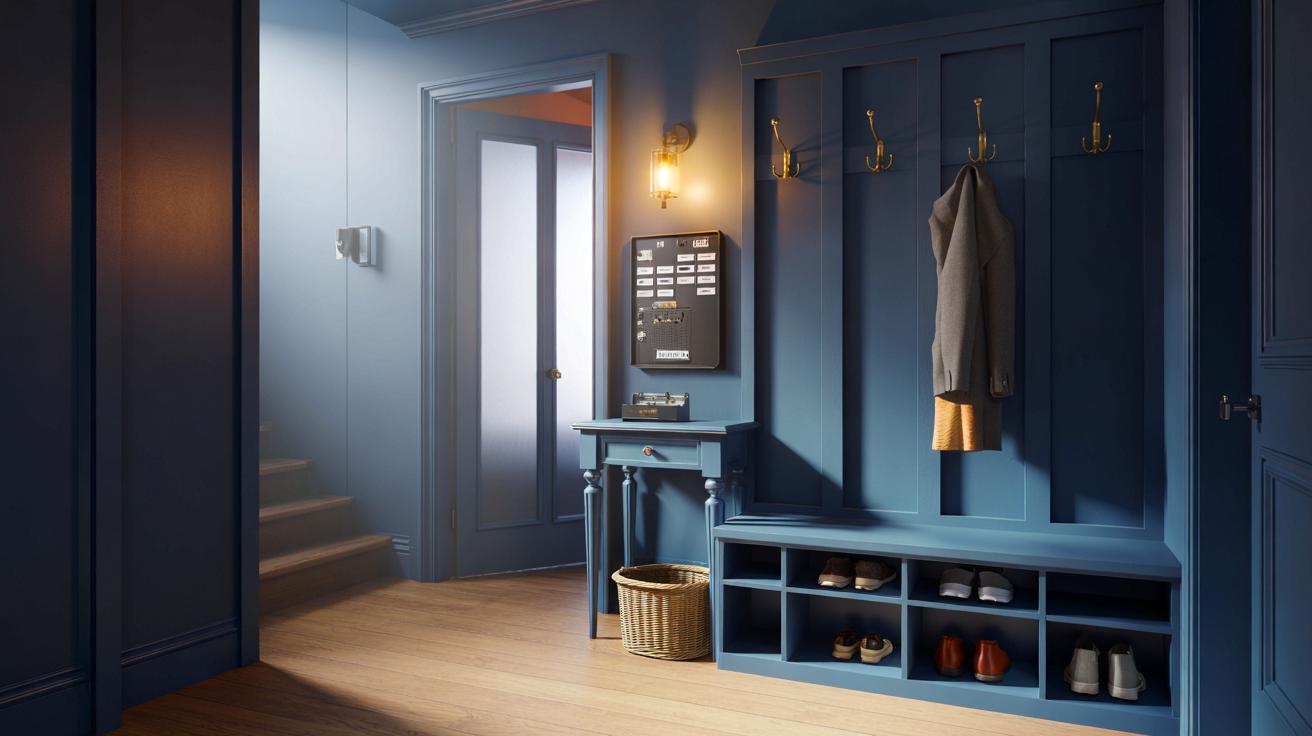
Form follows function at the door. Build a drop zone that makes the right behavior effortless: a narrow console for mail sorting, a catchall tray for keys, a covered bin for the eyesore items, and a bench with cubbies so sitting to remove shoes becomes automatic. Mount hooks at child height and adult height to democratize tidiness. Add a small, bright sconce—good light reduces rummaging and mess. If it takes more than one motion to put something away, it will land on the floor. Reduce motions. Make “away” the shortest path.
Think vertical. Tall ceilings invite stacked solutions: floating shelves for hats and gloves, an over-door rack for umbrellas, even a slim charging drawer to corral phones and earbuds near the exit. Label discreetly for clarity without clutter. Two or three words printed small—“Mail—Act,” “Returns—Out,” “Keys—Home.” These micro-prompts guide behavior in the rush of weekday mornings. Choose finishes that hide wear: textured baskets, darker metals, washable trays. Function first, then aesthetics; the beauty is the clear floor and uncluttered line of sight.
Finally, measure before you buy. Hallways are narrow. Look for furniture under 12 inches deep, shoe racks no deeper than 10 inches, and benches that leave a generous walking lane. Tripping is clutter’s cousin.
Shrink the Shoe and Coat Footprint
Shoes sprawl. Coats swell. Your antidote is limits plus rotation. Cap hallway shoes at two pairs per person: the daily pair and the weather pair. Everything else lives in bedroom closets. Store kids’ footwear in labeled, pull-out bins—front-of-bin labels face the door so even pre-readers match icons to items. Add a low, lipped boot tray to catch sludge and puddles. Wipe it weekly. Small surfaces with edges prevent big messes from traveling. For coats, keep only in-season outerwear by the door and send puffy parkas or off-duty rain gear to deeper storage.
Upgrade hangers and hooks. Slim, non-slip hangers compress bulk while protecting collars; spaced hooks prevent the dreaded coat-tower that collapses on the floor. If you’re short on closet space, adopt a capsule outerwear approach: one warm, one waterproof, one dressier layer. Then bring color and personality with scarves and hats stored in a shallow basket. Consider vacuum bags for true off-season pieces and stash them under beds or on high shelves. The goal isn’t austerity; it’s right-sizing the daily footprint so your hallway breathes.
For households with gear-heavy hobbies, create a “departure kit” system—pre-packed totes for gym, swim, or practice—that live in bedroom closets. They pass through the hallway, not live there.
Set Maintenance Rituals That Stick
Decluttering is the opening chapter; maintenance is the story arc. Create a 120-second daily reset after dinner: return shoes to the rack, clear the tray, empty the mail slot. A two-minute rule keeps the task under willpower’s radar. Add a 10-minute weekly sweep—shake out mats, wipe the console, restock pet bags, cull the coat hooks. Then schedule a seasonal swap: rotate shoes and outerwear, wash baskets, and revisit your rules. Calendar it like an appointment. Treat your doorway like a newsroom desk—clear, current, ready for the next edition.
Behavioral cues help under pressure. Place a small shredder within arm’s reach of the mail slot. Station a pen and sticky notes where you open packages, so returns get labeled immediately. Use a sand timer by the door to gamify clean-up with kids. For adults, try the “Doorman Rule”: nothing crosses the threshold without a destination. Consistency beats intensity—small repeats beat occasional overhauls. In a week, you’ll notice faster exits. In a month, the calm feels built-in.
Finally, refresh your boundaries as life changes—new puppy, new job, new sport. Update the system, not the floors.
Clear the hallway and you change your home’s narrative from chaos to intention. Fewer decisions at the door means less mental chatter all evening. The floor shows. Breathing room returns. Guests notice, but more importantly, you do—every time you step in or out. Your entrance becomes an exhale. Keep the system simple, make the rules visible, and let the space work as a launchpad, not a storage unit. What one change—limit, tool, or ritual—will you try this week to make your hallway a calm, reliable threshold?
Did you like it?4.4/5 (20)
This was the exact pep talk my chaotic doorway needed. The “audit arrivals” week opened my eyes, and the 120-second reset is actually doable. Thank you for practical steps that make calm feel achievable, not abstract.
Quick Q: my hallway is only 36 inches wide—what depth console or shoe rack would you reccomend so we don’t create a tripping hazard while still having a real drop zone?
My hallway is the Bermuda Triangle of socks and takeout menus. The “make away the shortest path” line made me snort-laugh—and then install a key tray. Consider me converted, minus the lost umbrella from 2017.
Parent test: how do you get kids to respect the two-pairs-of-shoes rule? My twins dump cleats, sneakers, and mystery flip-flops daily. Thinking labled bins with icons, but any tricks to make it stick after practice chaos?
Big thank you for naming “clutter is delayed decisions.” The Doorman Rule flipped a switch for me; now parcels go straight into a labeled tote and out within 48 hours. Fewer piles, calmer brain, faster mornings.
We’ve got a muddy dog and rainy climate. Any tips to keep the boot tray from turning into a swamp? Do you line it with pebbles, a mat, or something else that dries quicker and doesn’t smell wierd?
Love the idea to track what actually comes through the door first. I always buy baskets too early, then regret it. Going to audit this week and write simple lables for the real categories we use.
Question: any renter-friendly ways to add hooks at two heights without drilling? Command strips are finicky for heavy coats. Wondering if a narrow leaning rack or tension-rod system could work in a high-traffic entry?
Capsule outerwear just decluttered my brain. One warm, one waterproof, one dressy—done. The rest moved to bedroom closets, and suddenly the hallway doesn’t feel like a coat avalanche zone. Why did I wait so long?
The shredder-by-the-mail-slot tip is genius. Do you have a favorite compact model that’s quiet and safe around curious kids? I’d love to corral junk mail instanly without hauling papers to the office shredder.
Our hallway shares space with laundry. Any ideas for a hidden, covered bin that can handle errant socks and still look tidy? I’m picturing a slim tilt-out hamper next to the bench with cubbys.
Tried the 120-second reset tonight and timed it with a sand timer; kids actually raced me. We cleared shoes, sorted mail, and restocked pet bags. Five minutes later the house felt calmer, like, noticeably calmer.
Curious about accessibility: any suggestions for bench height and hook placement for elderly parents? I want sit-and-shoe-off to be easy, and reaching coats shouldn’t require stretching. Measurements or general ergonomics would help, please.
I followed this today and my hallway feels twice as wide, no joke. Key tray, labeled tote, boot tray—boom. I can actually breathe when I walk in now 🙂 Thank you for the clear, do-able plan!
“If it takes more than one motion, it’ll land on the floor” is my new household motto 😉 I shortened our coat options and moved the mail shredder—our exits already feel smoother and way less shouty.