In a nutshell
- 🕔 Five-Minute Reset: Use a timer to timebox tidying, cut visual clutter, lower cortisol, and build consistency with small, visible wins.
- 🧽 Sink-and-Surface Sweep: Empty the sink and wipe counters with simple tools to signal “ready,” reduce decision fatigue, and set a calmer morning tone.
- 🚀 Launchpad Layout: Stage bags, keys, outfits, and coffee the night before; a choice architecture that prevents scrambles and forgotten items.
- 🧠 Science-backed cues: Timeboxing and environmental design make the ritual easy to repeat; aim for consistency, not intensity, to lower morning stress.
- ⏱️ Practical and flexible: 10–20 minutes total, adaptable for families or roommates; pair with music, stop at the timer, and avoid scope creep.
Evenings often blur into late-night scrolling and last-minute chores, but experts say a brief, intentional cleaning ritual can dramatically reduce morning stress. The trick is not perfection. It’s predictable, repeatable moves that reset your space and brain. Think of it as hygiene for your schedule. Ten to twenty minutes. No more. You’ll go to bed with fewer open loops, and you’ll wake up to fewer decisions. Your future self will thank you before the coffee even brews. Here is a three-step nightly ritual—simple, flexible, and grounded in behavior science—that helps you reclaim control and start every day with momentum.
Step 1: The Five-Minute Reset
Set a timer for five. That’s it. The five-minute reset shrinks a sprawling task into a doable sprint, hijacking the brain’s tendency to procrastinate when a chore feels endless. Start with visible wins: toss trash, corral laundry, return stray items to a single “put-away” bin. You’re not deep-cleaning; you’re lowering visual clutter, which research links to elevated cortisol. A quick reset beats a perfect clean. Small actions, big effect: clear the coffee table, straighten pillows, stack mail for tomorrow. The timer keeps momentum honest and prevents scope creep.
Professionals call this timeboxing—and it works because it pairs urgency with clarity. When the timer dings, stop. Celebrate the difference. That microscopic before-and-after is a psychological nudge that builds consistency. Over time, your home develops “resting order,” a baseline that’s easy to return to after chaotic days. Parents can gamify it with a song-length tidy; roommates can rotate the timer each night. If you finish early, don’t add tasks—enjoy the win. Consistency, not intensity, is what transforms evenings into calm mornings.
Step 2: The Sink-and-Surface Sweep
The kitchen drives morning mood. A spotless sink and wiped counters are small but potent cues that the day is manageable. Run the dishwasher or start a quick soak if you don’t have one. Empty the sink completely, then give surfaces a speedy pass with a microfiber cloth and an all-purpose spray. This 7–10 minute sweep eliminates sticky hotspots—crumbs, coffee rings, and the mysterious spill you meant to get earlier. Seeing clean, clear surfaces lowers mental load and curbs decision fatigue at dawn. You’ll pour cereal without dodging last night’s dishes, and your brain reads “ready” instead of “catch up.”
Experts emphasize environmental cues: your space instructs your behavior. Clean counters subtly prompt healthier breakfast choices, faster packing, and a calmer departure. Keep tools visible and simple—cloth under the sink, spray on the counter, dish tabs within reach. Don’t chase streak-free perfection; chase a reset. Add a quick sweep of entry surfaces too—drop-zone table, dining chair backs. If motivation dips, pair the task with a podcast or playlist and stop when the last chorus ends. Ending the day with an empty sink is a small promise kept to tomorrow.
| Step | Time Target | Core Tools | Stress Benefit |
|---|---|---|---|
| Five-Minute Reset | 5 minutes | Timer, “put-away” bin | Reduces visual clutter and overwhelm |
| Sink-and-Surface Sweep | 7–10 minutes | Microfiber cloth, all-purpose spray, dish tabs | Signals readiness; cuts morning decision fatigue |
| Launchpad Layout | 5–8 minutes | Tray, hooks, chargers, lunch containers | Prevents last-minute scrambles and forgotten items |
Step 3: The Launchpad Layout
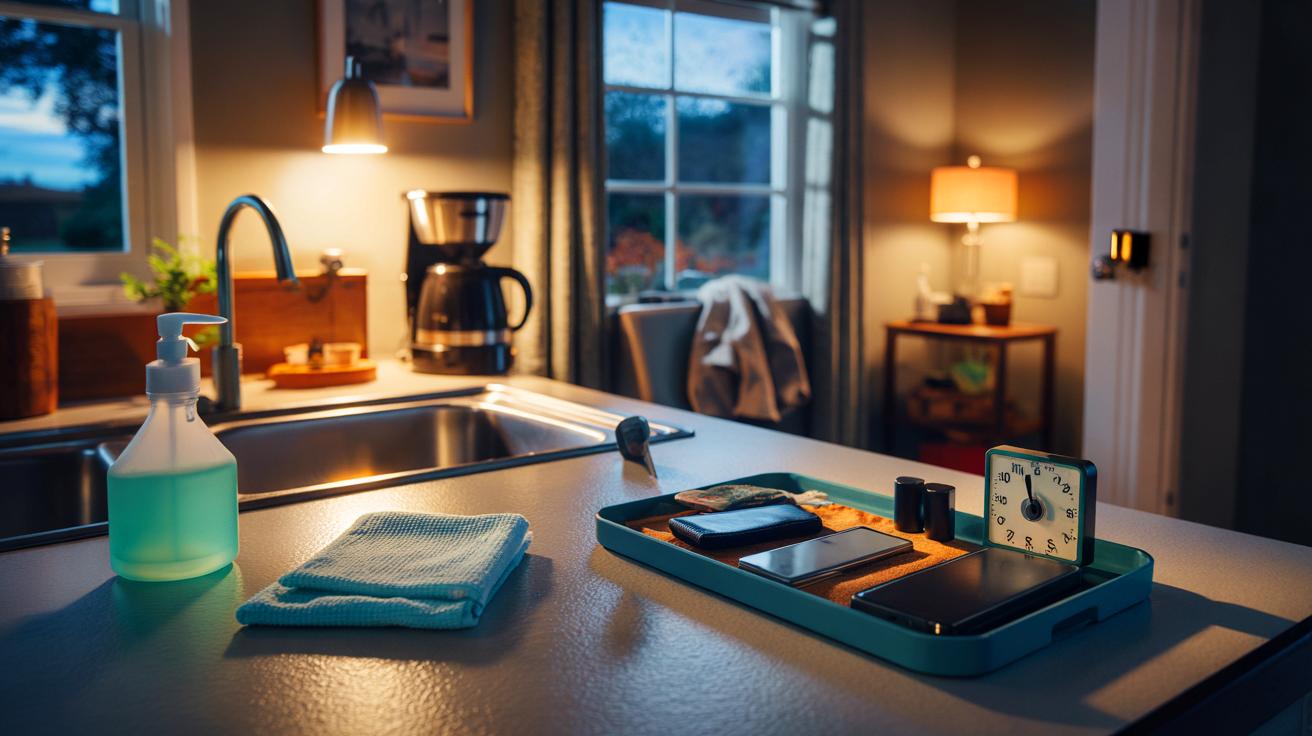
Now stage tomorrow. Designate a launchpad—a tray by the door, a section of the counter, or a hallway console—where everything needed for the morning lives overnight. Pack bags, prep lunch containers, place keys and sunglasses, charge devices, and set out work badges or transit cards. If you drink coffee, load the machine and set the timer; if you commute by bike, check lights and pump tires. Lay out outfits, including socks and accessories, to erase decision-making speed bumps. Decide tonight, glide tomorrow. This is where anxiety evaporates into order.
Behavior scientists call this a choice architecture—you’re engineering the easy path. Each item leaving your brain and landing on the launchpad lowers the risk of morning mishaps. For families, create labeled bins by person; for shared homes, assign shelves or hooks. Keep it visible, but tidy, to maintain that “airport gate” feeling of readiness. Rehearse a 30-second check before bed: wallet, phone, keys, meds, ID, water bottle. The goal is a frictionless exit, not a magazine-ready vignette. When your launchpad is set, mornings start at cruising altitude, not on the runway.
Small rituals compound. Five minutes of reset, ten minutes on sink and surfaces, and a focused launchpad layout can reclaim an entire morning’s peace. You’ll feel it in your pulse, your pace, your first conversation. The ritual is flexible; life isn’t. Miss a step? Do the others. Travel or late shift? Shorten the timer and keep the sequence. Over a week, the gains are undeniable: fewer frantic searches, cleaner counters, steadier starts. Your evening choices write tomorrow’s headline. What would your ideal nightly ritual include—and which single change tonight would make your morning meaningfully calmer?
Did you like it?4.4/5 (27)
This makes so much sense—choice architecture for my future self. Laying out keys and coffee gear tonight so morning-me can glide instead of scramble. Bookmarked and sending to my team.
Any tips for doing the Five-Minute Reset with two toddlers who turn laundry into capes? We can gamify, but bedtime is chaos. What song-length games actually work for little humans?
My sink is the boss of my mood, apparently. When it’s empty I feel like I defeated a mini-boss and unlocked Level Calm. Going to try the microfiber sprint after dinner.
Night-shift nurse here: would you adjust the sequence if “morning” is 6 p.m.? I want the same calm start before heading in, but my energy crashes are weird.
Tried it tonight: 5 for reset, 8 for sink, 6 for launchpad. Fourteen minutes total and my brain felt quieter. The “stop at the timer” rule saved me from scope creep.
Could you share a printable checklist version? I’d love a fridge magnet with the three steps for my fam, plus a tiny box to tick when we’re done.
Pro tip that helped me stick with it: one playlist. Hit play, clean, stop when the last chorus hits. No arguing with myself. Also, I keep the spry under the sink—visible!
Thanks for the gentle nudge; setting a five-minute timer now and staging my launchpad. Future me is going to high-five this version of me 🙂
For roommates: how do you keep a shared launchpad from becoming a clutter-trap? Labels, hooks, trays—I’m in. But the communcation part trips us up. Sample “house rule” phrasing would be gold.
As someone with ADHD-lite, the timeboxng piece really lands. Do you recommend visual timers over phone alarms? I drift if I can’t see the countdown ticking away.
My fave hack: a “put-away” bin with a handle that lives by the stairs. During the reset I toss everything in, then ferry up once. Defintely reduces random laps.
Tiny studio dweller here—any minimalist version of the sink-and-surface sweep? I’ve got one cloth, one spray, no dishwasher, and zero spare counter. Give me the simple reciepe and I’m in.