In a nutshell
- 🍋 Science-backed approach: white distilled vinegar (rich in acetic acid) erases sugary scent trails that attract fruit flies; reserve apple cider vinegar for traps, not for repelling.
- 🧴 Easy recipe: Mix 1 part white vinegar + 1 part water, add 1 tsp isopropyl alcohol per cup, and 2–4 drops dish soap; optional 5–10 drops peppermint or lemongrass oil per 16 oz for deterrence.
- 📍 Targeted use: Spray and wipe sink rims, drains, disposal guards, trash/compost lids, fruit bowls, bottles, and windowsills; run hot water down drains, then treat with the spray; patrol morning and night for the first week.
- 🛡️ Safety first: Do not use vinegar on marble, limestone, travertine, or unsealed grout; opt for a stone-safe routine with 70% isopropyl on a cloth; keep essential oils modest, especially around pets.
- 🔁 Routine that works: Pair daily sanitation + vinegar spray with ACV + soap traps placed away from prep areas; consistency causes the swarm to collapse within days.
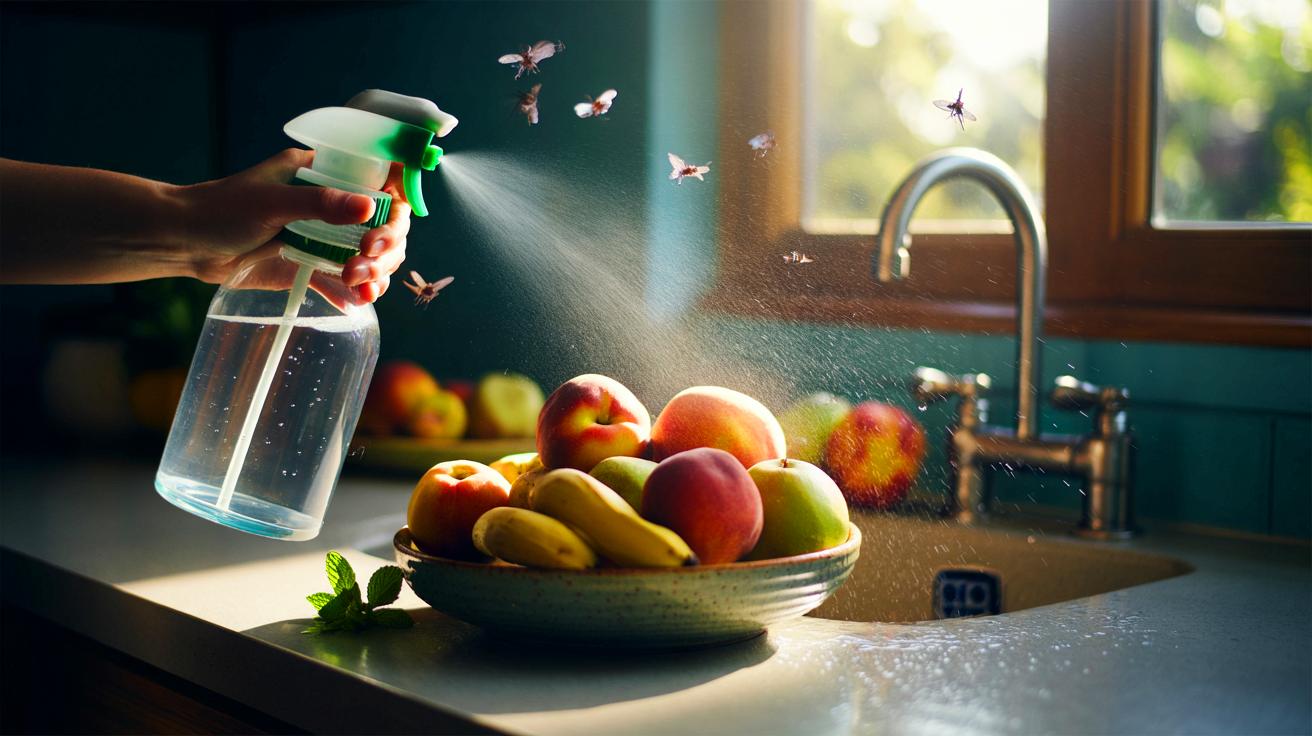
They appear out of nowhere—hovering over the sink, dotting the fruit bowl, scouting the compost pail. Fruit flies thrive on ripening produce and the microscopic sugars we leave behind. Here’s the good news: a simple, inexpensive vinegar spray can break their cycle and push them out of your kitchen for good. This is not a gimmick. It’s chemistry and routine, working together. You’ll use common pantry staples, tweak the mix for your counters, and deploy it where fruit flies breed and feed. Consistency beats any one-time blitz. With a few spritzes a day, you’ll reclaim your space—and keep it that way.
How the Vinegar Spray Works
Fruit flies are drawn to volatile compounds released by fermenting sugars. Those scents signal a buffet. White distilled vinegar, powered by acetic acid, cuts through sticky residues, dissolves sugar films, and scrubs away the invisible trails that tell flies a surface is safe. Clean smells like nothing to them. That matters. When you mix vinegar with a drop of soap, the solution also lowers surface tension; any fly you hit midair or on a wet surface is more likely to be immobilized. Add a small dose of isopropyl alcohol and the contact-kill improves without introducing harsh commercial pesticides into your home.
Here’s the counterintuitive part: apple cider vinegar attracts flies into traps. That’s great for capture, not for repelling. Use white vinegar to deter and de-scent; reserve apple cider vinegar for jar traps placed away from food zones. Essential oils like peppermint or lemongrass can heighten the deterrent effect by adding volatile compounds flies avoid. The result is a one-two punch: erase the signals that invite them, then overlay a scent they don’t like. Done daily, this strategy starves their population and sends stragglers elsewhere.
Mixing the Perfect Fruit Fly Repellent
The base formula is straightforward and adaptable. In a clean spray bottle, combine 1 part white distilled vinegar with 1 part water. Add 1 teaspoon of isopropyl alcohol per cup of liquid for a stronger knockdown and 2–4 drops of dish soap to break surface tension. For a repellent edge, include 5–10 drops peppermint or lemongrass oil per 16 ounces. Shake gently. Label the bottle. Make small batches every two weeks to keep the scent bright and effective. Prefer fragrance-free? Skip the oils; the vinegar-cleaning action still removes the “eat here” cues fruit flies follow.
Use this table to set your ratios and understand each component’s job.
| Ingredient | Role | Suggested Ratio | Notes |
|---|---|---|---|
| White vinegar (5% acidity) | Cleans sugars, disrupts scent trails | 1 part | Choose distilled; it’s neutral and streaks less |
| Water | Dilutes acidity for daily use | 1 part | Use warm water to help dissolve residue |
| Isopropyl alcohol | Boosts contact kill | 1 tsp per cup | Optional; keep away from open flames |
| Dish soap | Breaks surface tension | 2–4 drops per bottle | A little goes far; prevents streaks |
| Peppermint or lemongrass oil | Scent deterrent | 5–10 drops per 16 oz | Optional; avoid direct food contact |
Always spot-test on an inconspicuous area before broad spraying. If you need a stone-safe variant, swap the vinegar with 70% alcohol and add water plus soap; then spray on cloth and wipe, rather than misting directly on the surface.
Where and When to Spray for Lasting Results
Target the places fruit flies scout first: the rim and underside of your sink, the drain flange, the garbage disposal splash guard, the trash can lid and lip, the compost pail top, the backs of the fruit bowl, and windowsills that warm in the afternoon. Mist lightly, then wipe, letting a thin film remain. Treat the outside of bottles—vinegar, wine, soy sauce, maple syrup—because dribbles send powerful signals. Think like a fly: anywhere sticky or sweet needs attention. Do a quick patrol after dinner and another pass in the morning for the first week.
Interrupt breeding too. Pour a kettle of hot water down suspect drains, wait five minutes, then spray your vinegar mix into the drain and around the flange. Wipe cutting boards, blender gaskets, and juicer parts after use. Move ripening fruit into sealed containers or the fridge. Place any apple cider vinegar traps at the far end of the kitchen or on a windowsill away from prep space, drawing strays off your main lane. Within days, you’ll notice fewer scouts; within a week, the swarm collapses.
Safety, Surfaces, and Smart Alternatives
Vinegar is food-safe and effective, but it’s still an acid. Do not use vinegar on marble, limestone, travertine, unsealed grout, or other calcium-based stone; it can etch. For those surfaces, choose a stone-safe routine: wipe with warm water and a tiny drop of soap, then disinfect with 70% isopropyl alcohol sprayed onto a cloth, not directly on the stone. Test painted cabinets and stained wood in a hidden corner. Keep essential oils modest if you have pets; cats are sensitive to concentrated oils like tea tree and peppermint, especially on bedding or bowls.
Want an unscented option? Skip oils entirely and rely on sanitation plus perimeter cleaning. Sensitive to alcohol? Remove it; your spray still works by erasing food cues. If the infestation is heavy, run a parallel track: the vinegar spray for daily wipe-downs and ACV+soap traps placed away from food zones. Empty traps every 48 hours. The secret isn’t strength—it’s repetition and precision. Keep counters dry, compost sealed, and dishes out of the sink overnight. You’re teaching flies that your kitchen offers nothing to eat and nowhere to breed.
A bottle, a ritual, a week. That’s the arc. The vinegar spray cleans what fruit flies crave and replaces open invitations with closed doors, day after day. Build the habit into real life: spritz after slicing fruit, after rinsing bottles, before bed. Tweak the formula for your surfaces and household. When you remove the signals, the insects remove themselves. Are you ready to mix a batch tonight and map a three-minute route through your kitchen that keeps fruit flies out for good—what will your plan look like?
Did you like it?4.4/5 (27)