In a nutshell
- 🔬 Causes and diagnosis: most haze is mineral scale from hard water; distinguish from permanent etching—scale improves when wet, etching does not.
- 🧴 One-staple solution: use distilled white vinegar (5% acetic acid) to dissolve alkaline deposits safely, without tint or strong residue.
- 🧽 Method that works: rinse, fill with appropriate vinegar mix, soak rather than scrub, agitate/brush threads, then warm-rinse and air-dry upside down.
- ⏱️ Soak time guide: light haze—50% vinegar for 10–15 min; moderate—75–100% for 20–40 min; heavy—100% vinegar for 1–2 hours.
- ♻️ Safety and upkeep: Never mix vinegar with bleach, remove metal parts for long soaks, odor dissipates quickly, and a vinegar cup in the dishwasher helps prevent future film.
Cloudy glass jars are a familiar frustration: you pull a favorite vessel from the cupboard and the once-sparkling surface looks dull, chalky, almost frosted. The culprit is rarely dirt. It is often chemistry. The easiest fix sits in your kitchen right now. With one pantry staple, you can dissolve that stubborn film, restore the gloss, and keep jars looking display-worthy for pickling, pantry storage, crafts, or candles. No specialized cleaners. No mystery solvents. Just a measured approach that respects the glass and your time. The trick works quickly, costs pennies, and is gentle enough for repeated use without wearing down your jars.
What Makes Glass Jars Turn Cloudy
Cloudiness most often comes from hard water minerals—calcium and magnesium—left behind after washing and drying. These minerals bond to glass as thin, alkaline scale that scatters light. Dishwashers can amplify the problem when high heat and detergent drive minerals into microscopic surface irregularities. You may also see a faint film of old oils and starches, which attract dust and dull the shine. Most haze is mineral scale, not embedded grime, and that distinction matters because it determines the right remedy.
Another possibility is detergent etching, where aggressive alkalinity or undissolved granules mark the glass. Etching is permanent. Luckily, true etching is rarer than simple deposits. The good news: mineral scale is reversible with the right pH. Because these deposits are alkaline, they respond best to a mild acid that can dissolve them without scratching. That is where a familiar workhorse—kept for salads and quick pickles—earns a second life as a glass restorer and rinse aid.
How do you tell the difference? Run your fingertip over the haze. If it feels slightly gritty and improves when dampened, you are looking at scale. If the cloudiness looks iridescent and unchanged when wet, it may be etched. Soluble scale vanishes with an acid soak; etched glass does not.
The Pantry Staple That Solves It: Distilled White Vinegar
The hero is distilled white vinegar, a 5% solution of acetic acid. It is inexpensive, food-safe, and strong enough to break down calcium carbonate without harming glass. Unlike colorful vinegars, it leaves no tint, no residue, and no fragrance once rinsed away. Chemistry does the heavy lifting: acetic acid reacts with alkaline deposits, turning visible crust into water-soluble salts that wash clean.
Vinegar clears haze without harsh scrubbing, which means fewer micro-scratches and longer life for your jars. It also slips into crevices—threads, shoulders, embossed logos—where a sponge cannot. Because it is already in your pantry, you can deploy it on demand: for a single cloudy jar, a quick splash and swirl; for a box of thrifted jars, a batch soak in the sink.
Why not apple cider or red wine vinegar? They can work, but their pigments risk faint staining on clear glass and metal rings. Distilled white vinegar is neutral in color, consistent in strength, and reliably cheap by the gallon, making it ideal for routine maintenance and deep refreshes alike.
Step-by-Step Method: From Haze to Crystal Clear
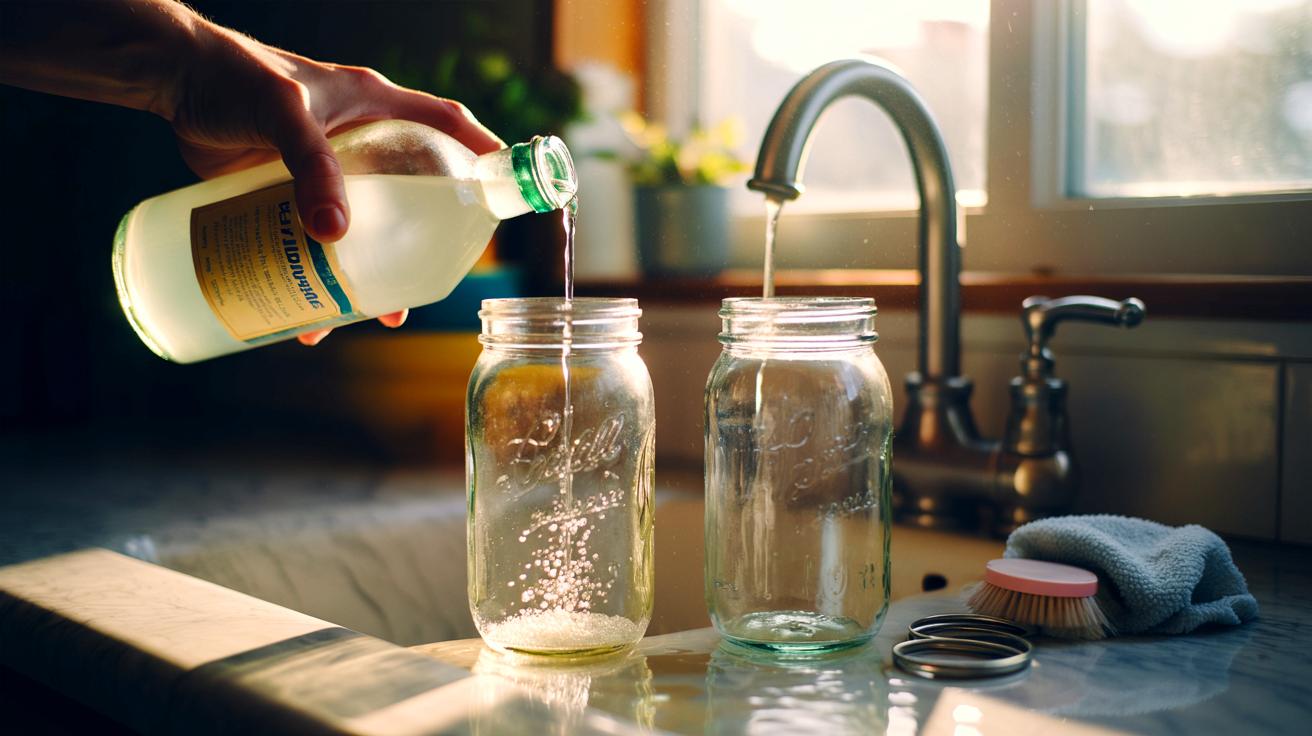
Start with a quick rinse to remove dust. For light haze, fill the jar one-third with hot water and one-third with white vinegar, then cap loosely and shake for 20–30 seconds. For heavier deposits, skip the dilution and use vinegar full-strength. Lay jars on their side to wet every surface. Let chemistry work—soak time beats elbow grease. After soaking, use a bottle brush or a soft cloth to lift any remaining film, focusing on threads and the shoulder. Rinse thoroughly with warm water and let the jars air-dry upside down on a rack.
For exteriors, soak a paper towel in vinegar, wrap it around the jar, and wait 10–20 minutes before wiping clean. Final-touch polish with a dry microfiber to restore clarity and remove water spots. To minimize new scale, dry quickly in a draft or in front of a fan. Below is a quick guide to dial in strength and soak time.
| Cloudiness Level | Vinegar Strength | Soak Time | Notes |
|---|---|---|---|
| Light haze | 50% vinegar, 50% hot water | 10–15 minutes | Shake midway to agitate |
| Moderate scale | 75–100% vinegar | 20–40 minutes | Brush threads after soak |
| Heavy buildup | 100% vinegar | 1–2 hours | Use full-strength vinegar for stubborn deposits |
Safety, Odor, and Eco-Friendly Notes
Vinegar is food-safe and biodegradable, a welcome contrast to harsh descalers. Still, a few rules keep things trouble-free. Never mix vinegar with bleach or chlorine-containing cleaners; the combination releases dangerous chlorine gas. If you are cleaning old canning lids or rings, remove metal parts before soaking, as prolonged acid exposure can dull finishes or encourage rust along scratches. For rubber gaskets, a short soak is fine, but avoid overnight baths.
Worried about smell? It flashes off fast. Rinse well and let jars air out; the sharpness fades in minutes. For an extra-fresh finish, place jars upside down to drain thoroughly so minerals in your tap water do not re-deposit. As a maintenance habit, you can place a small, vinegar-filled cup on the top rack of your dishwasher during a glass-only cycle to soften hard water and cut film. A little routine attention prevents the haze from returning, saving you time and preserving that satisfying, crystal-clear gleam.
With one bottle of distilled white vinegar, cloudy jars go from dull to display-ready—no fancy products, no wasted scrubbing, just simple chemistry and a few easy steps. The method scales from a single heirloom jar to a weekend haul of flea-market finds, and it is gentle enough for repeated use across seasons of canning and crafting. The result is clarity you can see and confidence you can feel when you store food or showcase a homemade gift. What will you refresh first, and how will you put those newly brilliant jars back to work in your kitchen or studio?
Did you like it?4.5/5 (28)