In a nutshell
- ✨ Streak-free chemistry: vinegar’s acetic acid plus citrus citric acid/limonene dissolve oils and film; using distilled water prevents mineral spots for fewer streaks and cleaner glass.
- 🧪 Simple recipe: mix 1:1 white vinegar + distilled water, add 1–2 tbsp lemon juice or a peel infusion; an optional single drop of mild dish soap helps with heavy grease—apply as a fine mist.
- 🧰 Pro technique: use tight-weave microfiber and a squeegee, work top-to-bottom with overlapping passes, wipe the blade each time, avoid direct sun, clean in small sections, and finish with a dry edge buff.
- ⚠️ Safety and surfaces: Never mix vinegar with bleach; avoid acids on natural stone; protect wood by spraying the cloth, and fix streaks by adjusting dilution, switching to distilled water, and using clean cloths.
- 🌱 Benefits: a low-cost, low-waste routine that delivers professional-grade clarity on windows and mirrors with a fresher scent and fewer chemicals in your home.
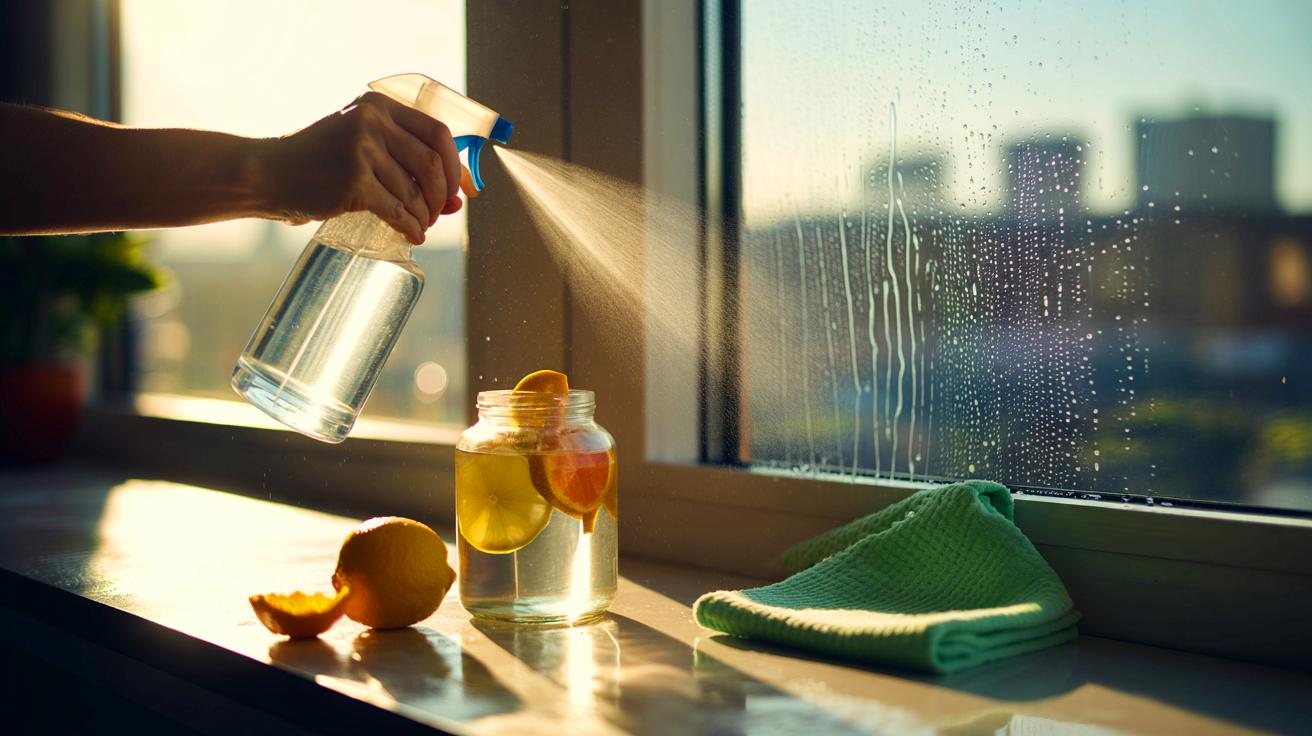
Forget the blue bottle. A humble mix of vinegar and citrus can make glass surfaces gleam like a downtown high-rise after a professional wash. It’s cheap, low-waste, and surprisingly powerful, beating fingerprints, mineral haze, and the faint film left by many store cleaners. The real twist lies in the chemistry: acetic acid from vinegar and citric acid from lemon or orange peel team up to dissolve grime, cut oils, and reduce streaks. Used with the right technique, this blend leaves windows so clear they seem to disappear. Here’s how the mix works, the best way to use it, and the few pitfalls to avoid so your view stays spotless.
Why Vinegar and Citrus Work for Glass
The secret is a duet of mild acids. Household white vinegar brings acetic acid, which loosens alkaline residues and soap film. Citrus adds citric acid and natural solvents called limonene and pinene. These compounds slice through oils from hands, cooking, and city air without leaving heavy surfactants behind. That matters because surfactants can dry into faint lines. Less residue on the glass means fewer streaks—period. And unlike ammonia-based sprays, this combo won’t sting your lungs or etch window tints when used properly. It’s brutally simple chemistry applied to an everyday eyesore.
Water quality is the silent culprit behind streaks. Hard water carries minerals that spot as droplets dry. Vinegar helps, but the real upgrade is to use distilled water in your mix. It keeps minerals out of the equation, especially on sunny days when windows dry fast. Citrus also helps mask vinegar’s tang, and if you infuse peels in vinegar, you gain cleaning punch without sticky residues. The goal is a clean sheet of glass with nothing left behind to catch the light.
The Simple Recipe and Variations
You don’t need a lab. For standard grime, mix 1 part white vinegar with 1 part distilled water. Add either 1–2 tablespoons of fresh lemon juice per cup of liquid or use a citrus-peel infusion: soak clean lemon or orange peels in vinegar for 5–7 days, strain, and dilute 1:1 with water. This balanced acidity breaks films fast yet stays gentle on seals and frames. For heavy buildup, increase vinegar slightly; for delicate finishes nearby, dilute more.
| Component | Amount | Purpose |
|---|---|---|
| White vinegar (5% acetic) | 1 cup | Dissolves mineral film, cuts soap residue |
| Distilled water | 1 cup | Prevents spotting from hard-water minerals |
| Lemon juice or peel infusion | 1–2 tbsp per cup | Boosts degreasing, adds fresh scent |
| Optional: drop of mild dish soap | 1 drop per quart | Breaks heavy grease; avoid excess to prevent streaks |
Apply with a fine-mist sprayer. Too much liquid floods edges and drips, dragging dirt. A light, even coat allows the acids to work without pooling. Microfiber cloths or a professional squeegee maximize clarity.
If you prefer zero-squeeze prep, pre-wash extremely dirty panes with warm water and a few drops of soap, rinse, then use the vinegar-citrus cleaner for the final pass. That two-step method is the difference between “looks okay” and “absolutely pristine.”
Tools, Technique, and Timing for Streak-Free Shine
Good tools matter. Choose a tight-weave microfiber that won’t shed lint. Keep two cloths: one damp for cleaning, one dry for buffing edges. Or go full pro with a squeegee. Spray lightly, loosen grime with a damp microfiber in gentle circles, then squeegee from top to bottom in overlapping strokes, wiping the blade after each pass. Edge detailing is everything—most streaks hide along the frame. For tall panes, a pole-mounted squeegee gives reach without ladder drama.
Timing is as crucial as technique. Avoid direct sun, which flash-dries droplets into outlines. Morning or early evening is best. If sun is unavoidable, shrink your work area; clean in small sections, buff immediately. For mirrors, a single spritz on the cloth (not the glass) prevents seepage behind the silvering. Newspapers? They can work, but modern inks and coatings vary, and they may scratch films. A high-quality microfiber is consistent and reusable. Distilled water plus patient, overlapping passes typically delivers that “disappearing glass” finish.
When in doubt, use less liquid, more passes, and a fresh dry cloth for the final buff.
Safety, Surfaces to Avoid, and Troubleshooting
Vinegar is safe on glass, but not on everything. Never use acidic cleaners on natural stone such as marble, limestone, travertine, or some granites; acids etch and dull polished faces. Be cautious around wood frames with delicate finishes. Overspray can lift varnish—spray the cloth instead. And one nonnegotiable rule: do not mix vinegar with bleach. The combination releases toxic chlorine gas. If you’ve used a bleach product in the area, rinse thoroughly with plain water before switching cleaners.
Seeing streaks? Diagnose fast. If they’re vertical and faint, you likely used too much liquid or a dirty cloth—switch to a clean, dry microfiber and buff. Cloudy haze that reappears after drying suggests hard-water minerals; switch to distilled water and increase vinegar slightly. Rainbow films point to silicone or aerosol overspray; add a single drop of mild dish soap per quart, clean, then return to the base recipe. Persistent spots at edges may be failed seals or trapped moisture; a squeegee with firm pressure often solves it. The right ratio, clean tools, and patient passes beat even stubborn glass.
Window cleaning doesn’t need a cart of chemicals or a hazmat label. The vinegar-and-citrus mix is fast, frugal, and satisfying—an elegant fix for a common annoyance. It turns Saturday chores into a five-minute reset with pro-grade results, and it keeps plastic bottles out of your recycling bin. Clean chemistry, clear glass, calmer space. Ready to test it on your toughest pane, or will you start with a bathroom mirror to prove the point—what will be your first streak-free victory this week?
Did you like it?4.6/5 (23)