In a nutshell
- 🍎 Leverages fermentation cues—especially acetic acid from apple cider vinegar—plus sugar and a drop of dish soap that breaks surface tension, turning a simple jar into an overnight fruit fly wipeout.
- 🧪 Easy setup: about 1/2 cup ACV, 1–2 tsp sugar, 1–2 drops unscented dish soap, optional yeast/overripe fruit, covered with plastic wrap (small holes) or a paper funnel for higher capture rates.
- 📍 Smart placement: position traps near the fruit bowl, compost, recycling, or a slow drain; avoid drafts, set at dusk, and deploy multiple traps to intercept different scent pathways.
- 🔧 Troubleshooting: refresh bait every 48 hours, switch to unscented soap, warm the jar briefly, or add baker’s yeast; if you’re dealing with drain flies, pivot to enzymatic drain treatments.
- 🛡️ Safety and hygiene: keep away from kids/pets, never mix with bleach or ammonia, clean underlying food sources, and consider professional pest control if infestations rebound despite sanitation.
Fruit flies appear out of nowhere, then multiply like gossip. The fastest, cheapest fix is a simple kitchen hack: a sugar-and-vinegar trap that lures them, drowns them, and lets you reclaim your counter by morning. It’s low-tech but brutally effective. Using the same aromas that draw flies to ripening fruit, it flips the script and turns scent into a lure you control. The secret isn’t just smell. It’s chemistry, surface tension, and smart placement. With a jar, a splash of apple cider vinegar, a spoon of sugar, and a drop of dish soap, you can dismantle an infestation overnight. Set it at dusk and you’ll see the evidence at breakfast.
Why This Trap Works Overnight
Fruit flies are hardwired to follow the bouquet of fermentation. To them, ripe fruit smells like a neon sign. The main beacon is acetic acid, abundant in apple cider vinegar. Add sugar, and you intensify the sweetness signal that mimics late-stage ripening. The flies detect these cues from surprising distances in a kitchen environment, traveling along scent plumes that pool in still air and around bins, sinks, and fruit bowls. Once drawn in, their attention narrows to the source. That’s where the second piece of the trap matters more than people think: physics.
The drop of dish soap crushes water’s surface tension. Without that tension, the tiny flies can’t stand or launch from the surface. They slip through instantly and drown. Do not skip the soap; it is the kill switch that turns a bottle of bait into an overnight wipeout. Covering the jar with a perforated film or a paper funnel increases capture rates, limiting exits and channeling the approach. The trap works fast because it compounds: the first arrivals stir up scent, attracting more, creating a cascade that peaks overnight when your kitchen is dark and still.
Step-by-Step Setup With Ingredients You Already Have
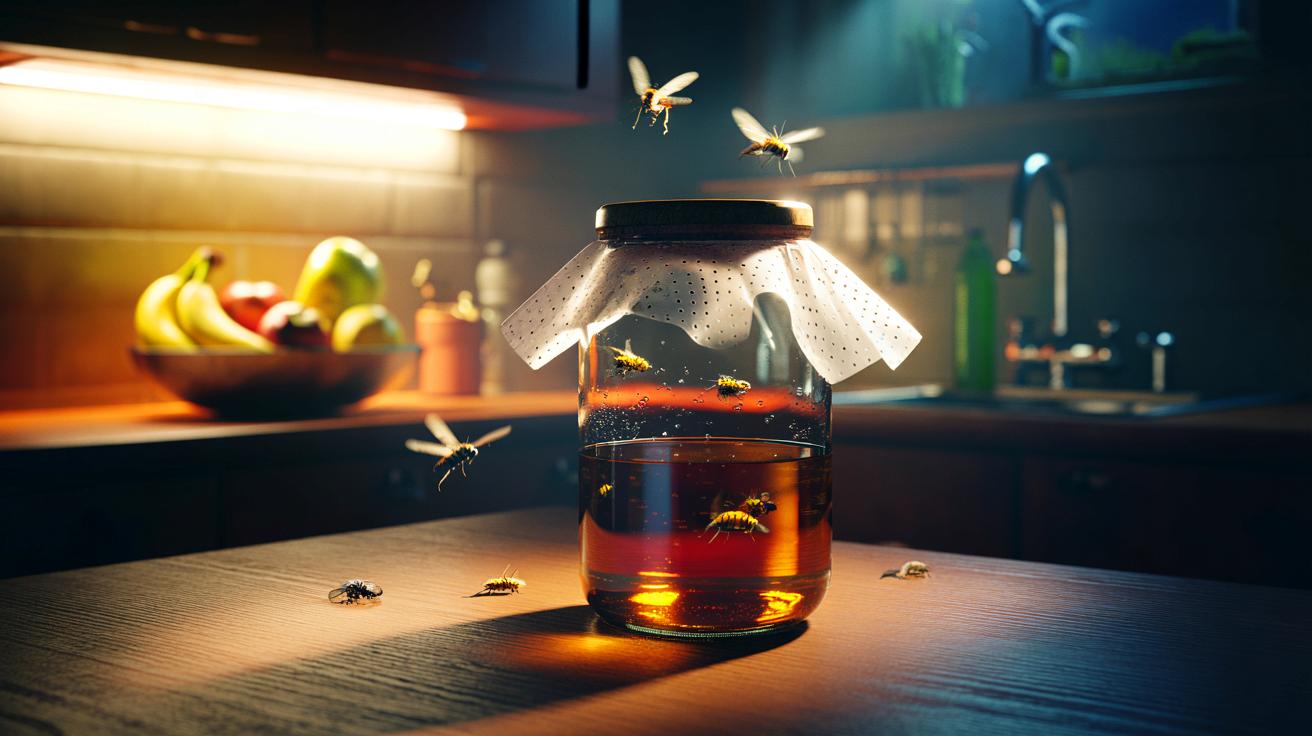
Grab a small jar or cup. Pour in about 1/2 cup of apple cider vinegar. Stir in 1–2 teaspoons of granulated sugar until dissolved, then add a splash of warm water to bring the level to one-third to one-half full. Add 1–2 drops of unscented dish soap and swirl gently—no foam needed. For a turbo lure, drop in a pea-size pinch of yeast or a scrap of overripe fruit; it amplifies the fermentation plume. Cover with plastic wrap and poke 6–10 small holes, or insert a paper funnel with a pencil-wide tip. One jar can clear dozens of flies in a single night.
| Component | Purpose | Recommended Amount | Pro Tip |
|---|---|---|---|
| Apple cider vinegar | Primary attractant (acetic acid) | 1/2 cup | Warm slightly to boost scent |
| Sugar | Enhances sweetness signal | 1–2 tsp | Dissolve fully for even plume |
| Dish soap | Breaks surface tension (drowning) | 1–2 drops | Essential; don’t omit |
| Warm water | Volume and scent diffusion | To 1/3–1/2 full | Avoid diluting vinegar too much |
| Plastic wrap/funnel | Limits escape routes | Cover with small holes | Funnel increases entry rate |
| Yeast/fruit (optional) | Fermentation booster | Pinch or small scrap | Use when flies are stubborn |
Build two or three traps for a medium kitchen and spread them strategically. Cluster near problem zones but keep a few feet away from your cutting board. You’re setting a lure, not seasoning tonight’s salad.
Placement, Timing, and Troubleshooting
Location is half the battle. Put traps within 12–24 inches of the action: next to the fruit bowl, behind the compost caddy, near the recycling bin, and by a slow drain. Avoid drafty windows or under-cabinet fans that scatter scent plumes. Set them at dusk, when you tidy surfaces, and shut the kitchen down: no new fruit exposed, no open wine glasses, no rinsed bottles left dripping. When the room goes quiet and dark, traps outperform swatters ten to one. In the morning, you’ll see a peppery constellation of tiny bodies. It’s gross. It’s also proof.
If you’re not catching much, refresh the vinegar and sugar; stale bait loses its punch. Switch to unflavored ACV if you used a heavily scented detergent—perfumes can repel flies. Add a pinch of baker’s yeast for stubborn swarms. Warm the jar for 10 seconds to boost volatility, or place the trap inside a cabinet where you’ve seen activity. Replace bait every 48 hours, and retire the whole jar after a week of heavy use. For major infestations, run multiple traps and rotate positions to intercept different scent pathways in your kitchen.
Safety, Hygiene, and When to Call It Quits
Keep traps away from pets and kids, and never set them where splashes could hit food. Do not mix vinegar traps with bleach or ammonia cleaners; the fumes can be hazardous. Once you’ve knocked down the swarm, remove the food sources that started it: compost daily, rinse recyclables, scrub sticky rings under jars, and store fruit in the fridge until the cycle breaks. Check onions, potatoes, and bananas for soft spots. Dry the sink after use—flies drink from film-thin puddles. If you suspect drain flies instead of fruit flies, switch tactics: enzymatic drain treatments and pipe brushing are your best bet.
Disposal is simple. Seal the trap and toss it, or pour contents down a drain with hot water and detergent. Then build a fresh one if you still see stragglers. Commercial traps work, but this homemade version is cheaper, adjustable, and transparent—you can literally see the results. If populations rebound within days despite clean counters, check for a hidden source: a forgotten produce bag, a leaky trash liner, or a spill under an appliance. Persistent problems in restaurants or multi-unit housing may require professional pest control to locate structural breeding sites.
By turning fermentation’s allure against the invaders, the sugar-and-vinegar trap restores home-field advantage. It’s quick to assemble, easy to scale, and devastatingly effective when placed with intention. Pair it with crisp kitchen habits and you’ll keep the swarms from starting again. The real payoff isn’t just a fly-free morning; it’s knowing you can end the siege anytime with pocket-change ingredients and a minute of prep. Ready to set your first jar tonight—and where will you place it to make the biggest impact?
Did you like it?4.6/5 (20)