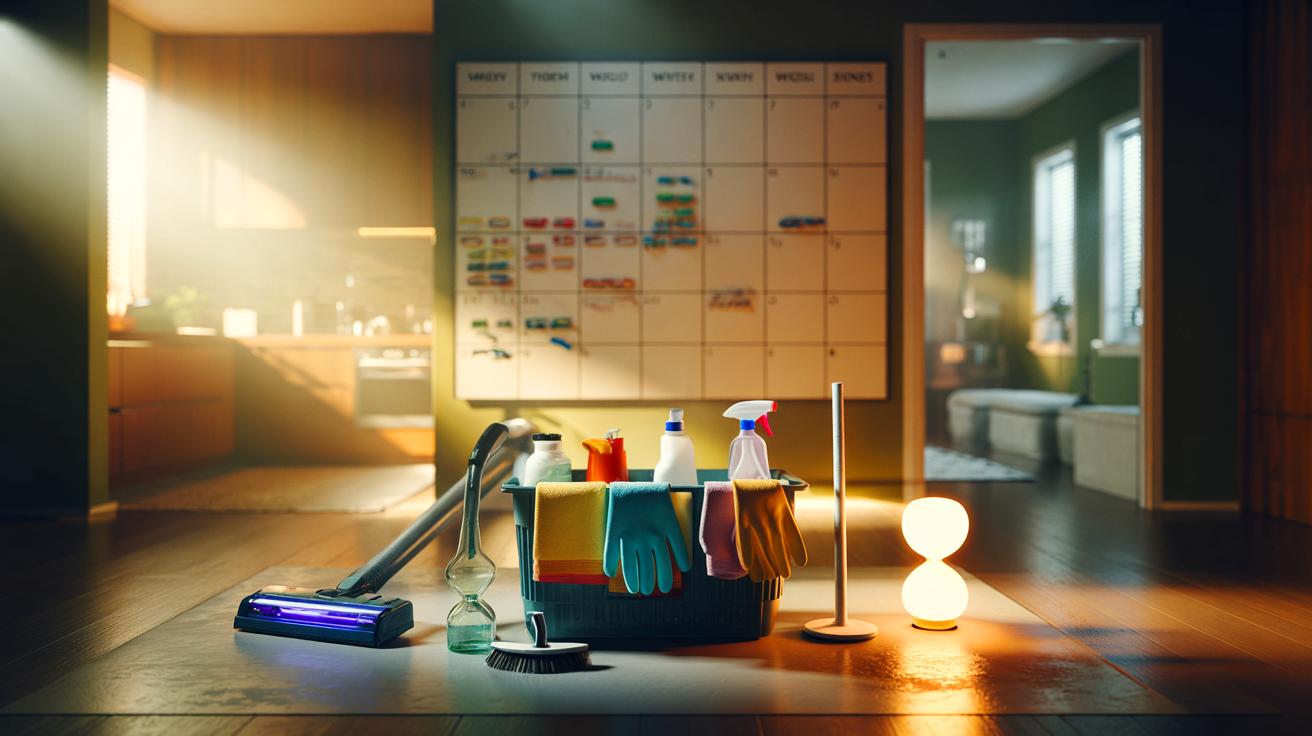
In a nutshell
- 🧭 Adopt a simple rotation: keep daily baselines and tackle one focus zone per day to cut decision fatigue and keep cleaning manageable.
- 🗓️ Build a weekly loop (e.g., Kitchen Monday, Bathrooms Tuesday) with a firm time cap of 15–30 minutes—start the timer, finish the zone, and move on.
- 🗂️ Layer in monthly and seasonal resets: distribute deep-clean tasks, track dates on a visible checklist, and run a quarterly declutter sweep.
- 🧰 Remove friction with a staged cleaning caddy, a handy cordless vac, motivating timers/music, plus the two-minute rule and nightly closing duties.
- 👥 Make it collaborative: post the schedule, assign and rotate roles, use shared notes for proof, and keep a Sunday flex day for rest or quick catch-up.
Ever notice how cleaning is either a sprint or a stalemate? One week you’re scrubbing grout at 11 p.m., the next you’re ignoring a dust bunny the size of a chinchilla. There’s a calmer lane. A simple rotation system turns chores into a steady rhythm—predictable, bite-size, and oddly satisfying. By dividing your home into zones and cycling tasks across fixed days, you remove decision fatigue and emotional noise. When you always know what today’s focus is, you stop negotiating with yourself. Less dread, more motion. Small wins compound. The house stays good enough, consistently, without the Sunday panic that drains your weekend.
How a Rotation System Works
The premise is straightforward: keep a short set of daily baselines that protect your peace—dishes, counters, a quick reset—then rotate a single focus zone each day. Instead of aiming for whole-house perfection, you zoom in. Kitchen on Monday. Bathrooms Tuesday. Floors Wednesday. By Friday, the space looks handled because every high-impact corner received attention without demanding a marathon. This reduces clutter blindness and spreads effort evenly across the week.
Two rules keep the engine humming. First, a time cap per session—usually 15 to 30 minutes. Start the timer, stop when it rings. Second, escalate only within the day’s zone. If you spot a rogue closet during bathroom day, park it on your monthly list. This protects your attention from derailment. The routine becomes a loop, not a labyrinth. Over time, you’ll calibrate which surfaces behave like magnets for mess and schedule them before they snowball into real work.
Think of this as editorial planning for your home: one beat per day, recurring coverage, almost never “breaking news.” The outcome isn’t spotless. It’s manageable. You’re building a system that tolerates life’s chaos—childhood art projects, surprise guests, late nights—without stalling out.
Build Your Weekly Cleaning Loop
Lock in a predictable rotation that fits your household. Anchor it to existing habits—after breakfast, right before commute, during kids’ homework. Consistency beats intensity every time. Keep the daily baseline short: dishes to zero, counters wiped, hotspots cleared, trash if needed. Then hit the day’s focus zone and stop. Done means done.
Use this sample loop as a starting template. Adjust for apartment, house, roommates, pets, or kids. Keep the time cap honest; speed is a feature, not a flaw.
| Day | Focus Zone | Core Tasks | Time Cap |
|---|---|---|---|
| Monday | Kitchen | Stovetop, sink, appliances wipe, sweep | 20–30 min |
| Tuesday | Bathrooms | Toilets, sinks, mirrors, tub quick-scrub | 20–25 min |
| Wednesday | Floors | Vacuum high-traffic, mop kitchen/bath | 20–30 min |
| Thursday | Laundry & Linens | Wash/dry/fold, swap towels/sheets | 15–20 min active |
| Friday | Surfaces & Dust | Dust tops, tidy shelves, wipe handles | 15–20 min |
| Saturday | Entry & Errands | Front door sweep, car trash, supplies | 15–20 min |
| Sunday | Catch-Up/Rest | Skip or finish one missed zone | 0–15 min |
Notice how heavy hitters—kitchen, bathrooms, floors—land early. By Friday, the visual clutter drains away. Save Sunday for rest or a gentle catch-up; keeping a flex day is what makes this sustainable. Protect the loop at all costs—if you fall behind, restart with today.
The Monthly and Seasonal Reset
Weekly rotations keep the house steady; monthly and seasonal passes handle the grime that creeps in quietly. List your deep-clean targets: baseboards, oven, fridge coils, blinds, vents, mattress flip, grout. Assign a handful to each month, not all to one exhausting weekend. You’ll carve them into 20-minute chunks and ride the same timer principle. No heroics.
Pair these with calendar anchors you’ll never forget: first Saturday, payday, the new moon—whatever sticks. Track progress on a minimalist checklist taped inside a cabinet. When you complete a task, note the date. The record keeps you honest and lowers anxiety because you can see that the oven was scrubbed six weeks ago, not six years. Visibility beats vibes.
Quarterly, run a quick declutter sweep: one bag out of the house, every season. Donation, sell, or trash. Tie it to the changeover of linens or wardrobe. Windows on spring, gutters in fall, filters every three months. You’re building a calendar your future self will thank you for, one small appointment at a time.
Tools, Timekeepers, and Tiny Habits
The right setup removes friction. Stage a cleaning caddy per floor with microfiber cloths, glass spray, a gentle abrasive, gloves, and a scraper. Color-code cloths to dodge cross-contamination. Keep a cordless vac where messes actually happen. If it’s reachable, it gets used. Proximity is strategy.
Timers are your co-editors. A plain kitchen timer or phone alarm creates urgency without stress. Music works, too—three songs equals done. For motivation, adopt the two-minute rule: if a task takes less than two minutes, do it during the baseline reset. Close the day with “closing duties”—sink empty, counters clear, living room reset—so morning you starts ahead.
Households with roommates or kids? Post the weekly loop on the fridge and assign names to zones. Use playful job titles for buy-in. Rotate roles to keep resentment low. Consider a shared note app for photos of completed areas; it prevents double work and keeps the tone collaborative. When the system lives outside your head—in a visible list, a timer, a caddy—it survives busy seasons intact.
Cleaning doesn’t have to be epic. It can be ordinary, scheduled, and light. The rotation system trades intensity for continuity, and that swap changes everything: less dread, more control, rooms that stay guest-ready without stealing your Sunday. Start with a 15-minute timer today, run the loop for one week, and notice how your space—and your brain—responds. Small motions create momentum. What single change would make a rotation system easiest for you to try this week—time of day, tools on hand, or a shorter list?
Did you like it?4.6/5 (25)