In a nutshell
- 🧂 Use a $2 pantry mix of baking soda + salt in a 3:1 ratio to naturally deodorize trash cans—dry, simple, and effective without perfumes.
- 🧪 It works because baking soda neutralizes odor molecules while salt absorbs moisture, slowing bacterial growth and preventing stink instead of masking it.
- 🗑️ How to use: sprinkle 2–4 tbsp in the bin bottom (or a coffee-filter “pod”), refresh weekly, and make a paste scrub for deep cleans; up to 1/3 cup for larger cans.
- 💵 Budget- and pantry-friendly: a batch costs well under $0.50; add dried citrus peel for a light scent, or fully dried coffee grounds; avoid essential oils and moisture.
- 🔒 Safety and pro tips: safe for most plastics/metals (avoid unfinished aluminum), keep away from pets, don’t add to compost, and use layered control with a small lid sachet for extra odor zones.
Trash cans have a way of advertising last night’s dinner long after the dishes are done. You don’t need perfumed sprays or pricey pods to fight that funk. There’s a simple, two-ingredient pantry mix that absorbs odors at the source and keeps bins fresher between bag changes. It’s dry, safe on most surfaces, and takes seconds to deploy. No fragrances, no mystery chemicals—just a little kitchen chemistry doing quiet, effective work. For renters, parents, and anyone who hates waste, this fix costs less than a bus fare and performs better than most scented liners. Here’s how to make it, why it works, and when to refresh it for consistently clean-smelling cans.
What’s in the $2 Pantry Mix
The superstar duo is basic: baking soda and table salt. The formula is simple—use a 3:1 ratio: three parts baking soda to one part salt. Baking soda neutralizes odor-causing molecules; salt draws out moisture that bacteria and mold need to multiply. Both are pantry staples. Both are cheap. Most households can whip up a batch in under a minute. Depending on store brands, the whole batch typically costs about two dollars or less, and each trash can treatment runs just a few cents.
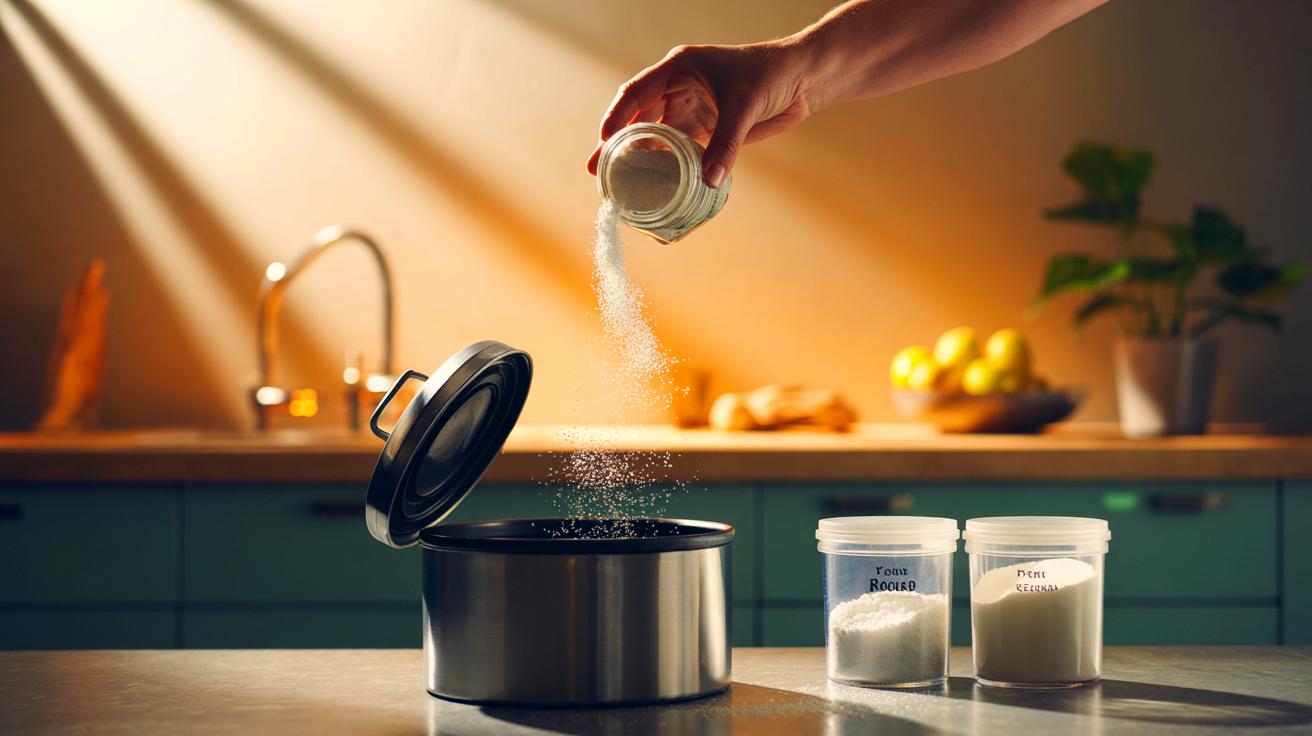
To mix: add 3/4 cup baking soda and 1/4 cup fine salt to a small jar, shake well, and keep it capped. For everyday use, punch holes in an extra jar lid to make a quick shaker, or spoon the powder into a disposable coffee filter to craft a paper “pod” that sits under the liner. Dry is the point. Liquid mixes can mask smells briefly, but a dry absorber works longer and leaves no residue in the bin.
Prefer a subtle scent? Toss in a teaspoon of dried citrus peel from yesterday’s lemon or orange. It’s optional, pantry-friendly, and won’t overpower your kitchen. Just keep oils and wet peels out; moisture shortens the mix’s life and can invite mildew.
Why It Works: The Simple Science
Odors are volatile compounds drifting off decomposing scraps. Sodium bicarbonate—baking soda—buffers pH. It captures and neutralizes many acidic and basic molecules from foods like onions, fish, dairy, and coffee. Instead of covering smells, it helps cancel them at the molecular level. That’s why your fridge relies on the same trick. It’s broad-spectrum and patient, continuing to work for days as new vapors appear.
Salt adds a second line of defense. It’s hygroscopic, meaning it pulls in water. Less moisture means slower bacterial activity and fewer enzymatic reactions that generate stink. Think of it as lowering the “humidity” in the odor zone. Salt also lightly abrades when used as a scrub, helping remove residue that holds onto smells on the can’s interior walls and base. Paired together, the two create a hostile environment for funk—dry, buffered, and relatively inert.
Critically, this mix is friendly to most plastic and metal bins. It’s non-corrosive at household levels and rinses clean. No synthetic perfume cloud, no clash with kitchen aromas, and no chemical cocktail to worry about if you compost. Smells go away, not just get covered.
Step-by-Step: Use It to Deodorize Any Trash Can
Start with an empty bin. Wash if needed, then dry thoroughly. Sprinkle 2–4 tablespoons of the mix across the bottom. Add a paper towel or thin coffee filter to act as a barrier if your bin tends to collect condensation. Drop in your liner, and you’re set. For bigger cans or diaper pails, use up to 1/3 cup. Replace every 1–2 weeks, or sooner after seafood nights or hot, humid spells.
During deep cleans, make a paste—three tablespoons of powder plus just enough water to form a spreadable scrub. Apply to scuffed or smelly zones, let it sit for 10 minutes, then wipe and rinse. For lids and hinges, a soft brush helps the powder reach crevices. Don’t forget the can’s underside; drips gather there. Keep the mix dry for routine deodorizing; use paste only as a periodic clean.
| Use | Amount | Frequency | Approx. Cost |
|---|---|---|---|
| Bottom of bin (daily deodorizing) | 2–4 tbsp | Weekly refresh | $0.05–$0.12 |
| Deep-clean scrub | 3 tbsp + water | Monthly or as needed | $0.05 |
| Paper “pod” under liner | 2 tbsp in filter | Every 1–2 weeks | $0.06 |
Cost, Variations, and Safety Notes
At typical U.S. prices, a 1-pound box of baking soda runs about $1–$1.50; a 26-ounce canister of salt is often under a dollar. A single batch (1 cup total powder) costs well under $0.50 and lasts multiple refreshes. That’s why this is a “$2 pantry mix” in spirit: two dollars buys the ingredients and weeks of odor control. If you want a twist, add a teaspoon of dried lemon or orange peel for a clean, kitchen-friendly note. Used coffee grounds also absorb odors—dry them completely in a low oven before mixing to prevent mildew.
Skip essential oils; they’re not strictly pantry and can interact with plastics. Avoid using the powder on unfinished aluminum surfaces, and test on specialty coatings. Keep sachets out of reach of pets—ingesting large amounts of salt is unsafe for cats and dogs. When refreshing the bin, pour the spent powder into the trash bag; it will keep working inside the bag on the way to the curb. For composters, keep the powder in the bin area, not in the compost stream, to maintain ideal compost pH.
One last tip: if you regularly toss high-odor scraps, double up—powder beneath the liner and a small sachet adhered under the lid with painter’s tape. Layered control handles both the source and the headspace where vapors collect.
A fresher kitchen doesn’t require gadgets or fragrance clouds, just a mindful routine and two humble staples doing quiet, reliable work. This baking soda and salt combo is cheap, fast, and adaptable to any bin—from under-sink cans to diaper pails. Put dryness and chemistry on your side, refresh on a schedule, and clean with intention, not elbow-grease marathons. Ready to retire the perfumed sprays and try a smarter fix—how will you adapt this $2 mix to your kitchen’s quirks and weekly trash rhythms?
Did you like it?4.6/5 (20)