In a nutshell
- 🧽 The most overlooked step is to deep-clean and fully dry the filter, which immediately restores suction, lowers noise and odors, and prolongs motor and battery life.
- 🌬️ Vacuum performance hinges on airflow; clogged filters spike static pressure, strain the motor, and can undermine HEPA filtration by recirculating fine dust.
- 🚿 Clean correctly: rinse from the clean side toward the dirty side, avoid soap unless approved, gently squeeze foam pads, and air-dry 24–48 hours—never reinstall damp; keep a spare set ready.
- ⏱️ Maintenance cadence: tap-clean every 2–4 weeks, wash every 1–3 months, and replace filters on schedule (foam/felt: 6–12 months, HEPA: 12–24 months); skip bleach, hot water, and fragrances.
- 🛠️ If suction still lags, check for hose blockages, tangled brushroll, worn belts, improper height settings, leaky seals/gaskets, and a clogged cyclone shroud; stop if you smell burning.
Your vacuum hasn’t gotten weaker. It’s suffocating. The most overlooked maintenance step isn’t buying new attachments or obsessing over the brushroll. It’s deep-cleaning and fully drying the filter. Emptying the bin helps, but dust-laden filter fibers choke airflow, strain the motor, and leave grit embedded in carpet. The difference after a proper filter refresh can be startling. Floors lift clean with fewer passes. Noise drops. Odors fade. Energy use shrinks. This is quick household mechanics, not rocket science—yet it’s often skipped for months. Here’s why that’s a mistake, how to do it right, and when to replace parts so your machine pulls like new again.
Why Clean Filters Matter More Than You Think
Vacuum performance is really about airflow. Suction alone doesn’t lift debris; moving air carries it from carpet to canister. When filter pores clog, resistance skyrockets and airflow collapses. The motor responds by working harder, often spinning faster and running hotter. That whine you hear? It’s wasted power fighting static pressure, not cleaning your floors. A clogged filter also forces fine particles past seals, redistributing dust and allergens. If your machine boasts a HEPA system, a starved filter undermines the very feature you paid for, letting microdust recirculate into rooms you’re trying to freshen.
Then there’s longevity. A strained motor wears brushes and bearings, cutting service life. Belts slip more under load. Even the battery in a cordless loses runtime pushing against a plugged filter. Regular filter maintenance restores suction instantly, reduces noise, and trims energy use. It’s the single fastest way to make any vacuum—upright, stick, canister, even robot—feel newly tuned. You’ll also notice cleaner exhaust. That “dog” smell? Often a damp, dirty filter baking under heat. Cleaning it removes odor at the source.
The One Step: Deep-Cleaning and Fully Drying Your Filter
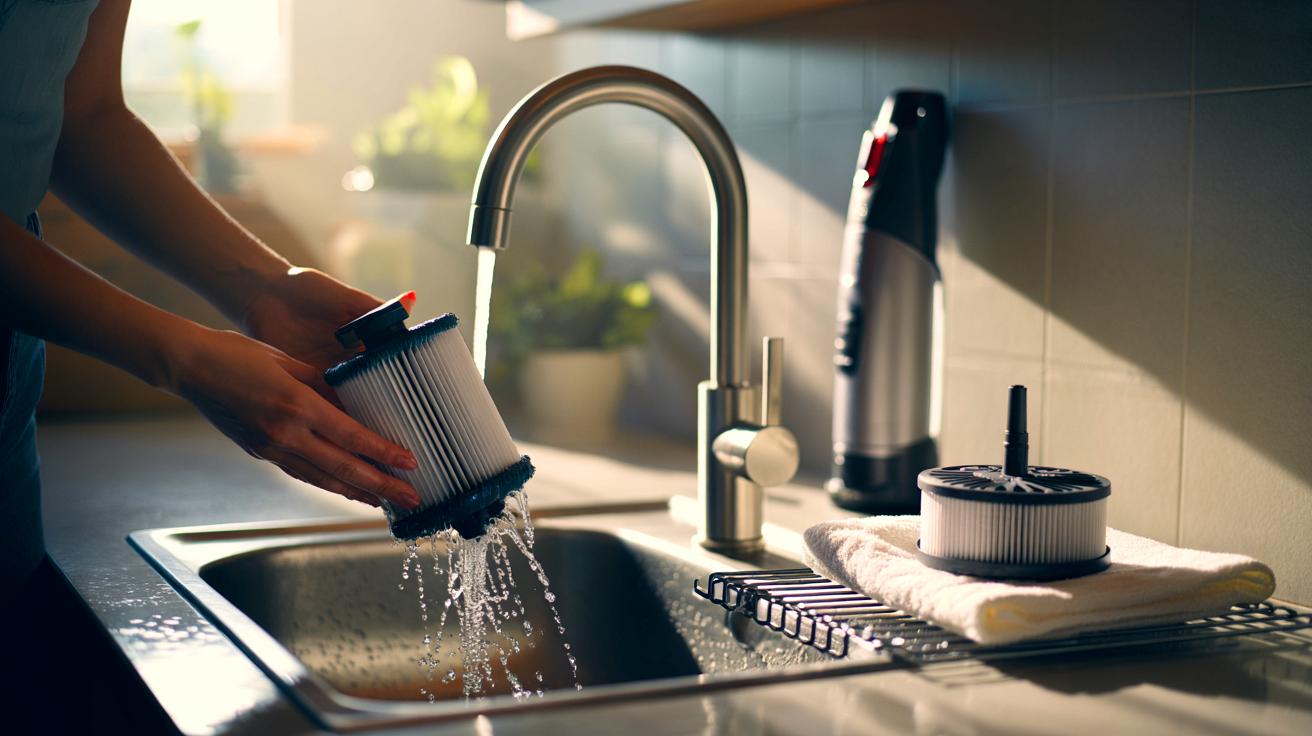
Start with safety. Unplug or power down and remove the battery if possible. Pop the filter housing—usually near the bin or motor. Tap the filter gently into a trash bag to dislodge loose dust. Now the key: rinse from the clean side toward the dirty side so you don’t drive dirt deeper. Use lukewarm water with a soft flow. No soaps unless your manual explicitly allows; surfactants can leave residues that glue dust to fibers. Rotate as you rinse until water runs clear. For foam pre-motor pads, squeeze—not wring—to push out embedded grime.
Drying is where most people go wrong. Never reinstall a damp filter. Moisture pulls lint into a concrete-like cake, throttling airflow and risking mold—and it can short electronics or pit the motor. Shake off excess water, then air-dry at room temperature for 24 to 48 hours on a ventilated rack. Sunlight helps, but avoid high heat from ovens, radiators, or hair dryers, which can warp plastics and degrade adhesives. If time is tight, keep a spare filter set on hand so one can dry while the other works. For bagged vacuums, replace the bag and rinse any washable pre-motor pad; post-motor HEPA cartridges are often non-washable and should be swapped on schedule.
How Often, What to Use, and What to Avoid
Frequency depends on your home. Pet hair, renovation dust, and plush carpet load filters faster. As a baseline, tap-clean every two to four weeks and wash every one to three months. If you notice a higher pitch, hotter exhaust, or poor pickup, bump maintenance sooner. When in doubt, clean it out. Keep a soft brush for the filter cage and cyclone shroud, and a dry microfiber for seals. Skip compressed air indoors—it blasts ultrafine dust into your lungs. If you do it, step outside and wear a mask.
| Filter Type | Maintenance Method | Dry Time | Replace Every |
|---|---|---|---|
| Foam Pre-Motor | Rinse, squeeze gently; no soap | 24–48 hours | 6–12 months |
| Felt/Cloth Pre-Motor | Tap, light rinse if allowed | 24 hours | 6–12 months |
| HEPA Cartridge (Non-Washable) | Tap outside; do not wash | n/a | 12–24 months |
| Washable HEPA | Gentle rinse; air-dry fully | 48 hours | 12–18 months |
| Robot Vacuum Filter | Tap or rinse if rated washable | 24–48 hours | 2–6 months |
A few red lines: avoid bleach, hot water, and dish soap on paper-pleated filters; fibers swell and lose efficiency. Don’t coat filters with fragrance or powders; they cement pores. Always check your model’s manual for exact guidance—some brands offer washable parts that look identical to non-washable ones. Label your spares to prevent mix-ups.
Troubleshooting After a Filter Refresh
If suction still lags, the filter wasn’t the only choke point. Inspect the intake path: wand, hose, and elbows collect crumbs that lodge like corks. Drop a coin through sections to confirm a clear run. Check the brushroll for string or hair that stalls bristles; a dull roll leaves grit behind even with perfect airflow. Belts stretch and slip—replace if glossy or loose. Height setting matters too. Too low and the head seals to carpet, strangling flow; too high and bristles can’t agitate fibers.
Next, examine seals and gaskets around the bin and filter door. A small crack is a big leak. For bagged models, ensure the bag collar is seated; off-kilter collars bypass the bag entirely. On cyclonic machines, scrub the cyclone shroud—those pinholes must be open to spin dust out of the airstream. Listen and sniff during a test run. Stop if you smell burning or hear a harsh chirp; that signals belt or motor trouble needing service. If you recently cleaned with water, confirm the filter is bone-dry. A single damp corner can tank airflow and invite odor overnight.
One overlooked maintenance step—deep-cleaning and fully drying your filter—can turn a sluggish vacuum into a confident cleaner in minutes. It’s cheap, fast, and profoundly effective. You’ll preserve the motor, protect indoor air, and pick up more with every pass. Keep a spare filter set, set a calendar reminder, and treat airflow like the fuel it is. Then enjoy quieter runs and cleaner floors, minus the frustration. When was the last time you rinsed, dried, and reinstalled your filter the right way—and what difference did you notice?
Did you like it?4.6/5 (22)