In a nutshell
- 🌱 Plant Growth Regulators (PGRs): Use trinexapac‑ethyl to slow vertical growth, deepen color, and keep the cut line crisp for +3–7 days without extra mowing.
- ✂️ Mowing Height and Pattern: Raise the deck (about 3–3.5 inches for cool-season turf), follow the one‑third rule, alternate striping directions, and consider a quick double cut to sharpen contrast.
- 🧱 Crisp Edges, Big Impact: A 15‑minute perimeter routine—vertical edging along hardscapes, tight bed lines, and thorough cleanup—frames the lawn so it reads freshly serviced.
- 🎨 Color and Clarity: Spoon‑feed nitrogen (0.10–0.25 lb N/1,000 sq. ft.) and apply chelated iron for fast cosmetic green; time watering to protect stripes and avoid matting.
- 🔁 System Over Silver Bullet: Combine PGR control, higher cuts, edge work, and color management to reduce clipping volume, extend the “fresh-cut” window, and deliver a pro-grade finish all week.
Every homeowner knows the deflating moment: two days after a meticulous mow, the lawn already looks shaggy. Landscapers fight that clock with a quiet, repeatable method that stretches the “fresh-cut” window without adding a full extra mow. The secret isn’t just sharp blades or tidy cleanup. It’s a blend of chemistry, blade height, geometry, and edge work that keeps grass upright, dark, and disciplined. The centerpiece is growth control, but the illusion is completed at the edges and along the stripes. Below, a step-by-step look at the pro playbook—from the plant growth regulators they rely on to the fast perimeter routine that makes a yard read like it was just cut this morning.
The Core Trick: Plant Growth Regulators
Ask a seasoned crew how they keep clients smiling between visits and they’ll say it plainly: PGRs. Products like trinexapac‑ethyl (often sold to pros as Primo-type formulas) slow vertical growth by redirecting plant energy into density and color. When grass grows less upward, the cut line stays crisper for longer. The result is subtle but striking—fewer stragglers, a deeper green, and reduced scalp risk on uneven spots. For many cool-season lawns, applications every 3–5 weeks in peak growth can extend the “just mowed” look by several days, sometimes a full week, depending on weather and mow height.
Warm-season turf like bermuda or zoysia also responds well, often showing even sharper stripes because leaf blades stiffen slightly under regulation. Homeowners should confirm what’s allowed locally and always follow the label; some formulations are sold to pros, while homeowner options exist through specialty retailers. A smart cadence: start low, observe, and build a schedule around your mowing rhythm. PGRs don’t replace mowing—they synchronize it. They also reduce clipping volume, which means less debris to signal “three days have passed.” Bonus: steady use can improve turf uniformity, making every pass look like it came from a reel mower.
Mowing Height And Pattern: Engineering The Illusion
Even with growth regulated, technique decides whether a lawn reads as pristine or merely neat. Pros raise the deck. A slightly higher mowing height—often 3–3.5 inches for cool-season blends—keeps leaf tips healthy, shades soil, and makes stripes bolder. The higher the grass (within reason), the longer the clean cut hides minor regrowth. Follow the one‑third rule: never remove more than a third of the blade in one session. Taller, stress-free turf holds the haircut line better and resists fraying, which is what dulls that “fresh” sheen within 48 hours.
Pattern matters. Crews alternate striping direction each visit—north/south one week, east/west the next—to keep blades from leaning permanently. A weighted roller or striping kit lays fibers consistently so they reflect light in clean bands. For show days, many pros do a “double cut”: a normal pass, then a quick 90‑degree pass across high‑visibility areas to catch stragglers and sharpen contrast. Keep blades sharp and pressure wash the deck underside to avoid clumps that rough up the finish. Light passes, sharp metal, and clean airflow make a lawn look camera‑ready with half the effort.
| Technique | Primary Effect | Longevity Boost | Cost/Skill |
|---|---|---|---|
| PGR application | Slows vertical growth, deepens color | +3–7 days | Medium cost / Moderate skill |
| Higher mow height | Hides regrowth, reduces fray | +1–3 days | Low cost / Easy |
| Alternating stripes | Consistent light reflection | Per visit | Low cost / Easy |
| Double cut spots | Catches stragglers, sharp finish | Per visit | Time cost / Easy |
| Perimeter edging | Crisp borders, visual pop | +2–4 days | Low cost / Easy |
Crisp Edges, Clean Lines: The 15-Minute Perimeter Routine
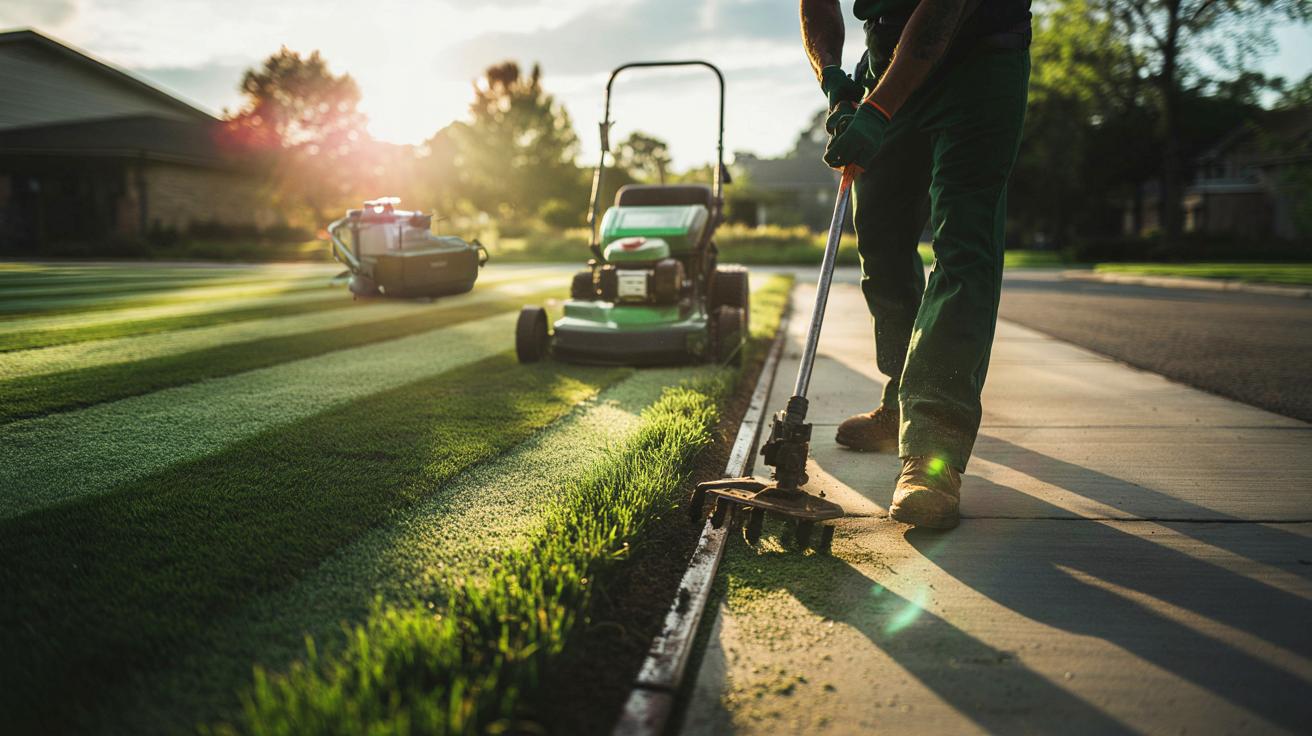
Homeowners obsess over center stripes; landscapers obsess over borders. Edges trick the eye first. A neat perimeter makes the entire yard appear freshly serviced, even if the center has softened slightly. Use a stick edger or flip a string trimmer vertical; walk clean, slow passes along concrete, pavers, and bed lines. Aim for a slender, straight trench—no ragged halo. Then blow clippings away from hardscapes and out of mulch beds so there’s nothing to signal time passing. The contrast of clean edge vs. turf is the magazine-cover effect.
Pros revisit edges briefly between full mows when growth spikes, because the payoff is outsized. Bed lines deserve the same treatment: redefine curves, shear stray stolons, and trim around trees with a tight collar. Finally, hide the evidence. Sweep or blow until borders read as a single clean stroke. When the frame is flawless, the picture looks newly painted. In 15 minutes, you’ve staged the scene and bought days of perceived freshness.
Color And Clarity: Quick Feeds, Iron, And Water Timing
Nothing broadcasts “freshly cut” like a darker, uniform canopy. For that, crews spoon‑feed nitrogen lightly—think 0.10–0.25 lb N per 1,000 sq. ft.—and lean on chelated iron or ferrous sulfate for fast cosmetic green without a flush of growth. Color amps the stripe contrast and hides minor imperfections. Apply iron during active growth and water it in per label to avoid staining hard surfaces. Balanced micronutrients and a touch of potassium further tighten cell walls, helping blades stand and reflect light more evenly.
Water timing also matters. Mow on dry blades to prevent tearing, then if dust is present, mist lightly to settle fines without matting stripes. Skip heavy irrigation immediately after mowing; it flattens the pattern you worked to build. Keep clippings mulched finely—PGRs help here—and bag only on showcase days or when weeds are seeding. Over the season, this approach deepens color while keeping growth calm, so the cut line doesn’t “explode” out of shape. Feed for color, not surge, and the fresh-cut look lingers.
The quiet genius of a lawn that stays “just cut” is not one magic product but a system: PGR control to slow the clock, a higher cut to soften regrowth, crisp edges to sell the story, and subtle color management to seal the illusion. None of it requires stadium budgets, just timing and consistency. The payoff is real—fewer full mows, more compliments, and a yard that looks professionally staged all week. Ready to test the trick set on your block, and which element—regulator, pattern, or edge work—will you try first?
Did you like it?4.3/5 (23)