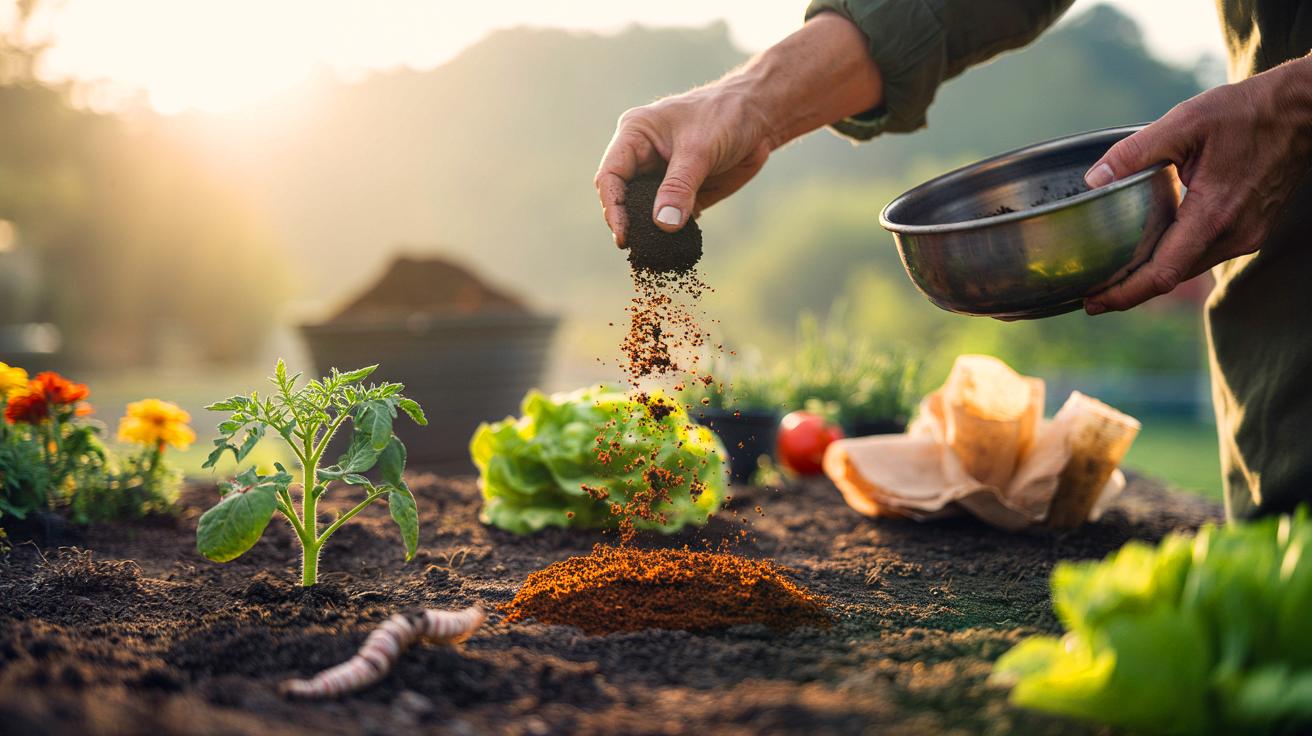
In a nutshell
- 🌱 Used coffee grounds enrich soil life with organic matter and about 2% slow-release nitrogen, improve aggregation and moisture retention, and are typically near-neutral pH.
- 🛠️ Apply smartly: compost as a “green” at ~1 part grounds to 2–3 parts browns (≤20–25% of mix), or rake 0.25–0.5 inch into beds; mix 1–2 cups per 10 sq ft, and keep pots to 5–10% by volume.
- 🪱 For worms and compost: add small, regular portions mixed with bedding; paper filters are compostable; aim for even distribution to avoid crusting and odors.
- ⚠️ Myths and limits: brewed grounds aren’t strongly acidic, slug/cat deterrence is unreliable, thick layers can form a hydrophobic crust, and while nitrogen tie-up is minimal, pet safety matters.
- 📊 Quick facts: N~1.5–2.3%, P~0.3%, K~0.6–1.2%, C:N ≈ 20:1, pH ~6.5–6.8; treat grounds as a supplement, not a substitute, and back decisions with periodic soil tests.
Coffee lovers and gardeners share a quiet secret: the daily brew can nourish more than your morning routine. When you scatter or compost used coffee grounds, you’re feeding soil life, improving texture, and recycling a resource that would otherwise hit the landfill. It’s simple. It’s low-cost. And it works best with a little know-how. Used grounds aren’t a miracle fertilizer, but they are a reliable, steady contributor to healthier beds and containers. Their fine particles build structure; their nutrients release slowly. Done right, the practice boosts fertility without chemical inputs and keeps waste in the circular economy. Here’s how gardeners turn yesterday’s espresso into tomorrow’s bloom.
How Coffee Grounds Feed Soil Life
Think of coffee grounds as a slow, supportive meal for the underground workforce. They’re modest in nutrients yet rich in organic matter, which fuels bacteria and fungi that in turn nourish roots. The standout is nitrogen. Grounds typically hold about 2% total nitrogen that unlocks gradually as microbes break down the material. That slow pace prevents the wild growth spurts synthetic fertilizers can trigger. Used coffee grounds are usually close to neutral pH, contrary to the popular belief they’re sharply acidic; the acidity is largely extracted into your cup.
Structure matters as much as chemistry. Mixed into soil, the fine granules improve aggregation and water-holding, helping sandy beds retain moisture and giving clay soils a looser, more porous crumb. Earthworms relish the microbial buffet that colonizes grounds, and their casting activity further boosts nutrient cycling. Yes, trace compounds like caffeine remain, but at levels that rarely cause trouble when grounds are blended with other materials. The real power of grounds lies in energizing the microbial loop that turns waste into fertility.
| Component/Property | Typical Value/Effect | Why It Matters |
|---|---|---|
| Total Nitrogen (N) | ~1.5–2.3% | Slow, steady nutrient release |
| Phosphorus (P) | ~0.3% | Root development support |
| Potassium (K) | ~0.6–1.2% | Flowering and stress tolerance |
| C:N Ratio | ~20:1 | Behaves like a “green” in compost |
| pH (used grounds) | ~6.5–6.8 | Gentle on most garden soils |
Smart Ways to Apply Coffee Grounds
Start with compost. Blend grounds as a “green” ingredient at roughly one part grounds to two or three parts carbon-rich browns (dry leaves, shredded cardboard, or straw). Keep grounds under about 20–25% of the total mix by volume to avoid compaction and odors. Stir them in, don’t layer them thickly. The heat of composting tames any residual caffeine and speeds conversion into stable humus. Small, regular additions beat occasional big dumps.
For direct soil use, think thin and blended. Rake no more than 0.25–0.5 inch of grounds across beds, then top with a coarser mulch like bark or leaves to prevent crusting. For in-ground vegetables and perennials, incorporate about 1–2 cups of grounds per 10 square feet into the top 2–4 inches of soil two or three times per season. Containers? Keep it lighter—no more than 5–10% of the potting mix by volume, thoroughly mixed to avoid hydrophobic clumps.
Vermicomposters can feed worms coffee grounds mixed with bedding, in small portions, observing how quickly it disappears. Seedlings prefer gentler media; skip fresh grounds in starting mixes. Used paper filters are fine to compost; tear them up for quicker breakdown. Water after application to settle particles. The aim is even distribution, steady biology, and texture gains without sealing the surface.
Myths, Limits, and Safety Notes
Let’s clear the air on acidity. Fresh, unused grounds can be acidic, but the brew extracts many acids. Once brewed, grounds lean near neutral and won’t meaningfully acidify established beds. If you need an acid boost for blueberries or camellias, rely on sulfur or acid-forming fertilizers instead. Another claim: that grounds repel slugs and cats. Results are mixed at best. A dusting may deter briefly, but it’s not a reliable barrier compared with physical traps or iron phosphate baits.
Overuse causes most problems. Thick layers can form a hydrophobic crust that sheds water and locks out air. Mixing fixes this. In compost, a pile loaded with grounds can go anaerobic; counter with ample browns and regular turning. Some gardeners worry about nitrogen tie-up as microbes feast. With a C:N around 20:1, grounds act as a mild nitrogen contributor, not a robber, especially when composted or blended into soils with existing organic matter. Keep pets out of bags of grounds—caffeine can harm dogs if ingested in quantity.
Quality counts, but perfection isn’t required. Grounds from chain cafés, office pots, or home machines are all usable. Let wet grounds cool and dry lightly to prevent mold if you plan to store them for more than a day or two. Wear gloves if you’re sensitive; rinse hands after handling. Think of coffee grounds as a supplement, not a substitute, for a balanced soil management plan that includes compost, mulch, and periodic soil testing.
Handled thoughtfully, coffee grounds make gardening feel both thrifty and modern: one habit feeds another. You divert waste, energize microbes, and build a richer soil sponge that supports tastier tomatoes and sturdier perennials. The trick is simple—apply lightly, mix well, and repeat across the season. Track what changes in your beds: moisture retention, worm activity, crop vigor. Organic matter is a marathoner, not a sprinter. Your soil will respond in steady, visible ways. What will you try first—compost mixing, a thin mulch under roses, or a test strip in the vegetable garden to compare results side by side?
Did you like it?4.4/5 (28)