In a nutshell
- 🧪 White vinegar repels ants by disrupting pheromone trails while cleaning food residues; avoid use on natural stone surfaces.
- 🧴 Mix a 1:1 vinegar–water solution (stronger for stubborn trails), use a spray–wipe–spray method at entry points, and repeat morning and evening for 24–48 hours.
- 🗺️ Target windowsills, baseboards, trash areas, and pet feeding stations; apply early morning and at dusk, and keep sprays away from outlets/electronics.
- 🧂 Use pantry backups—cinnamon, lemon juice, coffee grounds, and black pepper—as scent barriers; note staining risks, mold outdoors, and replace after rain.
- 📋 Prioritize prevention: seal food, dry sinks, maintain weekly perimeter wipes; consistent use resets the ants’ map and reduces indoor pressure.
Ants march in like clockwork. They find the smallest crack, map it with chemical signals, and invite the whole colony. Before you reach for harsh sprays, try something sitting in your pantry: white vinegar. This everyday staple, often splashed into salad dressings and marinades, doubles as a fast, low-cost ant deterrent that cuts through the invisible highways ants rely on. Because it’s food-safe and biodegradable, vinegar is a practical first response when trails appear on counters, baseboards, or window sills. It works quickly. It smells strong. And it helps you reclaim the kitchen without coating surfaces in synthetic residues.
Why Vinegar Works Against Ants
Ants don’t rely on sight to navigate your home. They follow pheromone trails—scented chemical breadcrumbs laid by scouts. The acetic acid in white distilled vinegar (typically 5% acidity) scrambles those trails. When you wipe a path with vinegar and let it dry, you erase the ants’ roadmap, forcing the colony to regroup elsewhere. This disruption is the core advantage of vinegar: it doesn’t need to kill ants to stop the traffic. The strong aroma also functions as a deterrent, making entry points less appealing.
There’s a second benefit: vinegar cleans. Sticky spills, juice rings, and crumbs are ant magnets. A vinegar wipe removes both scent trails and food residues in one pass. Choose plain white vinegar for neutral color and predictable acidity. Apple cider vinegar can work too, though its sugars—and its scent—may linger. One caveat matters: do not use vinegar on natural stone like marble, limestone, or some granites, which can etch. Use a gentle stone-safe cleaner on those surfaces and apply vinegar only around them.
Step-By-Step: The Vinegar Repellent You Can Mix Today
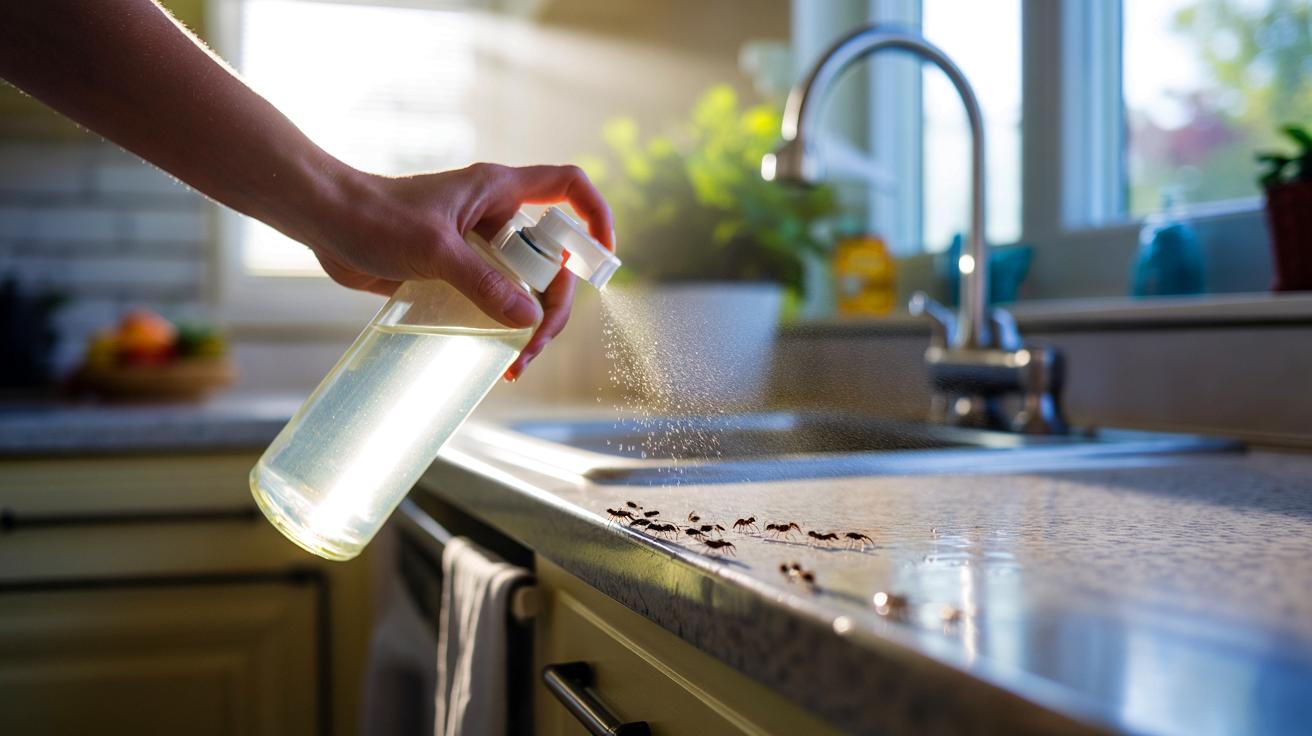
Grab a clean spray bottle, white vinegar, and tap water. Mix a 1:1 solution for everyday use. For stubborn trails, go stronger: 2 parts vinegar to 1 part water, or even full-strength on non-porous, vinegar-safe surfaces. Test a discreet spot if you’re unsure how a finish will react. Now, follow the ants. Their line shows you the entry point—often a window frame, baseboard gap, or pipe cutout.
Spray the visible trail until damp. Wipe it thoroughly to lift away the pheromones. Then spray again and allow it to air-dry, creating a residual scent barrier. Treat the entry point with two or three spritzes. Extend protection by drawing a light “vinegar moat” along edges where ants traveled—behind appliances, under the sink, along door thresholds. Repeat the cycle twice on day one: morning and evening. Most household species will stop within 24–48 hours when their trail network collapses. If you store food on counters, wipe jars and canisters with the same mix. Clean plus disrupt is the winning combo.
Where, When, and How Often to Apply
Target high-traffic zones: windowsills, backsplash seams, trash areas, pet feeding stations, and the warm shadow lines beneath cabinets. Kitchens and bathrooms are prime. Basements and utility rooms matter too, especially around sump pumps and foundation cracks. Apply in the early morning, when trail activity often peaks, and again at dusk. Reapply daily for two to three days, then taper to every few days as activity declines. After rain or yard work that disturbs soil, increase attention to door sweeps and patio sliders.
Make it routine: quick vinegar wipe after cooking, weekly perimeter spray along interior baseboards, and a fast pass on windows that face shrubs or paving stones. If you notice winged ants indoors, that’s a different signal—swarming season or a nearby nest—so pair your vinegar regimen with a physical inspection outside: mulch lines, gaps around utility lines, and where siding meets the foundation. Avoid spraying into outlets or onto electronics. And remember the stone-surface caution. Used consistently, vinegar resets the map ants use to navigate. When the map keeps changing, they stop investing in your kitchen.
Safe Use and Quick Alternatives from Your Pantry
Vinegar is the workhorse, but your spice rack and produce drawer also stock reliable deterrents. Cinnamon (ground or sticks) can discourage crossings when sprinkled along a seam; lemon juice offers citric acid that masks trails; coffee grounds provide scent-heavy barriers on patios and planters; black pepper irritates and turns scouts around. These options fit when you want dry barriers or prefer a brighter scent. None replace sanitation—seal snacks, decant sugar and flour into tight canisters, and dry the sink at night. Clean first, then deter. For families with children and pets, these pantry options deliver peace of mind while you monitor whether the colony relocates.
| Ingredient | Why It Repels | How to Use | Best Spots | Caution |
|---|---|---|---|---|
| White Vinegar | Disrupts pheromone trails; strong scent barrier | Spray/wipe 1:1 mix; reapply as needed | Counters, baseboards, entry gaps | Avoid natural stone surfaces |
| Cinnamon | Pungent oils deter crossings | Sprinkle a thin line or place sticks | Window tracks, back-of-shelf seams | Can stain light surfaces; keep tidy |
| Lemon Juice | Citric acid masks trails | Wipe diluted juice on paths | Door thresholds, patio sliders | May lighten unfinished wood |
| Coffee Grounds | Overpowers scent cues outdoors | Scatter a ring around plants | Planter rims, foundation edges | Replace after rain; can attract mold |
| Black Pepper | Irritation and odor barrier | Dust a thin line in dry areas | Under appliances, pantry corners | Avoid inhalation; wipe before cooking |
Natural does not mean hands-off. It means targeted, steady, smart. Vinegar gives you leverage: it erases ant instructions while making your space less rewarding. Use it to shut down trails, then lock in long-term prevention with sealed food, dry surfaces, and tight door sweeps. If outdoor pressure persists, bolster the perimeter with cinnamon or lemon in problem corners. Small, regular actions beat one big spray. What’s your plan for the first 48 hours—where will you spray, and which pantry backup will you keep ready if the ants try a different door?
Did you like it?4.6/5 (29)