In a nutshell
- 📱 Short-wavelength blue light from phones activates melanopsin in ipRGCs, signaling the SCN to suppress melatonin, causing a phase delay in sleepiness.
- 🧠 Interactive feeds drive dopamine-fueled hyperarousal, elevate cortisol, and keep cognition engaged, delaying sleep even in dim rooms.
- 💡 Dose-response rules: higher screen brightness, longer duration, closer distance, and late-evening timing amplify melatonin suppression.
- 📊 Environment stacks: overhead cool LEDs plus a close screen raise total melanopic load; warmer, dimmer lighting reduces the impact.
- 🛠️ Practical fixes: lower brightness, enable warm modes, increase viewing distance, set a “last look” cutoff, and prefer an e‑ink reader to protect melatonin and sleep quality.
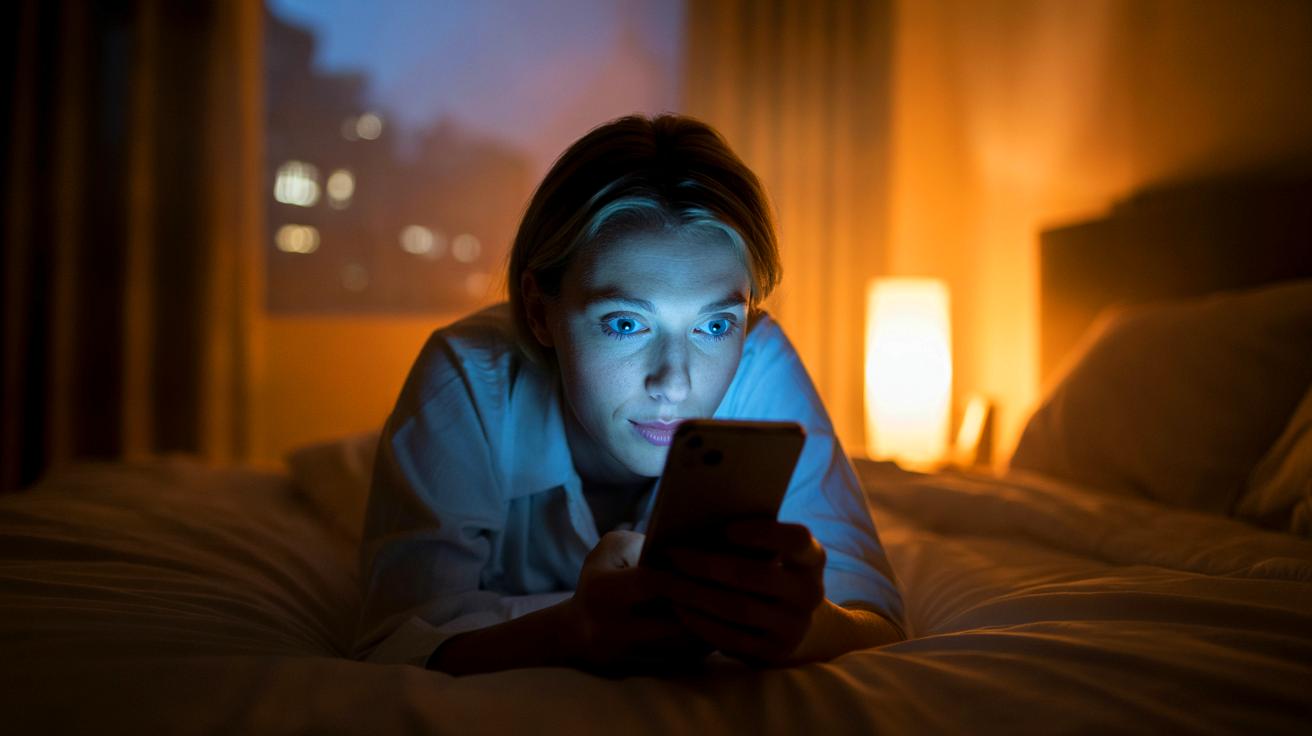
Across the United States, the nightly ritual is familiar: lights off, covers up, thumb scrolling through an endless cascade of posts, emails, and headlines. It feels harmless, even calming, but biology tells a sharper story. The glow from that glass rectangle nudges your internal clock, stalling the rise of melatonin, the hormone that cues sleep onset. Your phone can shift your night later without you noticing. This isn’t just about convenience or willpower; it’s about how our brains read light and reward. Understanding why scrolling delays your body’s melatonin release—and how to outsmart the effect—can transform late nights from restless stretches into reliable rest.
Blue Light, Melanopsin, and the Night Shift
Inside the eye, a special set of cells—intrinsically photosensitive retinal ganglion cells (ipRGCs)—carry the pigment melanopsin, tuned most strongly to short-wavelength blue light around 460–480 nanometers. When these cells detect that cool spectrum, they signal the suprachiasmatic nucleus (SCN), the brain’s master clock, which in turn tells the pineal gland to dial down melatonin. The result is a phase delay: your sleep window slides later, and genuine drowsiness gets postponed. Smartphone LEDs, particularly at higher brightness, peak in this range. Held close to the face, their melanopic punch is surprisingly strong. Even a dim, close screen can tell your master clock that daylight persists.
“Night shift” or “warm mode” settings reduce the most stimulating wavelengths, but they don’t neutralize light’s total biological signal. The physics of distance matters, too: double the distance, and intensity at the eye can drop to roughly a quarter. OLED screens may appear gentler, yet brightness still dominates the biological response. Add bright overhead LEDs and you compound the effect. Your eyes don’t average intention; they average photons. The result is a visible paradox: you feel awake longer, yet sleep feels thinner when it finally arrives.
Attention Loops That Keep the Brain Awake
Light isn’t the only culprit. Interactivity keeps you alert. Social feeds and news apps deploy variable rewards—fresh likes, breaking updates, surprise videos—that spike dopamine and heighten cognitive arousal. The brain leans forward. Heart rate ticks up. Stress mediators, including cortisol, refuse to power down. In neuroscience labs and bedrooms alike, that cocktail delays the mental “letting go” that sleep requires. When the mind races, sleep stalls even if the room is dark. The content itself matters as much as the light striking your retina.
Doomscrolling adds an emotional accelerant. Unsettling headlines trigger vigilance; social comparison stirs anxiety; late-night work threads tug at responsibility. These micro-stressors teach your nervous system that bed equals engagement, eroding the bed-sleep link clinicians cultivate to treat insomnia. The result is hyperarousal: you’re physically in bed, but your brain is still negotiating the day. When that state collides with blue-tinged light, melatonin release is doubly delayed—chemistry and psychology marching in the same wakeful direction.
Dose Matters: Intensity, Duration, and Timing
With light, biology respects dose. The more intense the light at your eyes, the longer the exposure, and the closer it is to bedtime, the larger the melatonin suppression and the later the circadian shift. Ten minutes of quick checks may be tolerable. Thirty to sixty minutes of steady scrolling—especially within two hours of lights-out—produces measurable effects for many people. Timing near bedtime amplifies the delay. Distance is a stealth factor: at six inches, a phone can deliver many multiples of melanopic stimulus compared with an arm’s-length hold. Ambient lighting stacks on top of the screen, raising the total signal your clock interprets as “day.”
| Source | Typical Spectrum | Melatonin Impact | Quick Fix |
|---|---|---|---|
| Smartphone at 6 inches | Blue-peaked LED | High | Lower brightness, hold at arm’s length |
| Tablet at 12 inches | Blue-peaked LED | Moderate–High | Enable warm mode; use stand further away |
| LED bulb 5000K, bright | Cool white | High | Switch to dimmer, 2700K lamp |
| Warm lamp 2700K, dim | Warm white | Low | Use for wind-down hour |
| E‑ink reader, front light off | No emission | Minimal | Prefer over phone at bedtime |
Think of your evening like a budget. Spend light carefully, especially the hour before bed. Combine light hygiene with content hygiene—no heavy debates, no inbox triage, no adrenaline-laced reels—and your natural sleep pressure can meet rising melatonin on time. That’s the rendezvous that restores you.
The late-night scroll isn’t a moral failing; it’s a design clash between ancient circadian wiring and modern, portable light-and-reward machines. Shift the environment, and your biology follows. Dimming screens, warming color temperature, increasing distance, and setting a firm “last look” time help, but the most powerful fix is behavioral: put the phone out of reach, let darkness and boredom do their quiet work. Your sleep is a technology, too—and it prefers low light and low drama. What simple change will you test tonight to protect your melatonin and reclaim the ease of falling asleep?
Did you like it?4.6/5 (21)