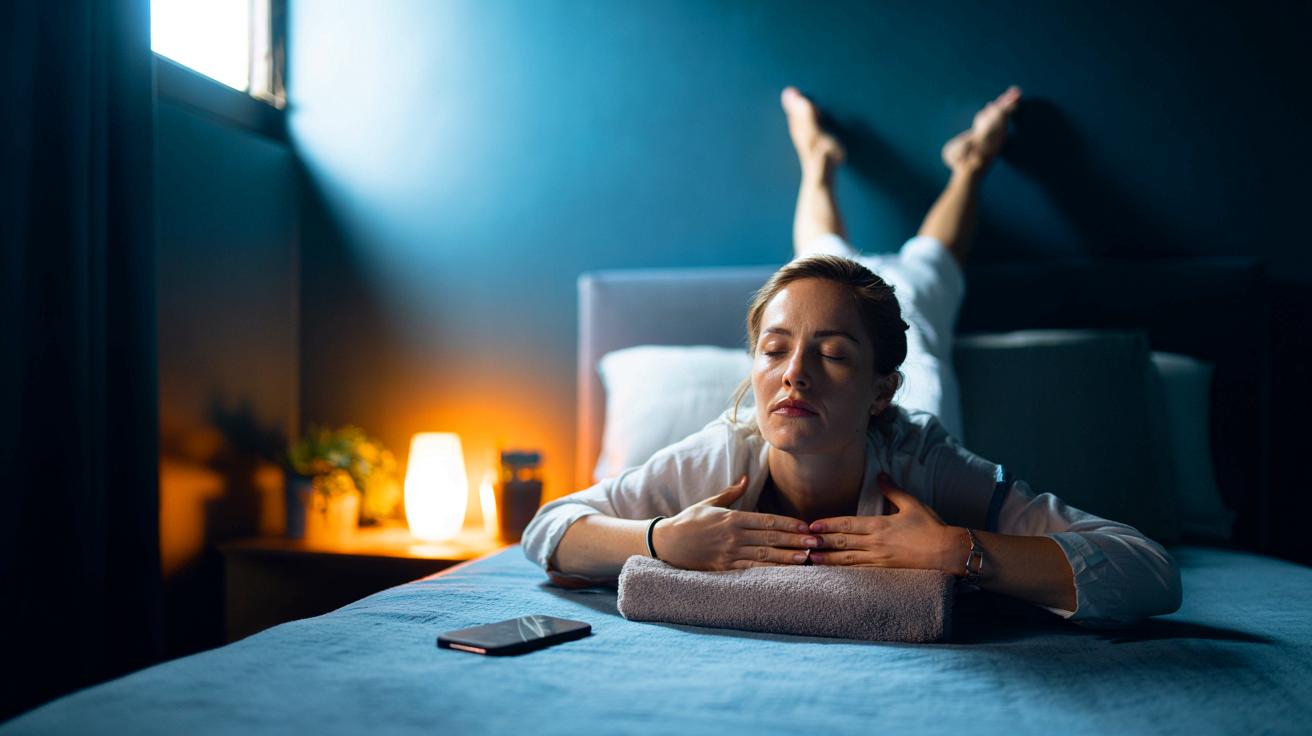
In a nutshell
- 🧠 A gentle pre-sleep sequence lowers sympathetic arousal, activates Golgi tendon organs, reduces micro-awakenings, and supports richer REM architecture.
- 🧘♀️ The five-move routine: Rib-Cage Breathing (2 min), Supported Child’s Pose (90s), Figure-4 (60s/side), Supine Twist (60–90s/side), Legs-Up-the-Wall (2–3 min) for a calm, 10–12 minute reset.
- 🌬️ Breathing and pacing: nasal breaths with a 1:2 inhale-to-exhale ratio (e.g., 4 in, 6–8 out) to raise vagal tone and lower heart rate before bed.
- ⏱️ Timing and environment: start 45–60 minutes before lights out; cool room (60–67°F), dim light, no screens; hydrate earlier; limit alcohol; track gains via HRV and resting pulse.
- 🛡️ Smart modifications: adjust for glaucoma/HTN, pregnancy, or recent spine/hip surgery; athletes emphasize breathing on late-training nights; persistent insomnia/apnea needs clinical evaluation.
The hours before bed can feel like a final sprint: emails, dishes, headlines, repeat. Yet that frantic cadence collides with the quiet, intricate choreography of REM sleep, the stage where emotional memories are sorted and creativity knits together. Physiologists increasingly point to a simple bridge between day and night: a brief, precise evening stretch that turns down sympathetic arousal and primes the brain for deeper cycles. The goal isn’t flexibility for its own sake; it’s signaling. Slow joints, longer exhales, dimmer light. Send the message, and the nervous system often follows. With about 10 to 15 minutes, you can nudge heart-rate variability upward, soften muscle tone, and make it easier for REM to arrive on time.
Why Stretching Before Bed Shapes REM Architecture
Physiologists describe REM as fragile. It’s easily disrupted by late caffeine, racing thoughts, or tight hip flexors that keep the pelvis tilted and the lower back whispering discomfort. A pre-sleep mobility sequence counters that noise. Static holds recruit Golgi tendon organs, which dampen reflexive tension. Slow nasal breathing nudges the parasympathetic system to the front seat. Together, they reduce micro-awakenings that fragment REM into crumbs. Less midnight turbulence, more consolidated cycles.
There’s also a temperature story. Gentle stretches, especially for the calves and hamstrings, increase peripheral blood flow. That helps heat leave the core, an essential cue for sleep onset. Add diaphragmatic breathing and you improve vagal tone, visible as steadier heart rhythms and a lower resting pulse. None of this needs to be intense. In fact, it shouldn’t be. Intensity is stimulating; duration and slowness are sedating. The result is a body that asks for fewer position changes and a brain with less nociceptive “static,” both permissive for richer, longer REM periods.
The Five-Move, Ten-Minute Routine Physiologists Love
This sequence is designed for low arousal and high payoff. Dim the lights. Put your phone away. Breathe through your nose the entire time. If a move pinches, ease off. The sensation should be mild and steady—never sharp.
| Move | Duration | Target | Why It Helps REM |
|---|---|---|---|
| Rib-Cage Breathing (supine, hands on ribs) | 2 minutes | Diaphragm, intercostals | Raises vagal tone, lowers heart rate |
| Supported Child’s Pose (bolster/pillows) | 90 seconds | Low back, hips | Relieves lumbar tension that wakes you |
| Figure-4 Hip Stretch (supine) | 60s/side | Glutes, deep rotators | Unloads pelvis; eases turning in bed |
| Supine Spinal Twist | 60–90s/side | T-spine, obliques | Downshifts the sympathetic system |
| Legs-Up-the-Wall | 2–3 minutes | Calves, venous return | Encourages cooling, calms the nervous system |
Guidelines: In Rib-Cage Breathing, inhale for 4, exhale for 6–8. Longer exhales are a cheat code for calm. In Child’s Pose, hug the bolster to quiet the neck and jaw. During Figure-4, flex the lifted foot and keep your sacrum heavy. For the Twist, anchor the opposite shoulder; think length, not torque. Legs-Up-the-Wall should feel neutral; slide a folded towel under the hips if your hamstrings tug. The entire routine runs 10–12 minutes—just enough to change state without waking you back up.
Breathing, Timing, and Environment: Small Tweaks, Big Gains
When you do this matters. Physiologists recommend starting the routine 45–60 minutes before lights out, not after you’re already groggy. It pairs best with a cool room (60–67°F), soft light, and no screens. Light tells the brain what time it is—so whisper, don’t shout. Keep your mouth closed to pace the breath. Try a 1:2 inhale-to-exhale ratio for the full session. That simple math stabilizes carbon dioxide, which in turn smooths cerebral blood flow.
Sound also counts. White noise or soft, consistent music prevents abrupt arousal. Hydration? Sip earlier in the evening, then cut off 90 minutes before bed to limit bathroom trips that break REM. Alcohol shortens sleep latency but shreds REM later; the routine cannot outstretch that effect. If you track with a wearable, look for small increases in HRV and a modest drop in resting heart rate on nights you complete the sequence. Consistency beats heroics—five nights out of seven wins.
Who Should Modify This Sequence—and Why
Most bodies will benefit from a gentle evening stretch, but a few scenarios deserve tailoring. If you have glaucoma or uncontrolled hypertension, keep Legs-Up-the-Wall to one or two minutes or substitute a simple calf stretch with your feet on the floor. Recent hip or spine surgery? Skip deep twists and rotate from the upper back with knees together. Pain is a red flag, not a rite of passage.
Pregnant in the second or third trimester should avoid long supine holds; perform Rib-Cage Breathing in side-lying and elevate the torso in Child’s Pose. Serious insomnia or suspected sleep apnea warrants a clinical evaluation; stretching can soothe arousal but won’t treat airway obstruction. Athletes arriving home late from training should shorten the routine and emphasize breathing to avoid prolonging core temperature elevation. And if anxiety surges at bedtime, double the exhale length and add a quiet five-count pause after each out-breath. The right dose is the one your nervous system accepts.
Evening stretching isn’t a miracle; it’s a message. Quiet tissues, unhurried breath, kinder lighting—signals that cue the brain to protect and extend REM. The routine above is short, adaptable, and grounded in physiology rather than folklore. Try it nightly for two weeks and track whether you wake less, dream more vividly, or feel sharper after sunrise. Then adjust durations and positions until the sequence fits your life like a favorite sweater. Small rituals, practiced steadily, change nights—and then days. What will you tweak first to help your body welcome deeper, more resilient REM sleep tonight?
Did you like it?4.4/5 (26)